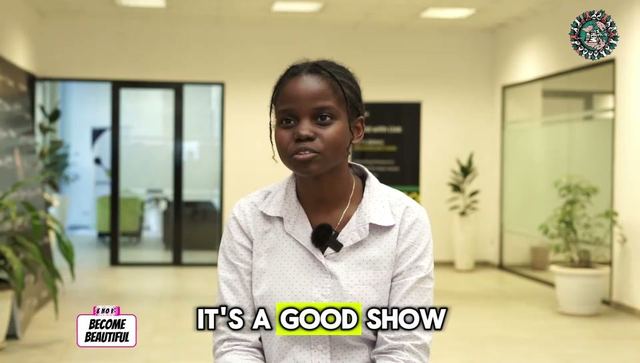
0:20BI was a former journalist. I’m still a journalist, actually.
0:24AOkay. And what do you, what do you like? What journalism inspires you? It makes you feel you have to do work. You need to work.
0:30BWell, journalism inspires me because it’s the foundation of the First Amendment, and we keep everybody in check. We tell the people what they need to know. We investigate the stories that need to be investigated. We keep the powerful in check. And so it’s really important if you want to support democracy to support the First Amendment. And as a journalist, that’s what we do.
0:51AOkay. I’m here with the fourth estate in the flesh. That’s what we heard today. And so what do you know about crypto?
0:56BUm, crypto is a currency that’s digital in nature and is spread out over -- it’s not, it’s not owned by one single entity, so it’s owned by a number of entities. And the thing about crypto is that you have to be careful because it can be exploited.
1:17AAnd do you feel like that’s different from other money?
1:20BExcuse me?
1:22ADo you feel like that’s Different than other money?
1:24BOh, yeah. It’s different than every money because currency is basically controlled by the government here. And so crypto is not controlled by the government.
1:31AA lot of people like that, right?
1:33BSome people like that. Not everybody like that. I don’t think it’s necessarily the safest because it’s private. And so you don’t know who’s exchanging the funds. And a lot of people have been duped into investing in cryptocurrency and lost all their money.
1:47AThat’s absolutely correct. That’s absolutely correct. I stand behind that. That’s important for people to understand that for the most part, this is a casino.
1:53BIt is a casino. And we don’t know who’s trading the money. We don’t know where the money’s going. We don’t know where it’s coming from. It’s very disseminated across a large number of people. And some of those people are unscrupulous.
2:08ACan you define unscrupulous?
2:10BUnscrupulous means they can’t be trusted.
2:13AI know some of y’all are about to start using that word today. But we like that. Okay, excellent. And so what do you think about inflation?
2:19BWell, inflation’s going up. I think that the, uh, interest rate now is at 7%, which if you’re trying to buy a house is really high. Although when I first -- my boy -- when I first bought my first house, it was at 8%, but the price of a house was much cheaper then.
2:36AAnd so do you feel you understand the relationship between cryptocurrency and inflation?
2:40BNot quite. No, not really. I don’t think I understand what that is. Can you explain what that is?
2:45AWell, absolutely. That’s actually what I’m here to do. You know, Bitcoin was created, people say, kind of tongue-in-cheek, to be decentralized money, peer-to-peer money. But in fact, there’s only 21 million of it. And some assume that the actual goal was to replace fiat currency at scale because people assert that, you know, since we left the gold standard, you know, and any country can actually print money. You know, that there’s always a concern of hyperinflation when the interests of those in power misalign with the interests of everyday people.
3:15BRight. But that’s always the case when you deal with the stock market. Yeah, the economy is not the stock market. The stock market’s a certain number of people and a certain number of stocks, but it’s not everybody and it’s not most people.
3:29AYeah, absolutely. You know, but my perception when it comes to crypto, I’m not as familiar with the stock market. I’ll tell you, I’ve been studying crypto the last several years. And how I see it is that Bitcoin, like as I mentioned, was designed to be a hedge against inflation under this assumption that they can print as much money as they ever want. People say, oh, there will only ever be 21 million Bitcoin. Well, that’s awesome. I should hold some Bitcoin just in case they do print me into hyperinflation.
3:51BCan you afford Bitcoin now?
3:53AMaybe not a whole Bitcoin, but if inflation keeps going up -- I have a Bitcoin. Yeah, but if inflation keeps getting worse, you’re going to be able to afford less of Bitcoin, right? That’s what people assert. And so people -- have you heard of de-dollarization?
4:03BNo, not really, no.
4:04ASo de-dollarization is this movement around the globe where people see the US dollar as a hegemonic currency. And so there are people who want to see the world shift away from the dollar as a reserve currency. But that scares me because that means Bitcoin might do well if we switch to Bitcoin as a reserve currency. But for every working-class American who’s in proximity to poverty, who’s working for US dollars, a dollar that is no longer in demand around the globe is what they’re working for. And where does that leave them?
4:29BTo me, that’s a scary thought. It’s a scary thought, but we have other currency. Other governments print currency and they have their own currencies. We could quite conceivably go into Chinese currency and they’re pretty reliable and steady right now.
4:42AI just think overnight if the country started saying like, you know, and if say 12 hours away they start saying while we’re asleep we’re all going to switch away, people wake up the next day groceries are 10 times more expensive.
4:52BYeah, that could be dangerous if we go away from U.S. currency because we’ve dominated for so long, but that’s not to say that we will continue to dominate, especially if you have the kind of government policies that you have now.
5:05AMm-hmm.
5:05BWe could be in big trouble in the next 5 to 10 years because US currency may not have the same status or value because of what the policies are now that we’re -- the economic policies that the government is engaging in right now. And it scares everybody. And so as a result, many countries are probably going to be moving away from US currency. Because we’re not reliable and as steady as we used to be. And that is because of current economic policy by this administration.
5:35AIt’s not new.
5:36BIt’s not new.
5:38AThis is just exceptionally, maybe more predatory.
5:40BBut they’re doing some things that may permanently impact US currency.
5:47AWhat things come to mind for you specifically?
5:48BThe trade wars, the -- what do you call it? What is the thing that they’re doing? The, um, tariffs. The tariffs, right. The tariffs could impact people. You know, our allies such as Canada are saying, well, we may not want to depend on the U.S. government because they’re beating us over the head with tariffs. And the tariffs are coming down because, you know, the everyday person pays the tariffs. The companies, you know, when they had that big refund, the companies got the refund from suing the government over tariffs. But do we see any of that money? No. So these kind of policies and the work that the US government is doing against our allies means that our currency, our economic way of life could be jeopardized and weakened over -- it may not be permanent, but it will definitely impact us over the next 20 years.
6:44AAbsolutely. And that’s really what matters to me when it comes to crypto. I don’t care if you buy crypto or don’t buy crypto, but I think it’s incredibly important that Black Americans today, people navigating poverty, understand what they should be planning to navigate over the next 5 years. Because saving money isn’t going to do it. Working hard isn’t going to do it. You know, it’s really about being intentional. You know, somebody earlier asked you, when are people going to get tired of spending money on holidays and start coming up as a family to make annual investments that fail and succeed? Because then they can learn something every year with the money, as opposed to coming together and feeling good for a moment. And that really, to me, was kind of interesting. I said, oh wow, what if we did do a investment experiment every year. We definitely have a lot more investment experience and, you know, understanding collectively, my family in particular, right? If we did that.
7:23BWell, we, we, we have more people who are doing that. This may not be, uh, you know, it may not be an overwhelming number, but a lot of people are focusing on how they can support their families financially, how they can plan better. And some families are making more than they’ve ever made in their lives, and so they’re able to save and put money forward towards the next generation. So some of that is going on, and we shouldn’t be so negative and defeatist about all of that because some people are doing that. Now, whether or not it benefits everyone, that’s going to be tough to figure out. Yeah, whether or not it benefits everyone.
8:02AThat’s correct. I agree with that. And so my final question -- I have 2 more questions, actually, 3 more questions, actually.
8:08BSo I’ll be quick.
8:09AWhat would your message be to Black Americans, Americans navigating poverty right now?
8:12BOh, navigating poverty, that’s tough because if you’re navigating poverty, you don’t always have a lot of options. Um, right now it’s hard to get a second job. It’s difficult to get, uh, access to benefits. So I would think that the best thing that somebody could do if they’re in poverty is think about some kind of way to become an entrepreneur, to make Something that you can sell for, for additional funds, because I’m not sure if you’re going to be able to -- I don’t know that people are going to be able to find jobs. I mean, you still could probably do Uber, but even they are cutting back, right? So the best thing to do is to find something that you can make and sell that will earn you extra money and be intentional about becoming an entrepreneur.
8:56AOh, yeah. And if you could ask people around the world one question, what would you ask them?
9:02BAround the world.
9:04AWe’re creating citizen journalism across the diaspora, the biggest citizen journalism network, and we’re going out and asking people questions, this one in particular. And then we’re picking one to go out and ask collectively.
9:13BWhat are you doing to support freedom of the press? What are you doing to support democracy? What are you doing to support the fact that we are getting -- some of our freedoms are being eroded? What are you doing to make sure that everybody has Is able to live a healthy, free, and a healthy, free, and educationally rich life.
9:38AAmen. And then I told you my podcast used to be called We Them Niggas, and so my last question is: We them niggas or nah?
9:45BNo.
9:46AOkay. Never. And what makes you say that, if I can ask?
9:49BBecause it’s a term that even though we may use it, some people may use it as a term of endearment. Basically. It’s a term that really tears people down. Ultimately, it’s not really a great way to talk about one another, especially when it’s weaponized against Black people. And we help to -- we help it to be weaponized against Black people. So no, it’s a no for me. I gave it up when I was in college.
10:13ABut before that, you had a different opinion?
10:16BI probably used it every now and again, but I definitely gave it up when I became a college student and I realized the negative implications. However, here we are in the rap or post-rap era, and everybody thinks it’s okay to use -- not everybody, many people think it’s okay. I think still a lot of people don’t use it, but for me, it’s a no. I try to avoid it.
10:37AI appreciate that. You know, I’m asking people on purpose, right? People could say yes or no. I think, you know, my podcast at one point was called We Them Niggas because I wanted to actually facilitate more discourse around how people understand that word, the politics of that word. And even our identity as people descended from slavery potentially here in America and what terms actually recognize that, you know, and give us dignity inside that context and who does and who doesn’t. Right.
10:57BSo how did you do that?
10:58AI had people on my podcast and I asked them, you know, what’s their first experience with the word? How do they understand it? What’s their understanding of why people get upset when people say it? Things like that. You know, can people say it or not? Just trying to facilitate the discourse.
11:12BSo did you think it did that?
11:14AYeah, I would say to some degree. I think, you know, I got into crypto and so I started interviewing a lot of Black people in crypto and it became more represent -- like documenting people in this space and what they were doing and trying to showcase what, you know, people descended from slavery were doing right now in a space that might not feel like it’s for us. And, you know, it’s taken me around the globe. I’ve spent 4 months in Africa. I spent months in Asia. I’ve been to Europe, you know, and I’m still on the journey, right? Asking people about it, as you can see right now.
11:39BOkay.
11:39ABut I think it’s important for us to start to unpack really what it means for Black people in America to be descended.
11:45BSo what do you think about it, the use of the word?
11:47AUm, I, I think it’s the, it’s the only term that implies that I’m someone descended from slavery and from a family that’s lived through slavery and racism in this society. And I think calling me Black doesn’t necessarily do that justice in the same way. And so I think when We Them Niggas is the name of my podcast, it’s about, you know, I am I’m the descendant of people who have survived, overcome, and lived through those circumstances, and I’m still navigating what that means for me and discovering it, you know.
12:12BI guess that’s one way of looking at it.
12:15AAnd, you know, they were calling -- they were calling us something different before, you know. But at the end of the day, we’re the people they were calling that. And where are we now?
12:20BI think we’re better off.
12:24ABut, you know, I agree with that, you know. But I want to show people where are we now while honoring that history, right, and including it and talking about it. And this word is, I think, a big part of that history.
12:32BI don’t mind using the word when it’s, uh, appropriate to use it. Maybe you’re writing poetry, maybe you’re talking about something in particular, maybe there’s somebody that fits the definition, right?
12:44AWhat does that mean? So talk about that, because that, that --
12:46Bwell, it means that’s the way somebody who, who, who is in essence causing their own demise or causing the demise of their own people, then I think sometimes that word might be appropriate.
12:58ABut if we’re talking about So that’s your definition though, because a lot of young people aren’t walking around with that definition.
13:02BIt’s not my definition. It’s kind of like what I see it being used as.
13:07ABut, you know, that’s your perception of the word.
13:09BThat’s my perception of the word, right?
13:11ATo say it better. So I’m not here to put words in your mouth. I’m going to be a good journalist. I promise.
13:16BYou better. It doesn’t -- now you made me lose my train of thought. I think it can be -- it can have some appropriate use. But I don’t think it should be used every day, all day, and as a substitute for other words that we have that better define what you’re trying to say. You know, remember, I’m a journalist, so I use words and words have meaning. And so you have to be intentional about how you’re using words and what you’re describing and who you’re describing and how you’re describing them.
13:46ADo you think it’s -- to me, it occurs like saying And in any environment such as a white supremacist society like we live in right now, you know, to say that we as Black people are responsible for our own demise really steps over everything that we’re standing in the face of and coping with and navigating.
14:03BI don’t think necessarily so. I think some of us do kind of do that and are engaged in that. I mean, you know, just look at some of the Black people in the Republican Party, right? They’re standing next to white supremacy because they think they’re going to benefit from it to the demise of other people, right? So there are some of us --
14:26AThat’s a nigga in your book.
14:27BI didn’t say that.
14:29ADemise. I apologize.
14:31BI’m done. No, but you know, there are some people who are not necessarily upholding and supporting Black people, and so those are the people who you know, are not for us. And, you know, not everybody’s for us. You know, there were also people back in slavery who didn’t want to get out of slavery, right?
14:54AYeah.
14:54BYou know, so what would Harriet do? She left them behind. Or she said that she threatened to kill them and shoot them if they didn’t free themselves. So, you know, we have -- we still have that. We still have a lot of that. And that’s unfortunate given where we are and what we know about our history and how we got here and what we had to go through to reach where we are now.
15:18ANo, thank you. And I have one more question, actually, because you’re here representing the journalism school.
15:22BYou know, go ahead. Go ahead. Well, it’s your last question.
15:26AIt will be.
15:26BOkay.
15:28AWhat would be your word of advice to Black people who want to be journalists in today’s world?
15:32BBecome an independent journalist. Learn your craft. Learn your trade. However you do it, go to school. Take a lesson from --
15:42AI should go to school for journalism. Should I go to school for journalism?
15:45BYou graduated already, didn’t you? Graduate from something? What is your degree in?
15:48AMoral psychology.
15:49BOkay, so you’re well, you’re pretty much a journalist already. Moral psychology.
15:53AThanks. That’s that’s nice credit to get.
15:55BBut um, so I don’t think you need to go to school for it because you’re out here practicing it. I think you just need to uphold all the tenets of being a good journalist, which is being factual, which is being honest, which is being truthful, and you. You seem to be doing some of that from what I can tell, having first met you on the street.
16:14AThat’s where we meet people, right? That’s where we meet community.
16:17BAlrighty, thank you so much.
16:20AThank you.
16:20BSo where am I going to see this?