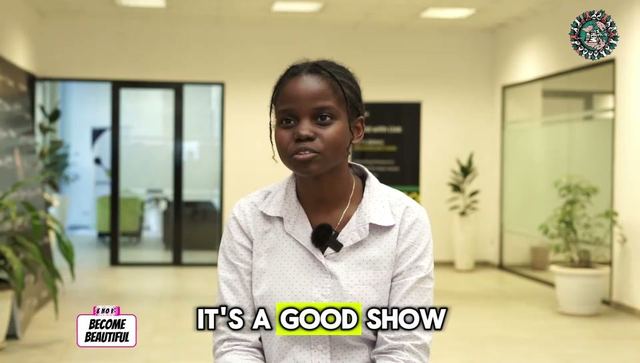
0:07BYes sir, I’m a second-year biology major.
0:09AOkay, so what you about to be, like a doctor or something like that?
0:11BYeah, pre-med.
0:12AOkay, stop playing with him. Black doctor, stop playing with them. Why?
0:16BUh, I want to be a Black doctor because I know specifically in the field of surgery we only make up 4% and representation is important and I have to be that change in our community.
0:25AOkay, excellent. Have you had Black doctors?
0:28BUh, personally, no, I’ve never had a Black doctor. I’ve had a Black dentist, but never a Black doctor.
0:32AYeah, me too. How many Americans, Black Americans, say that’s true for?
0:36BMost. I mean, I don’t know too many people who’ve had experiences with Black doctors. Again, it’s only 4% of --
0:43Ayeah. Excellent, excellent. And, um, where you want to go to medical school?
0:47BI’m thinking Howard Med, but my options are open. University of Chicago, Meharry, College of Medicine, preferably an HBCU though.
0:55AOkay, a man of the people. Okay, excellent, excellent, excellent, man. How you feeling about the school year? It’s been kicking off, right?
1:00BThe school year’s been good. Yeah, good connections, good vibes. I’m goal-oriented this year, so yeah, trying to stay focused.
1:07AAnd what’s the biggest challenge for you as a student here staying focused?
1:10BUh, the biggest challenge staying focused is that Howard University has so many opportunities, and sometimes you can get overwhelmed by all the opportunities and You know, put too much on your plate. But so just balance. That’s what I would say. Yeah.
1:22AOkay.
1:22BI hear that.
1:23AHe says she’s developing his discipline. You need that as a medical student.
1:25BYes, sir.
1:26AYou gotta lock in. Okay, cool. And so, as I said, I’m here for the Black Blockchain Summit, this crypto conference here happening at Howard University. What do you know about crypto? Nothing. Nothing?
1:36BNothing.
1:37AThese are your friends?
1:37BYeah, they are. He knows all about crypto.
1:39AOh, you guys, you guys about to be in the video? Excellent.
1:43BHe knows all about crypto.
1:44ASo who do we got here? Introduce your people.
1:46BThis is my brother Parker, and this is my brother Jelani, health science major, and we have a finance major right here.
1:53AOkay, okay. Yeah, you can hand it off. And so what do you guys know about crypto?
1:56CI mean, I don’t know a lot about crypto, but I know kind of like the basics, you know, how it -- like, it’s worth a lot, um, how it trades, stuff like that.
2:03AYou trade?
2:05CI, I invest a little bit.
2:06AYeah. Okay, okay. And what about you?
2:07DI invest a little bit, you know, like, like, you know, dividend stocks. I got a couple different portfolios, but not really too far into crypto for --
2:14Bfor --
2:14Dyeah, I don’t necessarily Yeah, like you know I’m familiar with like the blockchain and like how all of that stuff works.
2:19AOkay, so tell us tell us how it works. So it’s okay if you don’t get everything right.
2:24DSo so essentially the blockchain is it’s a it’s it’s a it’s a completely separate mechanism regarding like like the crypto world, and it’s it’s fully it’s fully two to two encrypted, right? So it creates an encrypted system where you you you you want to help me out with this?
2:42AI mean, I’m just like, you say what you say, and then if it’s -- I’ll say if I’m not sure if it’s right. That way people don’t like leave thinking it was right. But it’s more just about, right, what do you know? And like, people know what they know, and I’m gonna explain things to you no matter what, so don’t worry.
2:56DOkay, word. Okay, so I mean, but obviously, like, I know like Ethereum, I know, I know like Bitcoin, um, and then like, you know, a couple, a couple different -- like, I know, I know you’re not familiar with like, like meme coins or like other stuff like that, but you know, I’m I kind of did my research into that as well, looking into like things like day trading and, you know, along those lines.
3:16AOkay, dope. Well, yeah, my name is Maceo. I’ve been doing crypto journalism now for like 5 years. I’ve been around the world. I spent 4 months in Africa. I spent like 2 months in Asia. I spent a couple of weeks in Europe, Belgium, England, traveling around. I’ve been across America going to crypto conferences. This is my 4th time here this year at Howard for this summit. And, you know, I’m here to tell people to understand what crypto is, particularly as it relates to inflation. Okay. A lot of people don’t really understand what inflation is. Do you guys feel like you know what inflation Is yes. Okay, go ahead. So definitely inflation, yes.
3:46CUh, like explain inflation. Basically, it’s like, uh, the value of money over time decreases. Um, a dollar today is not going to be worth a dollar in 50 years. You know what I mean? Inflation rises about 2 to 3% every year.
3:59AWhy?
4:00CHistorically, on average. Uh, why?
4:02AYeah.
4:03CWhy does inflation happen? I think it’s just like there’s a lot of money in circulation. Constantly printing more money. And then also like --
4:12AOkay, so talk about that. That’s, that’s the big one. Put more money in circulation. What does that mean? That’s what inflation is.
4:17CYeah, like the United States government prints money basically. Other governments around the world, they print out more money. There should be more money. And that can ultimately lead to inflation.
4:29AAnd the devaluing the basis of currencies, right? That’s really what crypto is about. Crypto was started as a way for people to hedge against centralized currencies devaluing Right? Because if the dollar isn’t worth a dollar tomorrow, potentially, right? You can work for $100K this year, and if all you do is hold it, it’s not going to be worth $100K next year, right? And so people around the globe have been thinking, what can we do to exit these systems, right? And so there’s a reason Bitcoin has made the most millionaires of the 21st century, and that’s because people speculate more and more that the dollar is going to lose its reserve currency status, which means that countries around the world are holding the dollars feeling like, oh, I can’t hold gold. But the US dollar, that’s, that’s money. That’s real money. My country dollar, the naira might not be worth nothing, but if I got my dollar on me, you know, I can always exchange it and get what I need to get. Right. But people around the globe are losing confidence in our monetary policy. And so people are talking about de-dollarization. You know about de-dollarization? You guys talk about that?
5:25CYeah. Like trying to get away from the United States dollar.
5:27AAnd what would be the impact of that on working-class Americans?
5:31CI mean, it would be catastrophic. Basically, the US dollar is like the benchmark currency around the world. So If the US dollar were to -- I mean, if like the US government were to default on its credit, like that would be really bad.
5:44AYeah. And so a lot of people look at crypto and think, I’m gambling, hoping I can make a lot of money. I think if you’re learning about crypto, you’re thinking really about how you can hedge against the de-dollarization. Your concern shouldn’t be what if crypto goes up and I didn’t get it? It should be what if the dollar goes down and all I have is dollars? You know, because if you’re -- next thing you know, you’re, you know, Half a Bitcoin, let’s even say your tenth of Bitcoin you bought this year for $5,000 is is the most valuable asset you have ten years from now because even if you have a million dollars, maybe that’s not even a case of water at Walmart because the world doesn’t care about you.
6:19AAmerica doesn’t care about you. The oligarchs don’t care about you. You know what they care about? Making money. That’s why they’re buying Bitcoin and telling you it’s fake money. It’s funding scams. It’s funding prostitution. It’s funding Jeffrey Epstein while they go and buy more and devalue your work every day and say go to school, go get a job, and we hope you make it well. Yeah, so should you pay your debt or buy Bitcoin? That’s the real question. I got one more question. I got one more question. If you could ask people around -- no, that’s not true. What did you get from this conversation?
6:44CUh, I guess a little bit more insight into Bitcoin.
6:48DYeah, definitely insight, and learned a lot, especially, you know, how comparable it is to the value of the dollar and how useful it actually is. And it’s not just, you know, something reserved for the financially literate and the It’s not something that’s reserved for the rich and not something only the rich can trade, but it’s something that you can do too. It’s something that you should really do your research in as an American.
7:09BYeah, I’ll definitely say like I learned a little bit more about Bitcoin as a whole as well as like inflation. So that was, that was good. And yeah, like thank you.
7:20AThat was cool. Yeah, you’re welcome. And you know, I think what you said, bro, catastrophic is the word. A lot of Americans don’t realize, like that’s my whole mission. I don’t want working-class Americans to be thinking, what do I do now that Hyperinflation is here. You know, I’m working-class Americans right now to think, what am I doing to make sure that myself, my children taken care of if that were to happen? Because there will be no safety net. And then my last question: If you could ask people around the globe one question, what would you ask them?
7:45CThat’s really tough.
7:47AIt could be anything. The stakes are low.
7:49DThat’s a that’s that’s a tough question. You know, you don’t got a question.
7:52AYou having a good day is is okay. Yeah.
7:55BSomething I ask people around the world. Um, I would go ahead.
7:59DActually, you got one? Nope, I got one.
8:01BGo ahead, you got it.
8:04DDid you get 1% better than you was yesterday? That’s your question.
8:10CDid you cop Achieve Bliss? Did you cop September 26th, 9 AM? Make sure you cop some Achieve Bliss.
8:18DOkay, can you achieve bliss?
8:22CI don’t know. Let’s find out.
8:23AThank you. I appreciate you guys. You guys gonna follow us on