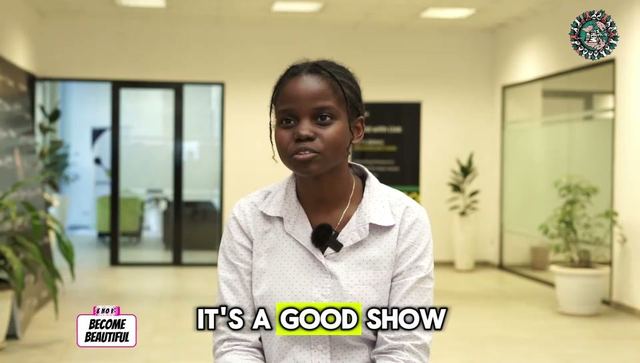
0:03BI’m from Milwaukee, Wisconsin.
0:05AExcellent. And you’re a student here at Howard?
0:07BYes, I am.
0:07AWhat year are you?
0:08BI’m a senior. I study philosophy and sociology.
0:11AAnd how has being here and studying those things shaped your worldview over the last couple of years?
0:15BI grew up in a predominantly white institution or like with predominantly white people. So that made me -- I wouldn’t say whitewashed, but I wasn’t really comfortable in my Blackness. And excuse me.
0:26AOkay, don’t even worry. Don’t worry about it.
0:28BBeing like around people that look like me and think like me has really like made me comfortable in being who I am. Like, I’m able to wear my afro, I’m really able to dress how I want to dress. I’m like very comfortable just being in my Blackness and sitting in my Blackness.
0:40AOkay, excellent, excellent. And what does that make available to you?
0:44BIt makes available just connections, I would say. Not feeling so sheltered and just being able to use my mind to the fullest and not feel like I have to -- like, I don’t feel like I’m pressured to be what society wants me to be or act how society wants me to act in a way. Like, I’m able to just be who I am.
1:02AI love that. And what about the philosophy side of being here?
1:06BThe philosophy side, just, you know, I’m thinking. I’m always thinking. There’s always things to think. And I just really love how, like, abstract -- well, yeah, how abstract and just, like, open-minded it is. It just really makes me, like, Take everything into consideration.
1:21AIs there a philosophy class which made you feel like philosophy is important?
1:24BUm, I wouldn’t -- not like any specific one. All of that, all of the classes I’ve taken has just like really like shaped like how I feel about philosophy. It has like really like just given me more to think about regarding philosophy and my role in like philosophy.
1:39AOkay. And so what does that even mean to have a role in philosophy? A lot of people don’t really understand what that even is necessarily.
1:44BI would say my role in philosophy is just like, it’s like incorporating like anthropology and like, I don’t even know how to explain it. Like, it’s just like incorporating me and who I am into like questions about the world and how the world works.
2:04AI love that. Well, that’s why I’m here today, right? I’m asking people what they know about cryptocurrency. What do they really know about how the world of money works? Essentially is what it comes down to. And so I’m curious for you, what do you know about crypto?
2:14BI don’t really know that much. I just know that it’s like an online type thing, like Bitcoin, and you’re able to like exchange it that way. I don’t really know how you like get that though, or like how you like go about like using it.
2:25AOkay. And so what would your questions be? Yeah, about crypto.
2:28BWell, first of all, like, what exactly is it for real?
2:31AUm, can I hold -- can I hand this to you?
2:34BYeah.
2:34AOkay, boom. You see, I’m working with people. So, you know, uh, crypto is a, is a decentralized kind of money. It’s money that runs on the blockchain. People talk about the blockchain. People are really talking about like a new kind of data center, right? A lot of your web applications now, Instagram, Facebook, most websites you go on might be run on like Amazon Web Services. And so what does it mean for us to have like databases that nobody actually owns? And so when you think about Bitcoin miners, those people are actually running like the Bitcoin database of all the transactions. If you send me Bitcoin, every computer that mines Bitcoin actually is tracking who has that money. You know, so if people shut down your computer, there’s still an ample number of computers around the globe which can attest to the fact that you actually have this much money.
3:13BOkay.
3:13AYou know, and Bitcoin in particular was invented as a hedge against inflation. People were aware that, you know, governments around the globe can print money as much as they want. We left the gold standard behind in the 20th century, and the US dollar has since been, you know, the privileged world reserve currency. And a lot of people around the globe are losing confidence, especially now under this administration. the kind of policy that we put forth around our money. So a lot of people are thinking, well, maybe we shouldn’t hold the dollar as the reserve currency, right? Because we think maybe we should hold Bitcoin or we should hold other things to hedge against inflation domestically, because last thing we want is America to print so much money that now our reserves are worth nothing, right?
3:50BYeah.
3:51ABut for me, I’m really passionate about helping people understand what the implications of the world leaving the dollar behind would be on working-class Americans, people who are already in poverty, who don’t even necessarily consider the privilege that it is for us to be living inside a country where the currency is the one the whole world views as the most important, the most valuable. And if that were to change, how that would impact us.
4:11BSo what are the implications for that?
4:13AI mean, I think if inflation -- we saw hyperinflation in America, you know, we go to work every day, potentially might work 2 jobs, we might work 60 hours a week and still be struggling to make ends meet. We might struggle to get out of debt. We might struggle to afford groceries. We might be all of a sudden begging for social services that used to, that used to work for us to work again for us and have politicians that don’t care. It might not even be living in the country anymore because everybody’s so hungry that they don’t feel safe.
4:35BLike the Purge.
4:38AThat’s what somebody else said earlier today. So for me, you know, it occurs to me as a catastrophic outcome. I spent 4 months in Nigeria over the last couple of years, 3 months in Nigeria. And since 2020, they’ve seen over 100% inflation in their currency. And a friend there told me, you know, hard work is worth nothing in Nigeria right now. You know, and so if that were to happen here in America, right, we lost that privilege. I think overnight people who already believe their life is as bad as it can get would become exceptionally aware of how much harder it can actually be to get out of living paycheck to paycheck.
5:08BOkay, that makes sense.
5:10AAnd so I’m curious, what do you get from that?
5:12BI get that, well, we’re already struggling as is with inflation, like you said. And so it’s just like if we keep doing things that make inflation worse, it’s just like, how can we live? We’re already barely living, making And to me, like, what really is it going to take for, uh, like politicians and governments to see like, okay, your people are dying, your people can’t afford to feed themselves, they can’t afford to go to work, to go anywhere? Like, what is it going to take for you to step up and be like, okay, let me actually care about the people that I’ve set to -- you’re supposed to care about. Like, you’re in a position of power because you’re supposed to help the people that are under you, but you’re not doing that. So what exactly -- when is that going to happen? When is -- when are politicians and governments actually going to live up to their title or what they’re supposed to be doing?
5:50AOh, oh, I like that. And so it’s funny that you say that because I actually have a thing we do called One Question where we ask people around the world, the world, if you could ask people one question around the globe, what would you ask them?
6:01BI would ask them, what exactly are you doing? What exactly are you doing in the world to make it a better place? And I don’t mean just like, oh, you’re watching your TikToks or you’re reposting. Like, what exactly are you doing that’s in the field that people can attest that They’ve seen you out there making a change. What exactly are you doing?
6:21AAnd what’s your answer?
6:22BI would say that I worked at a nonprofit for third grade -- no, for threshold giving. I worked for the IRA, and so I was basically bringing awareness to the refugee and humanitarian crisis that was happening around the world right now. And I also like repost TikToks and I repost Instagrams. I go to protests. So that’s what I’m doing.
6:42ASo what would you want to share with people about the refugee crisis and all that stuff going on? A lot of people don’t even know what that is or what’s going on.
6:47BYou’re so right. I would say right now in like 2023, We’re facing one of the largest humanitarian crises ever in the world with about like millions of people being displaced. They’re being displaced because of climate change, gender-based violence, war, etc., etc. And because Trump cut USAID by however much he cut now, a lot of charities and foundations have had to shut down, which in turn has lessened their impact on the humanitarian crisis. So like for threshold giving, we’re able to go in and give immigrants immigration lawyers and translators. But if we don’t have the funding, then we can’t do that. Then they’re just sat and they have to go and fend for themselves in immigration court when they can’t do that because they don’t even know the language.
7:25AOkay, thank you so much.
7:29BNo problem.
7:29AAnd do you know what’s next for you after you graduate?
7:31BYes, I want to go to graduate school for a psychology degree. I want to be a crisis response mitigator. So instead of like the police going and handling like mental health crises, I want to be the person that That would be remarkable.
7:44AOkay, excellent. And then my last question. I used to have a podcast called We Them Niggas. That was my podcast. And now my brand is We Them Media. We’re a grassroots community-driven media platform. We’re out to be the biggest citizen journalism network in the diaspora. And my question for you is, we them niggas or nah?
7:58BHell yeah.
8:00AOkay, why?
8:01BBecause we are.
8:02ABooyah. So what does that mean to you?
8:06BIt means that Society continues to try to break us, and they continue to try to call us niggas and Negroes and hard E-Rs, and they continue to try to break our spirit and make us seem like we just have to stay in an enslaved mindset. But we don’t. We are in control of our own destiny. We’re in control of -- we’re in control of the word nigga, so we can be whoever we want to be. We don’t have to sit and stick by society’s rules of how we should be.
8:30AAmen. Any message for the people?
8:32BKeep doing you and keep being Black. All you got to do is wake up, be Black, and die.
8:36AAmen.