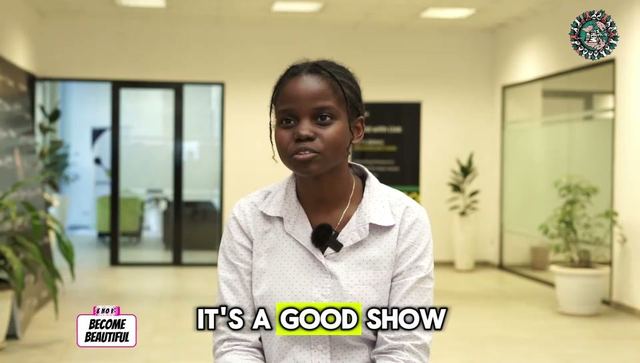
0:05BHoward University in Washington, DC.
0:07AOkay. And you’re a student here?
0:08BYes.
0:09AWhat year are you? I’m a freshman. And what are you trying to study?
0:12BPhilosophy.
0:13APhilanthropy? Philosophy.
0:15BOh, why philosophy? I like, you know, the logic behind things and the reasoning more than, you know, the emotional aspect of things.
0:23AOkay, that’s cool. So when did you know you wanted to study philosophy? I actually studied philosophy undergrad.
0:28BUm, I want to study philosophy. When I became in the 12th grade, I initially wanted to study psychology. I initially wanted to study psychology, but I didn’t want to do it anymore because I felt that it would be too easy. I didn’t want to deal with other people’s problems.
0:43AI get that.
0:46BI get that.
0:46AThat’s pretty dope. Yeah, I actually studied moral psychology, and so my degree was all about thinking about how people develop their, their, their values. And, you know, of course Questioning, you know, where do they come from? Are they natural? Are they developed over time? And developing your own posture or perception about that stuff. So that’s pretty much what I studied. And then since graduating, I’ve been studying cryptocurrency the last 4 or 5 years, been around the globe, spent 4 months in Africa, spent 2, 3 months in Asia.
1:10BHow was Africa?
1:11AAfrica changed the way I see money, the way I see poverty, the way I see, you know, what I’m here to do on the planet. Now I have a team in Nigeria I work with every week. I’m spending $1,000 a month on maintaining the team out there who are editing my content. We’re exploring what it looks like to help creators start creating services and products and automate and getting them in front of people, in front of their audience, so they can actually go from counting on, you know, YouTube, Instagram, and TikTok to pay them to actually having, you know, a body of people independently who say them creating, it means something to them. And, uh, yeah, man. So today I’m out here asking people, you know, what do you think about crypto? What do you know about crypto?
1:43BUm, the only thing I know that is like a technological type of currency that you can trade. That’s all I know.
1:52AOkay. And what questions do you have about crypto?
1:53BLike, what’s so good about it? Like, what is the determining factor that makes this such a great thing to use?
2:00ASo, so your question is what makes -- what’s so good about crypto? What’s the determining factor which makes it good to use? You know, I, I would say that it’s less about what’s good about it, and I think it’s more about what is the value proposition per se. Right, and the value proposition of Bitcoin, the first crypto, is that you know. Do you know what inflation is?
2:20BHmm.
2:20AYou know what inflation is? Yes.
2:22BWhat’s inflation?
2:23ACosts us. And where does that come from?
2:24BLike war, the economic state of the world.
2:28AThat’s what they tell us, right? But that’s propaganda. It’s actually there are people in the country who can print money any day they want, and when they print money, there’s more money, and so your piece of the pie is smaller. Your dollars are worth less. And so countries around the world, they all print money. And Bitcoin was designed to say, well, if they can print money and I have to work for it, where does that leave me? People said, well, instead of having to hold the dollar where they can devalue my labor every year as long as I live, I’m gonna hold Bitcoin because it’s only ever gonna be 21 million Bitcoin. So the proposition is it’s finally a currency where you can’t be inflated into poverty forever.
2:59BOkay.
3:00AAnd people see the US dollar -- the US dollar is a reserve currency around the globe. You know what that means? It means people used to have the dollar as a reserve currency. You could exchange, you know, almost any currency for gold. That stopped being true sometime around the ’50s, ’60s.
3:13BOkay.
3:13AAnd since then, many countries around the globe have been using the dollar as the reserve currency because they believe the US economy is stable. Like, their country might not be as stable. So like, oh, if I hold dollars, you know, that’ll really hold value in the long term. But the monetary policies of today have left a lot of people losing confidence in America, in our economy. But the value of the dollar that you hold It’s propped up by the demand of these people around the globe who are losing confidence that it’s actually worth holding. And so the question isn’t, will Bitcoin go up, make you a lot of money? It’s, will the dollar go down in value and your actual life as a professional and someone trying to make a living going to become exponentially harder because your dollars are worth less and you didn’t know to prepare for it?
3:50BSo it helps you prepare for the future.
3:53AIt’s a hedge against the world where the dollar is not worth what it was worth today. And so the question isn’t, is Bitcoin going up? The question is, is dollars going down? And if it is, what are you going to do about it?
4:06BWell, I don’t know, honestly.
4:09AWhat are you -- so what are you learning from what I just said? What do you hear?
4:12BLike you saying that the value of the dollar is steadily decreasing over time. So because, because they can print it.
4:22AYeah, I want you to get that because it’s propaganda with all caps.
4:26BSo I was like, damn, we can produce Print it, and this has the value. So it’s like, well, we need to increase everything.
4:34AMm-hmm.
4:35BIs that all correct so far?
4:36AWhat was the last thing you said?
4:38BIf we could just print the money, and like this is the value of a dollar, could get so it could get this, it could get that, then well, well, I just have to keep steadily increasing everything.
4:47AYeah, exactly. And what’s that going to mean for people in poverty?
4:50BThat’s about like having dollar values won’t mean anything.
4:53AMm-hmm. And what’s that going to mean for them?
4:54BThey’re going to get poorer.
4:56AAnd what’s that going to look like?
4:58BIt’s going to look bad, like we’re in the slums.
5:01AExactly. So that’s why I’m out here. I want people to understand that there’s a, there’s a world potentially 5 years from now where Bitcoin has changed the world, and it’s the worst news ever for working-class Americans and working-class Black people. And if we don’t get that, then I think we’re going to be kind of fucked. So my mission is to educate Black people around the globe. And so, yeah, man, I appreciate you taking this time with me. I have two more questions. If you could ask people around the world one question, what would you ask them?
5:28BAnything I want. Yeah. Why do we care more about the little dirt trout more than we cared about Nolan Wales?
5:42ATalk about it. What’s your answer?
5:45BI think that. We as Black Americans are so entertained by the media, you know, and so, and so many other factors and celebrities that we kind of lose the substance of life and our authenticity and what may, you know, what are, what this world is built upon. And we’re kind of losing our history. So when we put more entertain --
6:09AWe all feel that.
6:11BWhen you put more energy into other things That’s, you know, just gonna steady happen into the things that can make a change, then we kind of lose ourselves and kind of like, you know, prove a point that we’ll never progress.
6:25AHmm. Amen. So who do you want to be in the world?
6:29BI want to be a person that makes change, a person that when they look at me be like, he was different.
6:34AYou’re gonna be. You gotta say it. I’m gonna be.
6:38BI’m gonna be.
6:39AYou got to declare that it’s inevitable, man. You’re doing the work right now. Excellent. And then my last question is, we them niggas or nah?
6:45BWe them niggas.
6:47AOh, okay. We are?
6:48BWe are.
6:49AOkay. And there we have it, everybody.
6:51BHave a good one today.
6:52AYeah. And you think you’ll go to the Black Blockchain Summit next year potentially?
6:55BUm, no, probably not.
6:57AWhy?
6:58BI have no interest for it.
7:00AOkay, I get that. But our conversation didn’t change your opinion at all? Huh? Our conversation?
7:05BThey put like Very good insight. I didn’t know that.
7:08AYeah. And so I’m saying you have actually one of the -- it’s actually the only consistently organized Black organized crypto conference in North America right here on Howard’s campus. You go for free. It costs $170. You wouldn’t go?
7:20BMaybe one day, actually.
7:22AHey, man, you got to make it there. You got to make it there. But I appreciate you, man. If you don’t make it there, you can follow us on Instagram, on YouTube, and you’ll still get the information. I’m out here to make sure that you get the message. Appreciate it, man. You’re going to