0:14BAwesome.
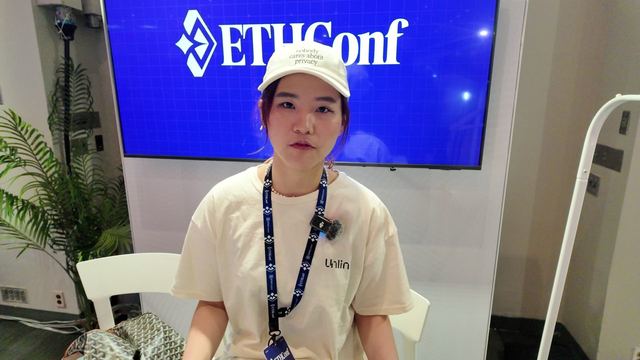
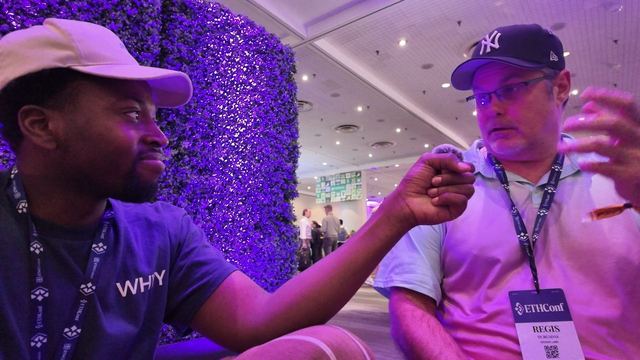
0:15AYou ready? Yeah. Awesome. So what’s your name? Ram. All right, what’s up everybody? I’m Maceo. I’m here with Ram. We’re at the ETHConf in Manhattan. How are you doing today?
0:25BI’m doing good. How are you?
0:26AI’m doing well. It’s been remarkable to be here. I think Ethereum is in a, you know, at an inflection point many would say, as institutions are recognizing this technology’s readiness to be adopted in the settlement layer at scale. I think it’s been also just fantastic to see builders I met around the globe, you know, here in New York, thinking united about where this technology is going and how they have institutions really embrace them. So I think it’s really been cool to see the community at a, I guess, approaching things together. So what are you working on?
0:55BSo I run a company called OpenLedger. I’m one of the core contributors. And OpenLedger’s biggest focus is to enable people to build custom AI models and agents. So we provide end-to-end stack where you can collect data and fine-tune AI models on top of us. Our focus has always been making sure that people who own data and can contribute data to build any kind of intelligence have to be rewarded, right? Going forward, intelligence will become a commodity. Everyone will get access to that. But if you can commoditized data and we can get rewarded for it. I think that’s probably the best thing. Data as an asset class has to be there outside, and we’re working towards promoting that. And we have close to about close to almost a million plus users who have contributed data to our network. We have, I would say, more than 50 plus models that have been fine-tuned till now, 10 plus projects using these models launching products on top of us. Yeah, that’s what OpenLedger is as a product, and that’s what I’m doing right now.
2:04AOkay, that’s remarkable. And where are you from?
2:06BI’m originally from -- I used to be in Singapore. I spent a lot of my time growing up in Singapore, India, and all these places. Right now I live in SF, so San Fran, Singapore.
2:21AHow does that multicultural, I guess, experience of growing up inform how you approach building or solving problems in the world?
2:28BSo when you’re multicultural, you get to see both sides of the world. You get to know, you get to meet a lot of people from different parts of the world when you travel. I think the biggest thing that blockchain personally, why I like blockchain is again because it kind of brings people to the same level. Anyone could hold a wallet. It could be someone who’s in Nigeria who’s like trying to survive, trying to grow from there. who needs freedom of money, or it could be a billionaire sitting in New York who wants to make sure that his assets are protected, right? Everyone is pretty much using the same blockchain, right? It brings the same level of freedom. I think that’s what I love about blockchain. It gives that freedom. You’re not bounded by any kind of boundaries, which we shouldn’t have. Humans created these boundaries, and I think blockchain breaks them down. So from various people that I’ve met, What I’ve understood is that people want freedom, people want to expand, people want access. Blockchain provides that, and that’s one of the reasons why I got into this space as well.
3:37AI love that. And I’m curious, what do you feel like most people outside the crypto space don’t get about this moment in the room when it comes to technology?
3:44BI think people outside crypto space think crypto is just like, I don’t know, like a trading thing or a used for payments and stuff. They just see it like forex and another commodity or something like that, right? But crypto is more than that. It’s the tech behind which is pretty good. I think there’s one point of time where Vitalik spoke about this. One of the best and worst things about crypto is that there’s a token, right? So that kind of creates a speculative element about crypto which we’re not able to avoid. But again, outside world, again, that’s the kind of picture they have about crypto.
3:44BI think it’s slowly changing with how people have seen Bitcoin, how people have started speaking of Bitcoin as the digital gold. They see it as an asset, which is good. You know, they can know that it gives access to freedom. So that education has been like And also the current government is very pro-crypto. It’s just good for the space because of the amount of visibility it’s been getting. So yes, so I think it’s been changing a lot from what I know. But one thing that worries me is like if there is anything which happens wrong in the industry, if there’s any manipulation at play or something like that, it gives a very bad narrative to the industry.
5:14AAbsolutely.
5:14BSo sometimes when I talk to these people who are building the AI space, when we say that we are a decentralized AI company, they think twice, right? So I think that has to change. We have to seriously build products which can be used by people. So yeah, so that’s what I hope not to happen. With all of us building, I see a lot of people building right now, programming and stuff. So if we all focus towards the larger goal of what blockchain was initially intended for, I think that will make a change. Okay, actually.
5:51AAnd your message for the builders?
5:52BKeep building. You know, what I love about a bear market, or an event when it happens in a bear market, is that you get to see builders who actually want to build. And who actually figure out problems that needs to be solved and start working on that. It forces people to do that instead of just speculating. So I would just let people build, and it’s probably the best time to build. You have so many tools. One single person can build a great company out there. I think it’s the best time ever. Ever.
6:27AOkay, sick. And where can we find you on social media?
6:30BYou can find me on Twitter. I’m @RamkumarTweet on Twitter, and you can also find me at @OpenLedgerHQ. That’s our page, so you can know updates about OpenLedger from there.
6:43AAnd can you spell your personal Twitter so we can tag you? We’ll tag both.
6:46BIt’s @RamkumarTweet. T-W-E-E-T.
6:53AOkay. Yeah, awesome. I like to say booyah to close out our interviews, so let’s say it. Yeah, three two one. Booyah! Booyah! Appreciate it, man.
7:02BNice meeting you, bro.
7:03AVery nice to meet you too.