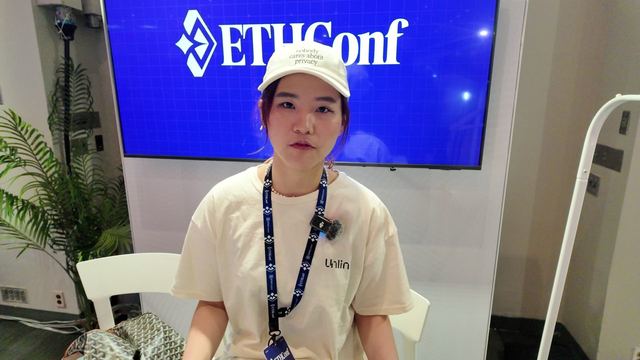
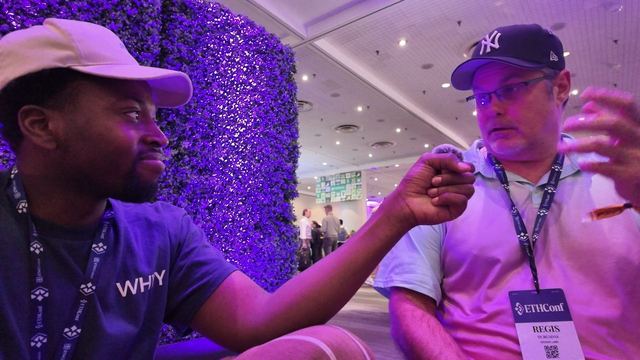
0:04CI’m Juanpi.
0:05AYou can just hold there. And where are you two from?
0:10CArgentina.
0:10BI’m from Ireland, but I live in Buenos Aires, Argentina.
0:14AOkay, very sick. And what are you working on?
0:16BI work at Solana Foundation.
0:17AOkay.
0:18BSo I do a lot of privacy stuff there, try to bring privacy and cryptography into the crypto world.
0:24CIncredible.
0:24AIncredible. What about yourself?
0:25CRight now I’m doing AI consulting for Latin American companies.
0:29AOkay, fantastic. And so, you know, I’m curious, what’s one thing you feel like people outside crypto aren’t getting?
0:35BI think a lot of people who are outside crypto who don’t get crypto are people who’ve never experienced problems with their bank or corruption. Like people in the US, they kind of place a lot of trust into the traditional finance system because they’ve just never had a problem with it. So I think like what they don’t get is that this solves a lot of problems for people in the world. People are actually using it. Like it’s not like this potential thing that we’re trying to build. It’s a thing that actually exists. At least that’s been my experience.
1:05AAnd so, being someone from Ireland, how do you think about that? Like, how does your Irish context inform that take you just offered?
1:11BI mean, I think it’s more about living in Argentina. Like, I use crypto on a day-to-day basis. There’s a lot of issues with the current financial system in Argentina, and people don’t really trust the peso. So, people want to get into other currencies and hold their funds in USD or other things that actually are going to maintain their value. There’s a lot of -- not a lot of trust in the financial system there. So, most of my money I keep in crypto and stablecoins.
1:38AOkay, very cool. What about yourself? What do you feel like people aren’t getting about crypto?
1:42CI think, I mean, there’s a lot of misunderstanding, like there’s a lot of bad reputation for crypto. People think that it’s scam, like investment, like you’re going to lose all their money. They don’t know about the technology behind, like blockchain and the real use case that it solves. And the problem that I actually see people is that, at least in Argentina or in my group of friends, is that they really don’t care about the problems that they have. They, I mean, they don’t To search for a solution, they just blame and complain, and that’s all. So yeah, I don’t know. People that actually want to find a solution, they will connect more with crypto. That’s 100% sure.
2:19AOkay. Tienes una mensaje para the people of Argentina about crypto?
2:25BOkay.
2:26CYeah, I mean, like, I don’t know. Like start using like fintechs like Lemon, Bello, all those stuff, and I don’t know. You will be using crypto without even knowing.
2:36AVery cool. And if you were a teenager, where would you get started?
2:41CSolana. Yeah, probably. Actually, I don’t know.
2:48BJust what -- actually, one piece of advice for teenagers. If you want to get into crypto, don’t start with a centralized exchange. And the reason you’ll know if it’s a centralized exchange, if you don’t see your private key, then it’s not your crypto. You don’t actually own it. It defeats the entire point of what you’re doing. So not your keys, not your crypto. Make sure you use decentralized places to get into crypto.
3:07AOkay. And you say you’re from Solana Foundation?
3:09BYes.
3:09ASo what is Solana?
3:11BSolana is blockchain. It’s layer 1 blockchain, and it’s a place for internet capital markets. You can trade anything with anyone on Solana. You can -- it like decentralizes the crypto world so you can engage in like fiat and TradFi. You can actually trade in the same places as Wall Street at the same level.
3:32AAnd like what differentiates it from Bitcoin or Ethereum?
3:36BSo it’s way, way faster. There’s a lot of things actually happening. There’s like TradFi and stuff on Solana. And you can basically trade like anything that you can already trade on Ethereum on Solana, but faster.
3:50AOkay, nice. Great.
3:51BYeah. All right.
3:51AThank you. You want to shout out your socials or we can tag you?
3:54BYeah, you can find me on Twitter. I’m Cat McGee. That’s my name.
3:58AHow do you spell it?
3:59BC-A-T-M-C-G-E-E.
4:02CMine is WhoCrypto. H-O-O-Crypto. I probably need to change that.
4:07AYou said you were doing stuff around agents. Is that what you said?
4:10CYeah.
4:10ASo can you speak a little bit about what that means?
4:13CI mean, I’m just a like helping companies that don’t know shit about AI to like actually integrate it. Like it could be workflows for internal processes. It could be, I don’t know, maybe you’re a media company and you want to start generating image videos, like just basic stuff to be honest.
4:29BOkay.
4:29AAnd so for like my great aunt, my great aunt uses Gemini, doesn’t use ChatGPT even. What would your message be to her about like where AI is going?
4:35CYeah, man, I’m afraid to be honest. I’m afraid. But I’m --
4:40Byou know what would make AI better, right? So we are trusting a lot in these massive AI labs and we have learned through a lot of experience also in crypto not to trust these massive companies. They, you know, for example, like Cambridge Analytica with Meta, they just sell our data because we trust them with our data. Or banks, they just do whatever they want with their money and then they get government bailouts. Like, we have learned not to trust these companies. We trust AI labs to submit all this research and say, yeah, like this is real. This is actually what our models are doing. Our models are safe.
4:40BThey can be used by anyone, but we have no way to verify it. And there’s a lot of things that we could potentially have with like this combination of crypto and like blockchain and AI where we can verify the claims that they make. And they don’t have to actually reveal all of their weights and their biases and everything in their models, but they can submit hashes, they can submit claims and enough information so that interpretability researchers can verify the claims that they’re making on their models so that we’re actually using the models that they say that we’re using and not some sort of cheaper or unsafe version of it.
4:40BBut I think maybe that’s a good way to explain what crypto is, that it’s verifiable information. So instead of trusting these big guys, we can actually verify that it’s true. But yeah, I just think there’s a lot of If we want the world to be better with AI, we can use blockchain to verify this.
5:54CI agree.
5:56BI just kind of interrupted you there.