1:02A: This is for y’all. And also, rest in peace, Sugar Plum, that’s my Shih Tzu.
1:06B: She died about 10 years ago.
1:07C: Appreciate you. Woo-hoo! Yeah, you have questions right? Like, what did he just drink? Why is he honoring his late Shih Tzu at a basketball game? Who are the people even being decentralized?
1:20B: What does that mean?
1:22C: Well, that’s why I’m here. Let’s find out. New York doesn’t ease you in. You step out and you’re already in it. A few million strangers, all going somewhere all at once. I grew up a couple hours away until close enough that New York was never some distant idea. It was a city you took the bus to or trained to. A place I get to go and see my friends from high school and college. That’s the thing about this city, it’s stacked, bodegas under glass towers, old New York holding up the new one And most new people have no idea what the old one even looked like.
1:40C: Oh, not you, sorry. This time I linked up with some friends out here in the city. People are already connected, already part of what I came for, an Ethereum conference. The kind of room where we’re negotiating where technology is going. But before any of that, you eat, you walk. You let the city remind you why people around the world dream of being here. And somewhere between these streets and the conference floor, that’s where the story really starts. My name is Maceo Whatley and I’m the founder of We Them Media. Over the last five years, we’ve been researching how cryptocurrency and decentralized technology can empower everyday people around the world.
1:40C: And that’s why I attended the Ethereum conference in New York City a couple weeks ago. To better understand and share with you all how Ethereum is working to show Wall Street it is ready to be the global settlement layer for financial systems. And we’re here to show you what it means. Let’s go.
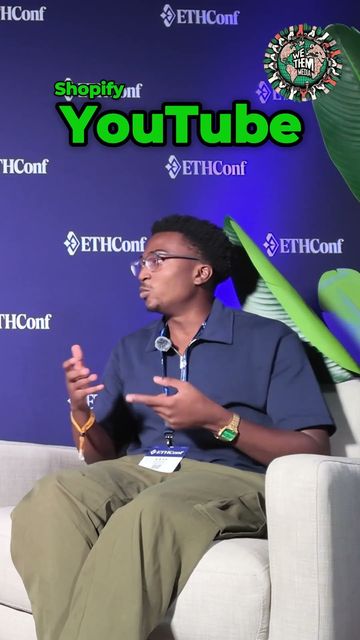
2:51B: Well, what’s up, everybody? I’m out here. I’m Maceo from We Them Media. We’re at ETH Conference right here in Manhattan. This is the first ETH Global conference they’ve ever organized. And I’m here with? Elomukoro from Credentials.
3:02A: I’m the co-founder.
3:03B: Heck yeah. And so tell us a little about where are you from?
3:05A: So I’m from Houston, Texas.
3:07B: Okay. How old are you? 26. Okay. Wow. Like myself, 26. Yeah, young.
3:12A: So what’s it been like for you being a young builder in this ecosystem?
3:15B: A young black man building in this ecosystem?
3:17A: That’s a very nuanced question. I think it’s been great, right? Right. Like there’s not many people that are our age and of our skin color.
3:24B: So being able to add that perspective. Building real products.
3:28A: Building real products. That’s why
3:29B: I want to say that too.
3:30A: Exactly. There’s not many people doing that. So being able to like be in these rooms with people that have all this experience and all this capital and everything like that. And also being able to provide value has really been like awesome to witness in this time period. Yeah.
3:43B: So. Okay. And so tell us a little about credentials. Yeah,
3:47A: so at Credentials, basically what we do is we provide a unified way for lenders, neobanks, and fintechs to be able to verify people’s income in the digital economy that are earning from platforms like Shopify, YouTube, Upwork, TikTok, right? We find that there’s a huge problem in the world right now. These subset of earners really have a hard way or really have it hard when it comes to accessing credit. And we’re basically here to make it very easy for them to access credit to get to get access to credit edit that part out
4:20B: hear that okay but that’s cool that’s cool and so how has it been for you actually working on this product things where you are right now how would you describe the face right now yeah
4:29A: so like um we’ve actually been working on this for some time now about two years um but over time the vision has gotten a lot more clear and i think it also has to do with timing as well this space really wasn’t ready for what we were building like two years ago. But over time, like when you look at neobanks and fintechs, right, they’ve done everything from the stablecoinback cards. Then, you know, they’re now in the yield phase, like yield products. But the next frontier is unsecured credit. And now the timing is starting to get a lot more ripe. And we’re seeing a lot more interest in what we’re building.
4:29A: So people can actually lend to individuals and businesses. is through Crypto Rails.
5:16B: Yeah, yeah, and you know, it’s remarkable. You’re building, you’re thinking about real use cases. You know what you just said, right, around lending. I think that’s remarkable around credit, right? And I’m curious, like, what’s your background? How did you even identify this as a problem? Like, how did you become qualified to even explore this design space, this problem space?
5:31A: Yeah, so two parts to this, actually. I first started off unqualified. I actually experienced the problem while in college with my co-founder. We had a website business, you know, We Were Just Like Making Money Like I Was Even A Freelancer To Making Money From Random Places But When I Tried To Access Credit They Asked For So Much Documentation Just To Reject Us In The End
5:54B: You Guys Been Doing Paperwork Though
5:57A: Man Like They Just Had Me Doing Paperwork And Stuff Like That So Look After That Like I Was Like Okay That’s A Problem And You Know I’ve Heard This My Whole Life All These Types Of People That Are earning Online In Non-traditional Formats Really Struggle To Access Credit So like I didn’t have the solution for it at the time. The solution came when I started to work at the Ethereum Foundation in specific PSE, privacy of scaling explorations at the time. And I worked on zero knowledge like proofs and like I was a lead lead dev row and I was onboarding people to open source tools.
5:57A: And that was actually the solution to a lot of the problems that we had when it comes to like being able to streamline that process of accessing credit. Right. Right. So I put two and two together, the problem, the solution. And I’m like, oh, yeah, we need to start a company and do this thing. Right. So that’s okay.
6:51B: And for those who don’t know, like, what is what is your knowledge proofs mean?
6:54A: Yeah. So, you know, I don’t actually explain this term too much, really, because
7:00B: he’s overqualified to break it down. So let’s hear it.
7:03A: Basically what zero knowledge proofs are is it’s the ability to verify that you know a certain piece of information or a certain piece of data without actually revealing the underlying data itself. So in the case of like what we do, we can verify people’s income without even seeing the data ourselves, right?
7:24B: how can you possibly do that
7:25A: it’s you know that that that’s fine you want but definitely it’s just mathematics right at the end of the day is polynomials right you don’t know polynomials that’s okay
7:35B: we’ll break it down
7:37A: don’t worry yeah but yeah it’s all just like mathematical equations that equal to a true or false statement right in the end so that’s that’s how it works
7:45B: okay awesome and who are the people that you’re targeting to be used to your application like who are the people you’re really solving a problem for
7:51A: yeah so we are beat to beat C2C company. So we kind of are solving the problem for two sets of people. The businesses being the neobanks, the lenders and the fintechs. They have no visibility into their like users of where their income sources are. So we’re helping them make that a lot more clear so they can actually like give credit and expand their product offerings in this competitive like crypto space that we’re in today. And then you also have the consumer that is actually the users of our, the customers that we aim for. And we’re helping them, you know, be able to verify their income and share that with these institutions so they can access credit or whatever financial services, a credit card, buy now, pay later.
7:51A: So yeah, those are like the two sets of like users that we essentially are working for.
8:46B: Okay, man. And congrats. Congrats on where you’re at. I think it’s awesome that you’re right in that intersection and being able to serve people on both sides. It sounds like you’re in a space with a massive market.
8:56A: Oh, for sure. Yeah. And
8:57B: you’re an early mover. 26 and move it early. I like that.
8:59A: Yes, sir. Yes, sir.
9:00B: And so what would you say is a long-term or are you trying to build to be like public infrastructure? And I guess I think of public goods is something that I like in this crypto space. I think it’s really cool that we can see emerging. Does your product evolve to be a piece of decentralized technology? technology, or is it something privately owned in the long term? Yeah. There’s no, it could be either. I’m just curious.
9:23A: Yeah, you know, even come from EF, like I’m very big on public good infrastructure. At this time, it is private, but I can definitely see- Get that money. Yeah. I can definitely see over time, like we’ll begin to open source some of our like infrastructure to where like anybody will be able to verify their income without needing us to do so. But as of right now, it is like a private institution So you get that $1 billion EF grant Hey, then we can change some things Wow,
9:55B: that’s sick, go ahead
9:56A: Yeah, I was going to talk about something else, but it’s okay
10:02B: What were you thinking about?
10:03A: I was just thinking about like, you know We’re also working outside in emerging markets as well To establish open banking Okay,
10:16B: we’ll talk about that, yeah Yeah, like
10:18A: First of all, what is open banking for those who don’t know Open banking is really just the ability To, you know, be able to access Financial statements From any bank, right Yeah, in a Compliant way And right now If you look at, like, countries like Ghana And Kenya, etc. There really is no Open banking infrastructure to be able To easily access your statements without needing to like do that whole PDF thing and everything like that. So we’re actually in talks with the government and stuff on like building out open banking infrastructure as well. That’s just like it’s a long it takes a while to like close those things.
10:18A: But that’s something I’m very excited about, like enabling open banking in these like emerging markets.
11:05B: No, I think that’s incredible. I know that you were just in Africa. How has that shaped your perspective on the opportunity in that space? I’m curious to hear.
11:12A: Oh, my gosh. Yeah. You know, I’m Nigerian, too, at the end of the day. Isoko.
11:18B: Isoko. Damn, I didn’t know that one.
11:20A: It’s a new one. You haven’t heard of it, huh? Yeah, it’s a smaller one. From where?
11:25B: What state?
11:25A: Delta state.
11:26B: Okay, okay, that’s cool.
11:27A: Yeah, yeah, yeah. Isoko. Yeah, Isoko. So I would say, like, going to Africa and being in Africa really has opened my mind just in terms of, like, you know, how different it is from the West and how you also have to build for that region as well. It’s not like you can just take a product from the West or take the product from the U.S. and just take it there and think that it’ll work because it’s not. It’s fundamentally different. It’s relationship and trust-driven. and actually you know the market is just not is not as established as the United States so there’s a lot of figuring out that needs to happen by being on the ground by actually talking to people and developing those relationships and that’s something that I learned in my travels throughout Africa
12:21B: okay incredible incredible man and then my last question would be like you know when you see this ecosystem when you see this technology what do you feel like everyday people aren’t getting or taking for granted that you know you could and how would you address that
12:35A: yeah so looking at this ecosystem right now um it’s very institutional you know even if confident where we’re at right now there’s a lot of institutions that are here and that’s cool um and it’s that time for them to come in um but when you look at the west i think we’re really focused on yield like if you look at actually look at all the booths here most of them are like yield driven right or institutional privacy, etc, etc. But honestly, like, that is not really the major focus outside of the US. I think outside of the US, we have, there are fundamental problems that actually, you know, that this technology is actually solving, like FX issues, where like with the currency devaluation, yeah, and being able to like save and stable coins, right?
13:24A: Or other problems
13:29B: in order to hedge against inflation.
13:31A: Yeah, to hedge against it. Exactly. There are other problems like, you know, currencies are not actually communicating with each other. Like Nigeria and Ghana being right next to each other.
13:42B: Nobody wants that Naira.
13:43A: Nobody wants that Naira. No one wants the CD. So you have a problem. Like, you know, and Stablecoins is also solving that problem by making it easy to just send money to someone in like a second without having to like really adopt too much of the infrastructure and change like what you’re doing. What I Want People To Realize Is The Use Cases Are Actually Abundant And They’re Necessary Now You May Not See That In The West But Just Look Outside Look At Your Neighbouring Country Like Latin Has The Same Problems Africa Has The Same Problems Asia Has The Same Problems And I Think This Technology Was Really Fundamentally Built For Them Yeah Yeah
14:26B: Oh Yeah And You Have A Message For The Ecosystem
14:28A: A Message For The Ecosystem them. I’d say, you know, it’s a bear market right now, but it’s actually a builder’s market. Actually, my friend Maceo told me that.
14:41B: Maceo. But Luciano told me that, so we’re back to Luciano.
14:44A: Back to Luciano. Maceo, got you. Sorry about that.
14:46B: I called him Elo at first. That was wrong.
14:48A: We’re both learning. Yeah. So it’s a builder’s market. And what I’d say to that is just like, you know, this is the best time to get the relationships and, you know, actually build what matters because when all the people start to come, that’s when it’s all annoying. But right now it’s just signal. So just go out there and connect and build and create something great.
15:12B: All right, man. You want to say where you’re coming from one more time? Yeah,
15:18A: so coming from Houston, Texas and... Representing your company? Okay, coming from Houston, Texas, representing credentials. That’s CR3Dentials. And
15:31B: then we like to say Booyah to close out our interview So 3, 2, 1 Booyah