1:49Maceo: That’s the thing about this city, it’s stacked. Bodegas under glass towers, old New York holding up the new one, and most new people have no idea what the old one even looked like. Oh, not you, sorry. This time I linked up with some friends out here in the city. People are already connected, already a part of what I came for, an Ethereum conference, The kind of room where we’re negotiating where technology is going But before any of that, you eat, you walk You let the city remind you why people around the world dream of being here And somewhere between these streets and the conference floor That’s where the story really starts My name is Maceo Whatley and I’m the founder of We Them Media Over the last five years, we’ve been researching how cryptocurrency And decentralized technology can empower everyday people around the world And that’s why I attended the Ethereum conference in New York City a couple weeks ago to better understand and share with you all how Ethereum is working to show Wall Street it is ready to be the global settlement layer for financial systems.
1:49Maceo: And we’re here to show you what it means. Let’s go. What’s up, everybody?
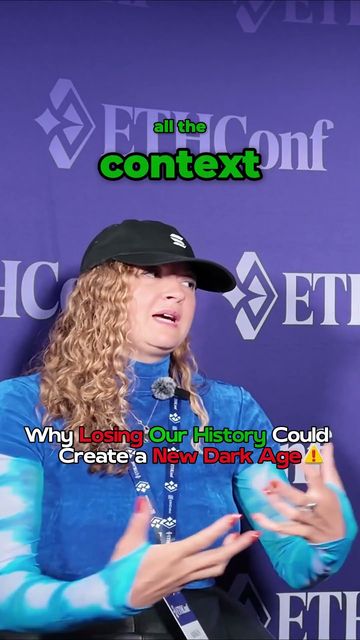
3:36C: We’re here at ETH Conference in Manhattan, New York. It’s 2026. It’s June 8th. And I’m here with Arikia Millikan, the founder of CTRL+X. How are you doing today?
3:44A: I’m great. How are you?
3:45C: I’m doing well. I’m excited to be here at BSM. I’m excited to be in New York. You’re in from Berlin. And so what brings you to the ETH Conference this year?
3:53A: I was in New York City anyway. I try and get over here once a year. I used to live in New York, and I was gifted a conference pass by one of my advisors, so I thought, better come check out the scene.
4:05Maceo: Okay,
4:06C: and what are you working on? What has the scene be of interest to you?
4:09A: So I’ve been building CTRL+X for the past 10 years in various capacities. It started off as a research project, and I started building the software about two years ago with a team of developers in Berlin. And we are licensing journalistic assets on-chain and monetizing those assets with micropayment transactions. So we’re really addressing this problem that’s been plaguing the journalism industry for decades, where the industry has chosen monetization pathways through namely the advertising industry, data mining of readers, and most recently the subscription model. and those three models alone can’t support what’s developing and passing through the rails of the digital publishing industry. So what CTRL+X does is enables readers to bypass the subscription model and access articles one at a time via micropayment transaction.
4:42A: because right now people are like hitting the paywalls and leaving or like we don’t want to sign up and subscribe for one more thing they don’t want the recurring payments and even if they do want to subscribe then they’re not accessing the entire archives of a publication so it’s always been a kind of like imbalanced problem and we’re introducing a new revenue stream into the industry and allowing journalists to really take control over the maintenance of their own assets
5:54C: and so what i’m hearing is that now people as opposed to necessarily uh paying for like i wasn’t i was a student writing college and we had like uh like where all the student journals are right we can go search through all the academia stuff but you’re saying as opposed to subscribing for like that whole thing now i could pay for access specific like articles isn’t one i publish and that person will receive that money or is that is that what you’re describing or something different
6:20A: yeah so the creators do receive the funds directly which is also a product of using crypto rails for this because it’s a peer-to-peer transaction that eliminates centralized intermediaries. Like, you know, we’re all familiar with DeFi, so crypto eliminates the bank as a central intermediary. In the journalism world, the analog is that peer-to-peer transactions for article-based content eliminates the publication as a central intermediary. And that’s important to do right now because the failures of the media industry’s business models over the past 20 years has led to a financial collapse in the industry where publications are going out of business, going offline. The databases that hold the content in the Web2 ecosystem are changing hands then to The New Management or Just Being Completely Deleted If Nobody Wants To Pay For Their Maintenance Anymore So We’re Losing Troves Of Human Historical Knowledge And So By Decentralizing The Process Which Is What CTRL+X Is Facilitating We’re Enabling Authors To Maintain Their Own Archives And Then Transact With Those Archives From A Point Of like they’re managing their own ownership and so they’re deciding what systems they want to be able to access their content and so as we move into the agentic era the authors can now control if they want agentic systems to be able to automatically access and purchase content from them including if AI companies want to use their assets for training because up until this point AI companies have largely just scraped the open web and stolen millions of journalistic assets that do have a value.
6:20A: It’s just not a value that’s been honored by these companies up until now or up until they’re forced in a court of law to have to pay copyright infringement seats out by the billions. So this infrastructure has really been missing from the whole process and now it’s gotten to a point where everything’s kind of ready. All the industries have matured enough and from the journalistic side, there’s no denying the need for something like this to exist anymore. So we’re ready to blow it up.
9:03C: Okay, that makes a lot of sense. And why would you say, like, what do you think is, like, the biggest issue, right, with these losses of, like, human knowledge, right, like, these things disappearing, these archives disappearing, like, what do you feel like is the biggest, like, yeah, like, what’s the biggest impact you see?
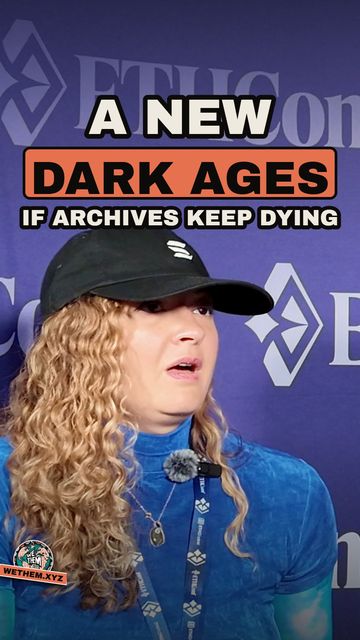
9:19A: I think there is something really concerning about the thought that in 50 years when we try and look back at this moment and figure out what happened, like, you know, from the news perspective, like how events actually unfolded or like all the context around that of like people observing reality as it’s unfolding and understanding what else was going on around that moment. I think we are in for sort of like a new dark ages if we let things keep declining at this rate because it’s already happening at scale and there’s also something a bit concerning happening with the Internet Archive lately which is kind of like the failsafe of the whole human knowledge economy because the Internet Archive creates Digital Backups of like mainly media sites as they’re published but a lot of different other types of content to you and The Internet Archive acts as a sort of library.
10:26A: It’s an archive. They know they don’t own the rights to the content But they’re also not selling it. So their role is to protect these content assets and What media companies are now doing in the dozens is they’re they’re telling the Internet Archive that they don’t want them to archive their journalistic works anymore because they’re seeing that AI companies are using Internet Archive as kind of like a portal to be able to scrape more effectively which isn’t what it was designed for and so these AI companies are in violation of the Internet Archive and the media companies and the authors that they’re scraping from but they’re taking the kind of like Silicon Valley approach of better to ask forgiveness than permission.
11:23C: Move fast, break things into their business okay.
11:27A: Yeah so they’re moving fast and potentially breaking the entire record of human knowledge in the process so if we don’t figure out ways to decentralize the ownership and management of that knowledge base we’re going to lose it and the implications questions are pretty dire. I mean, if we don’t know what happened and what’s happening as things continue to unfold, we just won’t have a sense of reality to be able to make decisions and render democracies.
11:58C: Yeah, I agree. I think we’ll be rendered kind of powerless.
12:01Maceo: We don’t
12:02C: know what environment we’re navigating in the first place, so the fact that we’re associated and get the kind of outcomes we want. I’m curious, why are you the person that solved this problem?
12:11A: So I have worked in the journalism industry for the past 20 years. It was my first real job in FreerProp although I did study engineering as well so I’ve always been kind of like in the middle which is a unique place to be in this industry not being just like on one side or the other but having a builder mentality and a journalistic mentality and understanding how the industry actually works and how different types of like writers and editors and all the different roles inside of a publication interact and so I started tackling this problem and kind of like visioning out the solution about 10 years ago because you don’t want to just come to the table with the problem set and not give people a way forward because then that just causes a lot of like doom and panic and I wanted to make sure that like when I brought CTRL+X to market, it was in the form of a solution that was immediately able to offer resources for individuals working in an industry that’s becoming more and more constrictive.
13:01A: So we’re almost to that point now. We’re raising our pre-seed funding round and yeah, I’m just like excited to be able to give back to this ecosystem that has been systematically denied access to technological resources that were outside of the advertising and data mining areas that would be like immediately profitable. because this is a project that looks at the long-term trajectory of content and is really building infrastructure that’s meant to last for the ages.
14:10C: And so like I myself I don’t necessarily do writing or I do this and so would I be someone that would use control x and if so how would that work?
14:17A: So in the initial phases we’re focusing on the written word that’s my specialty with just Just Being Able To Kind Of Like Work With It As A Craft And Process It But Eventually The System That We’re Building Which Is A Content Licensing System At Its Core Will Be Able To Theoretically Interact With Any Type Of Content So We Could Have A Licensing Marketplace For Video Content For Short Form Video But Also Every Video that has speech happening also has a text-based component if you were to drive a transcript from that video and that transcript could have value in a marketplace.