0:51BAnd he’s talking about Eric Cooper, who is the author of Nightseeker. Okay, I accept that. I’ve been in business for 25 years.
1:04AShe’s a natural.
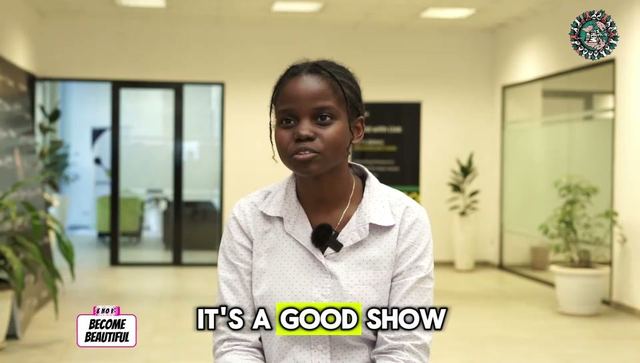
1:05B20 years here in Trenton. It’s a used bookshop. We are a community hub. People come in. We’ve had weddings in the bookshop. We host game nights. We play Scrabble. We play mahjong. We host local authors. And I love our local authors here in Trenton. I think we have more authors per capita than any other city. Everybody has a book. And we allow them to come and do book signings in our bookshop. So we wanted to just create a space where everybody could come and meet authors, meet their favorite new author. And I think we had a good time today.
1:44AI’m curious, you grew up here?
1:48BI did. I’m born and raised in Trenton.
1:50AWhat was it like for you growing up here in Trenton? And how do you see that as compared to what it is like today? Okay.
1:56BMe growing up in Trenton. It was kind of like a different world then. A lot of people don’t talk about it. They talk about, oh, how Dunham’s used to be downtown and you could walk through downtown. There was a lot of bustling and hustling and buying things. But when I grew up, we had Black-owned businesses in my neighborhood.
2:17AHmm.
2:19BThe guy that we used to-- Mr. Smitty, the guy we used to buy fish from around the corner on Calhoun Street. I’m from Hanover Street. A Black guy. The corner stores were all owned by Black people. So we grew up with--
2:34AI can’t even imagine.
2:35BBlack people in businesses all over Trenton. All of the businesses were owned by Blacks and slowly saw the corner store buildings are still there, but they’re owned by other people who don’t live in this community. So me growing up, we had Black teachers. Our teachers were Black. We saw examples of ourselves. All around here. And we really don’t see that as much anymore. There’s still some there because I’m a Black business owner. We still see it, but not as much.
3:07AHmm. And so what are some of the standout Black businesses that you do see then that have persisted, maybe?
3:14BWell, I’ve been in business for 25 years, 21 years down here. I want to talk about Skillet Cafe. I think they’ve been here for about 6, 7 years. Um, it’s a breakfast shop and they do everything top tier. Like, you’re going to get a good meal there, you’re going to get good service. So Skillet Cafe. Um, other Black businesses, um, the Sunrise Luncheonette up down the street on Warren Street. Um, they’ve been down here about as long as we’ve been down here, and they’re still making breakfast and lunch and serving it with a smile. So those are 2 That I can think of off the top of my head right here downtown.
3:54AWell, I appreciate you sharing that. I actually use the AI to transcribe all my interviews and videos.
3:59BOkay.
3:59AAnd so that’ll even go up on my website, and I’m sure someone’s gonna be looking up one day Black restaurants and they’re gonna end up somehow finding you through the AI. So I hope that it cites you. Okay. I, um, but you know, it’s been really remarkable today. I, uh, I met 2 former presidents of the NAACP here today.
4:16BNice.
4:16AAnd I said, what? You know, I don’t think I go places and that happens, you know?
4:19BOkay.
4:20AAnd I’m curious, is there a very pronounced legacy of these, like, kinds of, I guess, civic action, civic engagement, Black people doing things like that in this community? Is that a big thing here in Trenton?
4:33BI just want to say, I hope so. We’re, we’re a large part of the population here in Trenton. So I would say I hope so. And I hope that continues.
4:46ABut I guess, like, having been here over time, is this something that you’ve already observed? You’re saying you hope so, like, in the future?
4:51BYeah, I’ve heard-- I’ve observed it. I’ve observed it in the past, and I hope to observe it more in the future.
4:57AOkay.
4:58BYou know, I’d like to see some of our young people get involved. So you met 2 former presidents. They may have been at a certain age, right? It’s time for people your age to step in and start leading now. So that’s what I mean by I hope so.
5:15AI got that, and I appreciate that. Okay. Do you have anything you’d like to say to the people of Trenton?
5:20BTo the people of Trenton, I love you. Thank you for loving me. We got to do better by each other, but we can do it, and we will. Thank y’all. And thank you. That was so nice of you to ask me to sit down and talk with you.
5:35AIt’s really nice to meet you. I think this has really been an impressive event. Like, you know, I think I’m always excited to go see what Black people are doing. And just to find out there’s a Black book fair in New Jersey. I said, this isn’t my Saturday plan, but I feel like this should be my Saturday plan. It’s going to be from 12 to 7. 12 to 7. That’s a lot of my day. But I just-- I sat here during this open-- I sat in this room for like the whole time I’ve been here. I’m sure my aunt’s like, where did Maceo go? You know? And so it’s been-- I’ve seen remarkable poets, remarkable singers. I got to speak to like authors and their families outside. And I’m just really impressed by the culture I’ve seen here today.
6:10BWell, I’m glad that you came today and you’re always welcome. Welcome back, always.
6:15AI’ll be back, I’ll be back. You have to worry. I’m excited to come to these open mics. I’m gonna have a gimbal next time and I’m gonna be more involved.
6:21BWe do them once a month at the bookshop, so you’re always welcome.
6:25ANo, definitely. And then I have one more question. Oh, um, so if you could ask people around the world one question, what would you ask them?
6:31BI would ask people around the world, what is your dream and what are you doing And what’s your answer to that? I’m doing it every day. I wanted to have a nice event with a good vibe. I wanted to bring Black people and anyone who supports Black people. As long as you with us, you’re welcome. You know, we’re the main people that open the doors and invite people to the cookout. I just wanted to have a nice vibe. In this area. So I created it. So this is one of my dreams. I wanted to be able to be a person that kids look up to. And I think I do that because we offer free books to kids at my bookshop. Local kids don’t pay for books, as many as they can carry.
7:23AThat’s beautiful.
7:24BThey, they can, they come in and they can get them. I was able to provide that. Um, my family, I’m, I’m 30.
7:30AYou do that now?
7:31BYeah. I’m going to be married 31 years at the end of the month. And that’s my dream. My daughter is outside with her husband. She’s an engineer. She works at a robotics company. I want her to be successful. That, that’s my dream. My son is a senior in college and he leads his Black Student Union.
7:51AHmm.
7:52BThat’s my dream for my children to also be leaders in their communities. So I’m living my dream and any dreams that come, I’ll reach for those and try to catch those as well. But I’m living my dream right now.
8:05AOkay, well, thank you so much.
8:07BThank you. Oh yeah, that was so nice. That was nice of you.
8:12AYou jumped right into it. I said, oh, we’re in an interview. I wasn’t, I wasn’t gonna have the thing in the beginning of me telling you about myself.
8:18BI, and I appreciate you telling
8:38BAnd I want to know.
8:39AYeah, well, I mean, I can tell you very quickly. I’ve gotten my succinct explanation down, you know. So do you know how inflation works?
8:45BI have an idea.
8:47AOkay, well, I think most people have an idea but don’t necessarily feel clear, and I feel like that’s intentional, actually. If you look up--
8:52BAbsolutely.
8:52AIf you look up inflation, it says the prices of goods going up, but it doesn’t, it doesn’t actually like outline the mechanic, you know. But the Federal Reserve can print money any day of the year for anything. That’s as far as my brain conceives it, you know.
9:06BBut, and it’s not based on gold anymore, and it used to.
9:10AYeah, yeah, absolutely right. And so it’s just like the value of the dollar isn’t pegged to anything. Other, like, anything really. It’s just propped up by people around the world having respect for the US and having faith in the US. But I would even say that’s waning, right? And so, like, what do you think would happen if people around the world started saying, we don’t care about the dollar, we’re not going to use that as a reserve?
9:28BIt’s going to go down.
9:29AAnd how would that impact Americans, Black Americans?
9:33BOh, we’ll be impacted first.
9:35AYeah, exactly. And so I think that’s really what I’m passionate about. And people start to think about what happens if we see a world where hyperinflation is an American phenomenon and not like a far-fetched idea. And I think, like you said, like, we’ll feel it first. And I think that for us not to be prepared or to even have a concept of it, I think is like the worst position we can be in. And so I don’t-- I tell people I’m not pro-crypto, but I definitely think I’m super committed to us getting rid of all that ambiguity.
10:00BRight. Oh, I agree with that. Okay. Yeah.
10:04AAnd so now I’m on to my next thing, which is kind of figuring out what else can we talk about? I feel like I’ve figured that out for myself, and I want to share that with people. But I also want to talk to other people about other things, you know, and have conversations where we can get to know each other.