1:01C: Woo woo! Yeah, you have questions, right? Like, what did he just drink? Why is he honoring his late Shih Tzu at a basketball game? Who are the people even being decentralized? What does that mean? Well, that’s why I’m here. Let’s find out. New York doesn’t ease you in. You step out and you’re already in it. A few million strangers, all going somewhere all at once. I grew up a couple hours away in Philly, close enough that New York was never some distant idea. It was a city you took the bus to or train to, a place I get to go and see my friends from high school and college.
1:42Maceo: Hey, what’s your name?
1:43C: That’s the thing about this city. It’s stacked. Bodegas under glass towers, old New York holding up the new one. And most new people have no idea what the old one even looked like. Oh, not you.
1:54A: Sorry.
1:55C: This time I linked up with some friends out here in the city.
1:57Maceo: People already connected, already a part of what I came here for.
2:00C: for, an Ethereum conference, the kind of room where we’re negotiating where technology is going. But before any of that, you eat, you walk, you let the city remind you why people around the world dream of being here. And somewhere between these streets and the conference floor, that’s where the story really starts.
2:18Maceo: My name is Mase Wale, and I’m the founder of WeThem Media. Over the last 5 years, we’ve been researching how cryptocurrency and decentralized technology can empower everyday people around the world. And that’s why I attended the Ethereum conference in New York City a couple weeks ago to better understand and share with you all how Ethereum is working to show Wall Street it is ready to be the global settlement layer for financial systems. And we’re here to show you what it means.
2:40C: Let’s go.
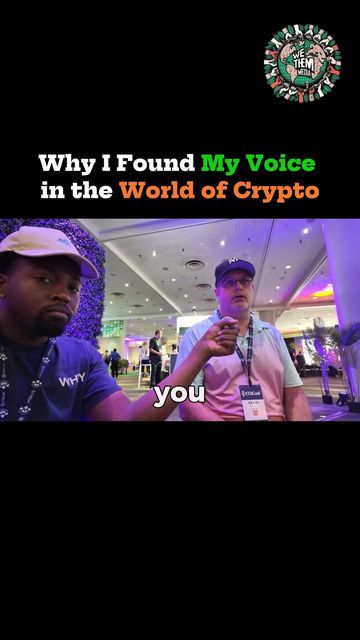
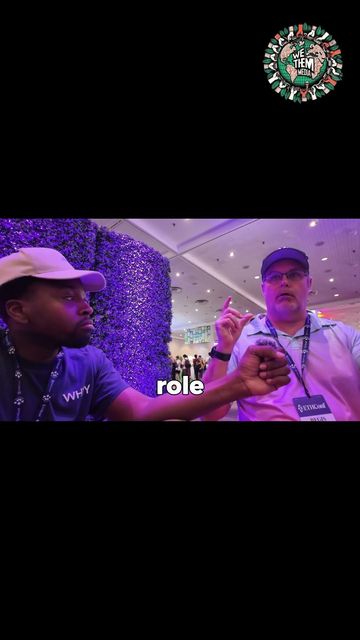
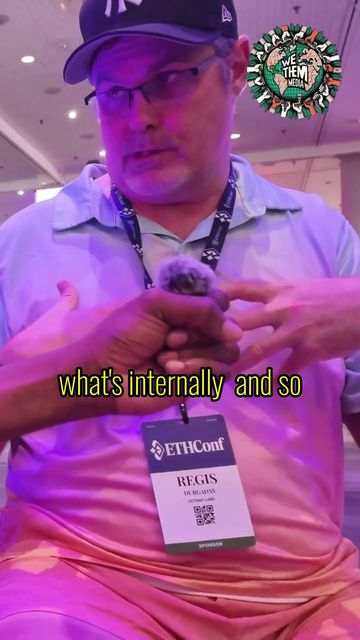
2:43Maceo: So what’s up everybody? I’m Maseya. We’re here at ETHCon. We’re here in New York. And what’s your name?
2:48A: Durga Das. Regis Chapman.
2:50Maceo: Very cool. And what are you working on?
2:52A: Well, I work at Octant on public goods grants funding. And yeah, I’ve just designed some standards for grants funding and data ingestion. To answer the questions you were asking about, I myself got into crypto because I felt like it was a social justice movement, you know, in a governance and financial side of the picture. And so, you know, if you want your voice to be heard around you know, your own kind of money and your own kind of way of dealing with things, crypto is the place to go for that. You know what I mean?
3:29Maceo: Why?
3:30A: Well, I mean, because you have the opportunity to have a voice. You know, there’s an awful lot of places that you can go that will welcome the unique talents of individuals. I mean, I’m an autistic, nearly savant-like person, and somehow, you know, the many communities made space for me, you know what I mean? So like --
3:53Maceo: Savant-like, I like that.
3:54A: I mean, you know, I’m, I’m like this super hyper-focused, like, you know, like in movies, you know, they talk about equations flying around your head. That’s how I experience the world, and, and that’s frankly quite socially weird. And, and so I think there’s an awful lot of people out there who would need a place to go and find community. And, you know, so, you know, the most welcoming communities I’ve experienced aside from when I lived in spiritual communities have been in Web3 and crypto. And, you know, it’s not for nothing that I showed up at the 40 Acres DAO and was welcomed there. You know, it’s a wonderful place. You know, you participated in that as well. That’s how I met you.
4:40Maceo: Absolutely, which is really cool.
4:41A: Yeah, I mean, it is really cool. Like, that’s what I’m saying is, the reason why you have more of a voice is because there’s more people that are willing to accept this specific kind of, like, you know, the more I know about people, the more awesome they become in a way.
4:59Maceo: Amen to that.
5:00A: And I think it can sometimes take time to figure it out. And so what people do with that that gap between the time they realize you’re really awesome and the time they don’t really know you is they just go, uh, maybe you’re weird, you know. So, and that’s a tragedy.
5:15Maceo: They discredit you instead of trying to dignify you. That’s how I put it.
5:18A: 100%. Discredit you other than dignify you. Exactly right. And so for me, that distance is much smaller in Web3 and crypto than in almost any other place. And so I feel much more at home here than I have in -- and I actually was just commenting to the Octant CEO about, I’ve worked at Cisco, Microsoft, Apple, every big Silicon Valley company you can imagine. I worked in Seattle. I’ve worked for the biggest tech corporations in the world. And, you know, working at Octant is the best experience I’ve ever had from an employment standpoint, you know? Yeah, I mean, I was literally hired because I wrote a think piece about what I would do if I won a bunch of money.
5:18A: and wanted to give it away because that’s what Octant does. Everyone works at Octant. All of our job basically is giving away the staking rewards from the 100,000 ETH that we stake. And so what’s better than that? You know, like, how could you have a better mission, first of all? And then the people are amazing. But that’s -- I think that’s a general symptom of a lot of people in Web3 and crypto. And for me, it’s a tragedy that people don’t actually -- because all they hear about is all the hacks and everything. And that’s tragic to me because there’s so many good people like yourself and different people in media.
5:18A: I mean, we had a creator round for people in the media, 451 applications. I had to do all 451 applications.
6:42Maceo: Oh yeah?
6:42A: And decide 30 out of those. It was almost impossible.
6:46Maceo: By yourself? Wow.
6:47A: Well, I mean, we had other people helping with the round, but I had to -- we were all trying to do multiple rounds. So, yeah, I mean, that’s what I’m saying is I feel like the media landscape, if you want to be in the media, if you want to be in finance, if you want to be in -- you want to start your own intentional community, a lot of DAOs are just intentional digital intentional communities.
7:10Maceo: Yeah.
7:10A: And so, having lived in monasteries and lived in intentional communities on pieces of land, a lot of people are like, hey, let’s go do that. I recognize the form of intentional community, whether it’s a digital one or an on-premise one, right? It could be an urban one, it could be a rural one. It doesn’t really --
7:29Maceo: Is it non-premised?
7:29A: What?
7:30Maceo: Is it non-premise?
7:31A: Yeah, like digital versus being on the land. So, if I’m on the land with people and I have to interact with them all the time --
7:39Maceo: So, on-premise.
7:40A: Yeah. So, or if I’m now distributed all over the world. Also, if you just go look in the Look in the convention there. There’s not more of an international, different groups of people, you know, every kind of -- you want to talk about like the Digital South showing up. I mean, you know, or the Global South showing up. You know, a lot of people from all over the world that look different from each other and everything, they all show up to events like this. And so there really isn’t a more diverse set of, you know, people I could encounter anywhere. So all of those things combined, you know, from my perspective, you know, there’s diversity and unity and there’s unity and diversity and they have to meet somewhere. And that place for me is the crypto and Web3 world.
8:33Maceo: And I’m curious, like, I know that you’ve spent a lot of time writing and thinking about identity in particular.
8:40A: Yeah.
8:40Maceo: And I’m curious, like, how did that become a field of study or like a topic, like a subject matter of exploration? You know, I think that’s probably one of the most interesting things about you that I found over time.
8:49A: Yeah.
8:50Maceo: And I would say it’s a reason I look at you as a remarkable white man in this space.
8:52A: Thanks.
8:53C: Yeah.
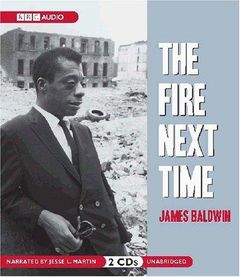
8:53A: I mean, I’m writing a book on decolonization from the perspective of my own discovery of, you know, and I’m actually inspired by James Baldwin’s book, The Fire Next Time, and specifically He said, you know, we won’t be free until they’re free. And I think that it’s a responsibility of anybody who has the kind of privilege that I’ve been born into to take that seriously and to understand themselves as a global citizen. And it also helps a lot. I worked in a Native band for 8 years. So, you know, of all the people who have a reason to be afraid of people that look like me, it’s those people I was working with. But the literal opposite of that, it was so transformational to me to see how accepting and beautiful and I was coming to fix their computers and they didn’t care about that at all. They cared only about me.
9:50C: Yeah, yeah, yeah.
9:51A: It was unbelievable to me. And I was just like, how can it be that there’s a culture out there that exists that has more reason than anybody else to hate somebody in my incarnated form here. But then they literally healed me from the inside out and enabled me to talk about autism and come out in a way as a more authentic version of myself.
10:16Maceo: Oh, so they were part of your transformation?
10:17A: They were, 100%. And so like the distance between they have every right to feel this anger toward People that look like me and my actual experience of how they treated me and how they healed me from the inside was maybe the most extraordinary transformation I’ve ever undergone next to my own spiritual awakening and understand myself as like the universe. But, from a social perspective, it is really a remarkable thing. And I will always be grateful to them and frankly, people from the 40 Acres community and people like yourself for making room. And there’s also, you know, part of the reason why I’m writing the books is because it’s also incumbent upon me to understand the narcissistic abuse patterns and everything that underlie colonization across the world and having experienced that.
10:17A: you know, myself and also, you know, like, you know, things like Roar set a pattern in place where my grandfather was traumatized from the Second World War. He’s an autistic person, comes back, you know, and my dad and his relatives all had a really hard time because of the problems that he experienced. Trauma from the war on top of his existing trauma. So, you know, like generations now back from that. And so, you know, people of color all over the world, they experience that same kind of inherited trauma situation.
11:48Maceo: Yeah, complex trauma situation.
11:49A: Complex trauma. And in some ways, I think it gets into you genetically. And my mother experienced horrifying abuse at the same, worse even than my dad. And so, just understanding the role of how all that macroeconomic conditions, these abusive various abusive factors that happen. And then, and then looking across and seeing somebody look -- might look different from you, but they are the same fundamentally. One of my favorite sayings is that sometimes when you reach up to scratch your head, you might accidentally poke yourself in the eye. And the thing about that is you’re not going to yell at your finger for being mad because you consider it to be a part of yourself.
12:31C: Mm-hmm.
12:32A: And so if someone does an injustice upon you, the only real way out of that is to do the same thing, is to consider that person a part of yourself. and accept them as identical to you or even exactly the same as you so that that’s the magic key to kind of fixing all of that stuff. So I’m all over the place a little bit with that.
12:54Maceo: You’re killing the game. You’re killing the game. I was excited to talk to you.
12:57C: What’s that?
12:58Maceo: I said I was excited to talk. You know, I could sit down for 2 hours and talk to you, so don’t worry. I think there’s not a lot of people at this conference I would say that about, you know, but I think you have a broad scope of expertise is how I’ll say it.
13:07A: Yeah, yeah.
13:08Maceo: Right? And I think that’s really, really impressive. You know, one woman Times Square today asked a question that I think is perfect for you. She said, are people in crypto, are they thinking about how this technology in the long term and how these rails are going to impact people outside the first world? And this white lady Bridget, I said, wow, what makes you care about them? She said, we have to.
13:24A: Right. And actually, one of the works that I’m doing with -- I mean, I have like 15 standards that I’ve created, but one of them is the structural obligation standard. So the basic idea is that I took the idea of A role from the indigenous definition of it, which is if you have a role, really a role is more like a locus of activity which you are temporarily occupying. But the thing is, is that the definition of a role is it has obligations in 6 directions. So rather than to say, I’m, I’m, I’m, I have an authority because I’ve sat in this role, or if I’m, if I -- I’m a leader.
13:24A: I have an accountability to somebody else because I’m in this role and I have authority over other people. That’s all Frame 1 thinking. And I invented entire frame language analysis software and logic underneath it to be able to tell the difference between the different ways you can think about language and the way you can speak about that. The way we often speak about a role, it’s using these reduced things like authority or governance or whatever. And governance implies a power over, right? Accountability implies an upward thing. But if you look at the indigenous approach to it, it’s going in 6 different directions, right? And so that lady in Times Square was exactly right.
13:24A: And she, you know, she -- So, But I built the structural thing, the Coordination Structural Integrity Suite. It’s on GitHub. You can -- this is a set of rules for a new organizational and coordinative activity thing that’s not governance.
15:17Maceo: Hmm.
15:18A: It’s specifically not governance. It’s a methodology for subverting all the things that happen. So there’s asymmetry standards in there, there’s consent standards in there, there’s all this stuff that no one else is thinking of and creating. And so I’m trying to put all of that into these standards. So yeah, so there’s a website and a GitHub where you can download this. I feel like it’s like this next generation coordination thing, and I’m going to be building something called Proof of Coordination kind of in my spare time next to my regular job, you know.
15:56Maceo: Yeah, absolutely.
15:58A: But you can tell it’s like coordination of grants funding is one thing, but then coordination between DAOs, for example. DAOs as they existed are kind of a failed experiment now. And the reason is, is because we forgot all kinds of aspects of that. And so I created a whole set of standards that would hopefully mean that we don’t miss so many things next time, right?
16:22C: I love that.
16:22A: So, yeah. So, and the whole thing with me is that I’m starting because I used to work at GravityDAO and all I got to see was how people fail at all of this. So, my starting point is failure modes. And then I was like, there are so many failure modes. And then I was like, can I find patterns in the failure modes? And then can I build solutions for those patterns of the failure modes? And so that’s how I built this. So I started from the actual problem, not as some pie-in-the-sky dude thinking about whatever.
16:52Maceo: What you actually saw wasn’t working in this space.
16:54A: And I teach theory of change and strategy. And one of the most critical things about both of those things is you have to start with the problem. If you don’t start with the problem, then you’re not really fixing anything, right? And so it’s really clear to me diagnostically how to make that work. And because I now have done all this language analysis and, you know, like linguistic, using linguistic, like neurolinguistic programming, like principles and stuff, you can diagnose, you can, I can, I’ve got a tool that you can point at somebody’s website and read all of their content and then figure out if they’re using language that’s like top-down language or if they’re using, you know, what kind of language they’re using so you can figure out where the person’s coming from. The other part too is that even people who have good intentions, what they’ll do is they’ll have a good intention, but then the language that they’re using constructs a separate reality from their intentions.
17:56Maceo: Yeah.
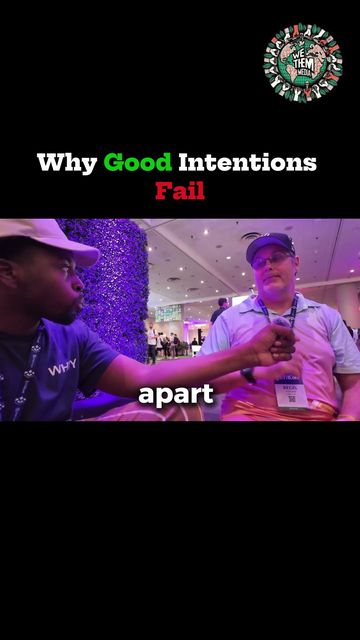
17:56A: And so what’ll happen is, is a year later or 2 years later when they’re having all these problems, their intentions and their structure are really far apart. And the structure wins every time. And so, if you don’t have an operating system for making sure you’re navigating your intentions and your structure together, then you’re -- that’s why DAOs fail.
18:19Maceo: Yeah.
18:19A: It’s because we didn’t have that. And I’ve created a set of principles that allow that to happen.
18:25Maceo: And where do we find that?
18:26A: Yeah, I’ll have to give you a URL for it after the interview, maybe. So yeah, it’s on GitHub, Coordination Structural Integrity Suite. There’s a website with all kinds of AI prompts and everything.
18:39Maceo: This is the expert, so pay attention.
18:41A: Yeah, so that’s, you know, that’s what I’ve been doing for the last 6 months. So I’ve created all this stuff. So yeah, 15 standards in 6 months.
18:48C: That’s remarkable.
18:49A: Yeah, so yeah, so it’s been really great. And I’ve got a lot of other byproducts from that too that should help.
18:57Maceo: Okay, so I want to say a couple more things, right? So do you have a message for the builders?
19:01A: Yeah, I mean, it’s just like what I just said, you know, make sure your intentions and the structure of the thing that you’re building are in alignment, you know, and people start off with this intent that they want to make something which is different and then use exactly the same structural language and approaches and everything that constructed an unequal system to begin with. So, one of these examples for me is like the network states idea, right? So, you’re going to put a techno king in place of a -- you know what I mean? Like, you’re just replacing --
19:39Maceo: Techno king, I like that.
19:40A: You know, one master for another, you know? And so, the thing is that what I’ve noticed about a lot of the folks in this space is we all see the same problems.
19:51Maceo: Yeah, absolutely.
19:52A: Right? But what we -- because we’ve grown up in this abusive society, the thing that abuse does is it narrows your options and it narrows your thinking into a very specific lane of things. So, the thing that you need to solve the problems are really outside of that. And so, taking the time to do that self-reflection and to understand who you are in relationship to that thing is the most necessary step to begin with. And so, if I build a structure and then a person slots into it, the idea is that this new structure would then run on that so that it would gradually subvert the old structural assumptions that they were making and then it would gradually replace them with new ways of thinking.
20:37Maceo: And, that’s how we see conscious evolution at scale.
20:40A: That’s exactly right.
20:41Maceo: That’s transformation at scale.
20:42A: That’s right because not everybody’s going to be able to be conscious about their inner life. Right. And the whole --
20:48Maceo: it takes something to not dissociate from that and really to unpack that and even consider that we can do that in the first place.
20:52A: And the whole narcissistic abuse thing, what it does is it produces an outside-in thinker. So you’re hollow internally. You don’t know how to make assessments about anything. And it’s not all 100% about therapy, but that helps. But if you don’t know how to address yourself with respect to the wider universe, and you don’t know how to address yourself psychologically or in whatever healing ways, because we’re all subject to abuse.
21:20Maceo: Absolutely.
21:21A: White, black, brown, or otherwise, because that’s the nature of the construct itself. That’s the nature of the structure itself. And so if we want to fix that, we have to work inside out. We can’t say, I want to fix the structure outside so that I can -- you’re required to fix what’s internally. And so as the designer of a structure, I have a literal mandate, like I cannot do anything other than work inside out. And so that’s encoded into everything that I do, all of my AI stuff, all of the -- so I check everything to make sure it’s all done inside out. And it’s also important to, I think, understand how things fail and see the patterns in things that fail.
21:21A: And be able to set up constructs that, that -- so you could have 2 individual things that together might have a failure, or apart from each other have a failure mode, but when they’re united together, then they fix each other’s failure modes. And even knowing how to discern that kind of thing is an enormously taxing internal diagnostic, spiritual, logical -- set of things and those all stack on top of each other. And as I was doing this process, I could even see wisdom behind my own guru’s work. My own guru used to have this saying, be good, do good, be kind. And the highest spiritual practice is to Deal with suffering, basically, or deal with insult and deal with injury, right?
21:21A: And you suffer at the hands of that. And the reason why that’s the highest is because there’s a structure to it. The structure of that is you have to be good and do good, but then you also have to suffer disconfirmation. You have to suffer somebody logically contradicting you. You have to suffer somebody being mad at you. You have to suffer, you know, all of that stuff. And it’s funny because when you’re creating all this structure, it’s an incredibly mental, logical, intellectual thing, but it’s all grounded in this idea where I have to force myself to make sure that I’m inviting disconfirmation. I need to invite somebody to contradict me.
21:21A: I need to invite the thing that destroys my own idea. I have to constantly do that. It’s like if you use a knife for too long, then you have to sharpen it against something.
23:58Maceo: Yeah, absolutely.
23:58A: That’s the precise --
23:59Maceo: Your ideas are unchallenged. They’re really not --
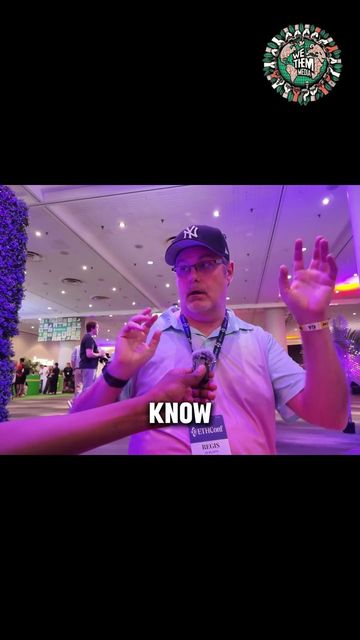
24:02A: That’s right. And so, I have to constantly just beat the crap out of my own ideas. And that’s the only way in which I can confidently step in front of somebody and say, I think you should use this for yourself, and have any kind of moral authority with which to do that. Even in my own conflict transformation stuff. So let’s say you and I are having a conflict, right? So usually what’ll happen is we’ll both set up our positions over here and I’ll be like, you know, that guy with his white hat, you know, whatever, the white hat, you know. And so I’ll just be like, thinks he’s so good with the white hat, you know.
24:02A: And I got my New York Yankees hat. And of course, the New York Yankees is the best thing that ever was. So, there’s no invitation for me to come across that without owning my part of it. So, unless I go, you know, does it really matter? Like, we both have hats on, they’re both baseball caps. Like, are they really that different? You know, I have to own my -- yeah, well, it’s all custom-made from Octant. You know, we had it custom-made for us. But the point is you have to own your own stuff. It has to always be inside out. And so even if you are completely unwilling to compromise in any way, the best chance that I have to get that conflict dealt with is by owning my thing.
24:02A: And so everything that’s healthy, everything that’s good, it all has to work inside out. And the way the world’s constructed now, especially now, given what’s happening in governments and all of that, and across the last 600 years of history, All of that has been a bunch of people who are unwilling to look inside of themselves and then basically force the rest of the world to conduct itself according to the fact that they are unwilling to learn anything about themselves. And so every movement that’s ever made a difference against that kind of work has always been inside out. So Gandhi and, you know, I mean, everybody.
26:04Maceo: So you know about Werner Erhard?
26:05A: It’s -- I’m drawing a blank right now, but I know about that a little bit.
26:12Maceo: You heard about like EST?
26:12A: EST, yeah.
26:14Maceo: You have thoughts on EST or anything like that?
26:16A: Well, you know.
26:17Maceo: Or Landmark as it is now?
26:18A: Yeah, Landmark is the word. Yeah, I mean, those are like --
26:23Maceo: The inside-outward?
26:24A: Those are like, yeah, but there’s -- I’ve -- yeah. It’s not though. I mean, it’s like we always talk about like coded language, right? Landmark and a lot of those groups use coded language. So they’ll talk like they’re talking about way to free you, but in fact those things just trap you. So it’s like, well, and code-switching, right, is a real thing. And so the thing is that the fact that we’re often -- and I as an autistic person have to code-switch because, you know, I live in a very internal world. I have to kind of turn on a mode that’s me being outside, right? And so that’s an entire code switch, and you know exactly what I’m talking about. The thing is, typically my life’s not going to be in danger if I don’t appropriately code switch because I have a certain look, right? That’s a very, very difficult lesson for people who look different.
27:45Maceo: Yeah, yeah.
27:45A: But the thing is, narcissistic abuse just uses a series of pretexts. The fundamental abusive structure itself is the same, right? It’s just, you know, oh, you’re tall, you’re short, you’re fat, you’re thin, you’re whatever. It’s just a series of pretexts. So race is just another one. You know, autism, you know, my whole life I’ve suffered from that because why is that dude so weird? You know, it’s just a pretext. And so the first inclination is to harm, right? And We just need a pretext. And so we’ve built an entire culture out of this stuff. Hence, for me, it’s a balancing act. It’s the resistance to that kind of stuff. And it’s that together, right? And that’s what America is. This resistance and this oppressive thing. That’s the whole construct of the American experience, really. So, I don’t know if I answered your question somewhere in there, but I hope I did.
28:43Maceo: I mean, you did. You said it’s coded language that says it’s empowering people, it’s actually trapping people, and then you went off. That’s okay. I, uh, my, my transformation has been largely facilitated by Landmark. I’m like a senior graduate of Landmark courses, which is why I was asking, as someone who was speaking about transformation, right? And, uh, so I know you’re more familiar with lots of modalities, so, you know, well, I respect what you think on a lot of them.
29:04A: But, but the thing is, is that But here’s the great thing about this. I left everything that I own and went and moved into a 4 by 6 shed without heat or electricity. I gave away all money in my bank account. I, you know, they repossessed my car. I gave away my comic book collection. I literally gave away everything that I considered to be mine.
29:26Maceo: Yeah.
29:26A: And I learned enough about myself through the process of living at the monastery from my teacher who was deeply flawed. Deeply flawed as a person to know that the way she was conducting herself was not correct. And then I had to leave. So, it’s okay. The thing is, is that did the process free you in some way? And if you’ve gone through that, no matter what their coded language and intention and subversive thing that they’re trying to do to keep getting you --
30:01Maceo: Whatever manipulations persist, yeah.
30:02A: Right. If you transformed as a result of that, I’m just going to encourage you to try to see through into the deeper nature of that. If you want to walk through that one day, I’d be happy to. I’m just, you know, and I actually have the Frame Language Analyzer. I could send you the website. You could run all of that language on their website. And, you know, if they send you a PDF or something, just upload it and it’ll It’ll tell you what’s, what the hidden pattern is in that. That’d be cool.
30:32Maceo: You know, I mean, I’ve spent hundreds of hours in Landmark courses. I’ve been through communication courses.
30:37A: I’m like, yep, We Them Media is essentially a Landmark project.
30:40Maceo: I mean, it’s a project we’re incubating.
30:43A: Yeah, I’m sorry to be critical of them because --
30:45Maceo: You don’t need to apologize for being critical. Every idea should be criticized until it’s perfect and ready to share.
30:50A: Yeah, and like I say, the whole idea is, is Whatever sets you free, to whatever degree it sets you free, then I can’t really say something against it because it was appropriate for you at the time, right?
31:05Maceo: Nothing else was.
31:05A: And I’m going to just encourage you to deepen that inquiry beyond those kinds of systems. So, yeah, there’s a whole other universe waiting for you there.
31:17Maceo: Oh, yeah.
31:20A: Whatever gets you there. I mean, the basic idea behind self-realization is, I don’t know if you know this, I have tinnitus because I had a head injury. I don’t know what that means. So, my ear rings all the time.
31:30Maceo: Oh, wow.
31:30A: So, I have a flap of skin that sits on my eardrum because I had a head injury and then bone came out of my inner ear. And so, the scar tissue just sits on my eardrum all the time. So, it’s like, eee, and for 30-some years now. There is a whole religion founded on tinnitus.
31:50C: Oh.
31:51A: So there’s a certain sect of Indian spirituality, and this guy who was studying, he became kind of a big deal in the organization that he was in. He was meditating all the time, and then he got tinnitus because of some problem with his ear. And so he started meditating on the tinnitus because he thought it’s a cosmic sound, and he became self-realized through just focus on something that was really a medical issue that he did not know about. And so you can do anything. You could just take this beanbag and you want to meditate on the beanbag, you realize the nature of reality because reality is all one and we’re just experiencing ourselves as a, you know, Separate consciousnesses.
32:38Maceo: And so how do you think about the way your consciousness works? Like the space between the back of your head and your eyeballs. How do you think about that insane complex system?
32:45A: Yeah, that -- well, it’s nonsense, first of all, and isn’t true. And none of this is really happening at all. We’re all just one consciousness experiencing itself in a subjective way, right? So, the unified and the divided are actually encoded in our left and right hemispheres of our brain. So, we have a right hemisphere of our brain, which is never seen a difference of any kind ever. And we have a culture that all it does is validate the serial processor, which is telling you that everything is different and broken up into small pieces, right? The problem is that, and with many of the systems, all the way through Walt Western philosophy and everything, it’s hard-coded to be limited, to think that you can construct self-realization from components. But you can’t, right? You have to see through into the mechanism of your right brain, which never has seen any differences ever for your whole life. Every human being that’s ever existed that has a bicameral brain and isn’t missing one half of their brain --
33:50Maceo: Yeah.
33:51A: Actually has exactly the same hardware. So, your right brain is like a parallel processor, your left brain is like a serial processor. And combined together, you get Hatha Yoga. Ha and tha. That’s where that comes from. I didn’t know that. Yeah, it’s the left and right, you know, body and everything, and left and right hemisphere of the brain. I built my whole yoga studio around the ha and tha part. So, that’s where that comes from. So, where you are now is, I think, you’ve got an organization that has enabled you to Construct a better reality. But the thing is, is that actual reality is not constructible.
34:36Maceo: Yeah.
34:37A: It has always existed. It transcends any -- it’s like the screen upon which you project any movie of any kind. You can change it to a better movie or a romantic movie or a movie where you come out on top all the time, or, you know, a movie where you don’t come out on top all the time. But the screen remains the same no matter what thing is projected upon it. And so, that’s the actual reality that all of that movie that’s being played on there is borrowing from. And it is a reflection of, not the other way around. So, yeah, so I’ll leave you maybe with that.
35:16Maceo: Oh, but I appreciate that. I’ve been thinking a lot about the nature of reality the last couple months and just like, Where did we come from? Where are we? What’s even going on? You know, I close my eyes, I wake up every morning, and I’m like, one day there was the first time that happened and it never stopped.
35:30A: Well, I mean, the law of karma is a real thing and it governs everything, includes physics and all of that. All of the stuff that you see around you, all the physical world that exists and everything, exists because the universe is so inclusive that it needs to allow the divided to divide itself as infinitely as it wants to, but it also needs to provide another methodology for it to reunify with the actual reality of things. And that’s not just your left and right brain, that’s the nature of reality itself, right? And so, the point is, is that all of this division is allowed, but the further you chase that division, what you’ll start to understand is, you know what?
35:30A: Those things are all suspiciously like each other and they’re all reflections of some deeper thing. And because they divide infinitely, well, guess what? The actual infinity is being imitated by the replication of that infinitude of divisions. The same reason why we have a sex drive or a desire to reproduce is because we want to continue ourselves in the same way that that always continues, that timeless, infinite, unchanging reality continues. And so, everything that you’ve ever seen is picking out a specific version of what exists in reality but is not manifest and manifests itself by borrowing some portion of that reality. And so, if you start to see it in that way, then some of the experiences and even trauma and things, all of that stuff Kind of recedes a little bit and the volume of difficulties that we face as humans starts to go further and further away.
35:30A: I’ve had, you know, pre-birth experiences and I have some knowledge of my past lives. And so when you have that, it tends to disabuse you of the idea that time is real or distance or this is real and that’s not real, or that direction exists, or any of the other relative --
37:41Maceo: It’s a presence of the organic occurrence of it all.
37:43A: Yeah, but it’s also that there are no other directions because every direction you go, you are there also, right? So, this person walking around, you might not be able to identify them, but they are literally you.
37:57Maceo: Yeah.
37:57A: Right? Not -- they’re just like the finger thing I was talking about before. They’re one of the appendages of the consciousness experiencing itself as a finger or as an arm or a limb of a larger being. So, that’s why in Hindu iconography, or if you look at like that Jimi Hendrix thing where he had a bunch of faces, you know, that’s taken from Hindu iconography.
38:24Maceo: Oh, I didn’t realize that.
38:25A: Yeah, so all the gods in Hindu thing, the idea is that the multiplicity is designed to Show you that all of these things are all one thing together. They manifest differently. They have different karmic loads, but but they’re all actually one one thing. That’s true, Marco. So yeah. So yeah, all all of the stuff I do in crypto and everything all come from this this place. So.
38:54C: All right.
38:54Maceo: I like to say booyah at the end of our content. Can we say booyah at the end?
38:57A: Okay, booyah.
38:58Maceo: Okay, three two one.
39:00C: Booyah!
39:00Maceo: And where can we find you on socials? Like, what’s the tag?
39:03A: Yeah, I’m at Durgadasji on X, so D-U-R-G-A-D-A-S-J-I on Twitter. And that’s probably the best place. I publish all my articles and standards and everything all there. So, yeah, and my paragraph is Hellenic Horizons. So, paragraph.com.
39:28Maceo: Holons? You’re talking about holons?
39:29A: Yeah, holonic. Yeah. So, that’s integral theory. Do you guys have holons in Landmark?
39:34Maceo: No, no, but this woman Carol, and she’s all about the peace movement, and she’s been making like a book about puns and plants and peace, and she talks to me about holons sometimes.
39:46A: Yeah, yeah, that all comes from Ken Wilber’s integral stuff, and I’ve founded a couple of groups that go deep into Ken Wilber’s integral work as well. So yeah, that’s my whole game is really deep complexity theory and history of religion and different ways of kind of working through it. Because if you think about it, it’s the weirdest thing in the world to be an apparently separate thing in a transcendent, timeless, infinite, unchanging reality. And so, like, the whole spiritual thing is all about, like, how in the heck am I supposed to reconcile the fact that I appear to be this thing, but then the universe is enormous and everything seems transcendent and it’s just, you know, like there’s no --
40:34Maceo: All at once.
40:34A: How can both of those things be true? And so, what I’ve told you about today about the hemispheres, the brain and all that. So, my whole thing is I want to kind of let people understand that there are known pathways between this left and right hemisphere of the brain. And those are things that people know and they’ve known for thousands of years. You know, the hard problem of consciousness in physics doesn’t really exist. It just comes from a very specific frame of reference. We solved the hard problem of consciousness like 10,000 years ago.
41:10Maceo: Yeah.
41:11A: In India, you know, and before that, you know, native bands and shamans, you know, that’s their whole role in that society is to be able to see reality as it is. And to do that, you have to have a functioning right brain. And it’s a whole different lexicon. It’s an entirely different language, entirely different way of framing and understanding How you speak and how you act and how you are in the world and your relationship toward things is fundamentally changed by it. So yeah, I’m just I’m really enjoying to be able to take my entire self and put it into the work that I’m I’m doing currently.
41:54Maceo: Yeah. So is there anything else you want to say to the world?
41:58A: Yeah, Hari Om Tat Sat. Thank you. Thank you.