We Them Media logo We Them Media Community-made Back the work →

An app that pays utility bills in crypto.

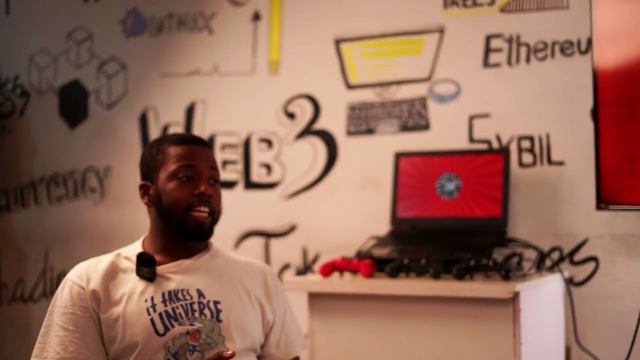
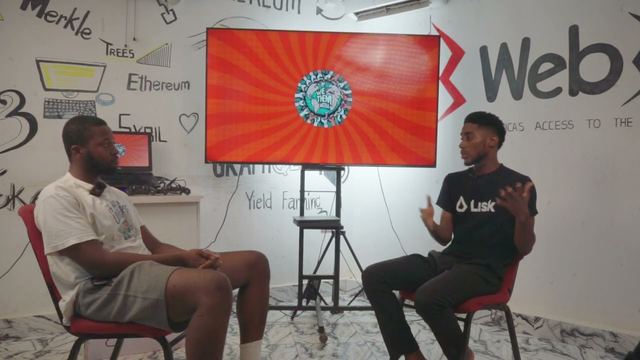
Four minutes in Ikorodu, Lagos with a member of Web3Bridge Cohort 12, the first episode in the run of short interviews We Them Media filmed as the cohort wrapped. It opens on the product and works backwards to the person.

Web3Bridge founder Ayodeji Awosika introduces the series from the same building, counting the cohort in and out and listing the countries applications for the next one came from.

The introduction that follows is one sentence: “My name is Ebere Lindo Kolo and I’m from Anambra State”, and “I’m Igbo by tribe.”

The route in was a message. “I got into Web3 from my conversation with my friend, Papa”, who was in the last cohort and doing well. “It was more or less a WhatsApp chat and he started like, are you interested in Web3?” The answer was yes, the friend suggested Web3Bridge, and that was the whole recruitment. There was already a developer background there, described on tape as being “already interested in the local C# and React”.

The account of the cohort itself is honest about the cost of it. “it’s been overwhelming, right?”, with assignments that “last till late nights and all that”, and the same word comes back twice before the sentence turns: “It’s been overwhelming, it’s been interesting.” What makes the difference is who else is there. “You have the right community you need, and above all, you have the right mentor.”

The part about teamwork is the most personal thing said. “having to work with people in a team, it’s something that I would say haven’t been easy for me”, but the course reshaped that, along with “having to stay up all night to get the tasks done”. The summary is generous to everyone in the building: “The whole zeal, the whole grit, the whole pushing, it’s something that will contribute to us developing some great products.”

The project has a spelling that gets spelled out. “It’s called Billoq, but it’s spelled Billoq, B-I-L-L-O-Q.” What it does is remove a step Nigerians take every day: it is “a decentralized application that allows you to pay for your utility bills using your crypto directly. So instead of converting to naira and then going back to pay your bills.” The team has finished the process and is “on listing currently”.

The advice at the end is about infrastructure as much as teaching. “Web3 Bridge, minus the teaching, you have the right community”, and beyond that “you have everything you need: internet, power, which is like a major challenge every Nigerian faces”. The recommendation that follows is flat: “I’ll advise everyone or anyone I know to go for it.” Nothing on this tape is hedged.
What is in it

Jump straight to a moment.

Transcript

Who speaks, by their own introduction on the tape: Ayodeji Awosika at 0:38, Ebere Lindo Kolo at 1:24. Transcribed and speaker-separated with AssemblyAI from the original audio, so nothing is masked. The letters are the model's speaker labels, not names; fillers are dropped by the model. Names corrected. Published in full so it can be read, searched and quoted. Search every transcript →

0:00Ebere Lindo KoloHaving to work with people in a team, it’s something that I would say haven’t been easy for me, but what truly kind of shaped that for me, having to stay up all night to get the tasks done. I know this, you’re trying to get something done, you can’t like sleep because you need to get this done. So currently my team and I are building a product, it’s called Billoq, but it’s spelled Billoq, B-I-L-L-O-Q, and it’s a decentralized application that allows you to pay for your utility bills Using your crypto directly, so instead of converting to naira.

0:38Ayodeji AwosikaHello everyone, my name is Ayodeji Awosika. I’m the founder at Web3 Bridge. For the last five and a half years, Web3 Bridge has been training amazing developers in Nigeria and in Africa. Trust me, 412 was amazing. We had 74 guys into the course, 89 guys graduated from the course. They are intense. But then 413 is going to be bigger than this 12. Because yeah, we’ve had guys apply from Cameroon, from Togo, from Kenya, from Zimbabwe, from Uganda, and yes, Nigeria is not left out. Trust me, you don’t want to miss the experience. Today I’m chilling with Maceo and his team at We Them Media. They are speaking with the guys that just finished from the court. Make sure you watch that. As we say here at We Them Media, in 3, 2, 1, welcome!

1:20Ebere Lindo KoloThank you.

1:21CUm, can you introduce yourself? Tell us your name, where you’re from, and what tribe you are.

1:24Ebere Lindo KoloMy name is Ebere Lindo Kolo and I’m from Anambra State. I’m Igbo by tribe.

1:29COkay. And how did you get into Web3 and learn about Web3 Bridge?

1:33Ebere Lindo KoloI got into Web3 from my conversation with my friend, Papa. It was more or less a WhatsApp chat and he started like, are you interested in Web3? I told him yes and he suggested Web3 Bridge. He was in the last cohort. I know he was doing well, the whole chain and all that. So I gave it a shot.

1:49CAnd you were, were you already a developer?

1:51Ebere Lindo KoloYeah, I was already interested in the local C# and React.

1:56COkay, and what’s your experience then being a part of this recently concluded cohort here at Westbury Bridge?

2:01Ebere Lindo KoloOkay, um, it’s been overwhelming, right? You know, it’s all back and forth. Sometimes they give you assignments that last till late nights and all that. It’s been overwhelming, it’s been interesting. You have the right community you need, and above all, you have the right mentor. So minus being overwhelming, it’s been interesting, right? And I’m just grateful for it.

2:20CAnd how was your experience of the community through this rigorous, overwhelming, but exciting experience?

2:25Ebere Lindo KoloOkay, um, my experience have shaped me personally. I mean, having to work with people in a team, it’s something that I would say haven’t been easy for me, but WorkTribe kind of shaped that for me. Um, having to stay up all night to get the tasks done. I know this, you’re trying to get something done, you can’t like sleep because you need to get this done. So The whole zeal, the whole grit, the whole pushing, it’s something that will contribute to us developing some great products.

2:51CAnd out of, you know, participating in this cohort and learning about smart contracts, what are you looking to achieve?

2:56Ebere Lindo KoloOkay, so currently my team and I are building a product. It’s called Billoq, but it’s spelled Billoq, B-I-L-L-O-Q. And it’s a decentralized application that allows you to pay for your utility bills using your crypto directly. So instead of converting to naira and then going back to pay your bills. You just use your crypto to make your bill payments. So we’re working on that. We’ve gone through the process. We are on listing currently.

3:23CThat’s incredible. And looking forward, how do you think you would give advice to people looking or thinking about applying to Web3 Bridge?

3:32Ebere Lindo KoloI’ll tell them to go for it. Web3 Bridge, minus the teaching, you have the right community. Um, you have -- the feeling is good. You have the right -- you have everything you need: internet, power, which is like a major challenge every Nigerian faces. So go for it. It’s something amazing. It’s a shock. I’ll advise everyone or anyone I know to go for it. Okay.

3:54CAnd then the last thing we like to do is we like to say booyah. Well, I’d like to hear you -- how do you think we spell booyah?

4:00Ebere Lindo KoloOkay. Um, B-O-O-Y-A-H.

4:04COkay, and you want to count us down and we can say it?

4:07Ebere Lindo KoloOkay, 1, 2, 3.

4:09CBooyah!

More from Nigeria desk.

The whole project →