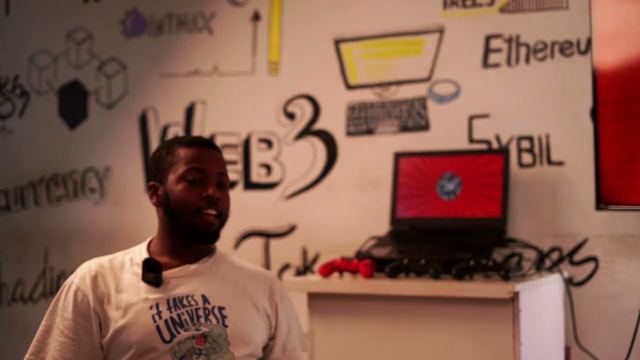
1:25Okay. Yeah. And how did you learn about web three? Were you already a developer? Yes. I was already a developer stack, JavaScript, Python. Yeah. So, I got to know about web three from a friend um an exclassmate. So, she introduced me. She’s from the past. And what is your favorite memory out of being a part of this this 12 corporate work through bridge has
1:50Oh. Oh, I I have a lot of memories like a lot of memories. It’s been both good, bad, the good, bad, the the ugly, you know. So, yeah.
2:02I can’t really like pinpoint one at the moment. That’s okay. Yeah. Uh how would you describe your experience as someone though? Oh, uh I would say it is um mental draining. It’s it will get you to think outside the box, think beyond what you or how like your pattern kind of thinking, you understand? You have to like widen out. So if you’re coming, you have to like be mentally prepared.
2:29And how would you describe the the role of of the community and your experience here? The the whole community. Uh it’s the community is vast. Yeah. But um you know, you start from somewhere where you you network. It starts actually from here from the classmates and all that meeting a lot of people. Then um web free bridge gave us the opportunity to go for events. Yeah. And from there we network and meet several people and yeah it’s goes on from there.
2:59And as this cohort just wrapped up I’m curious you know what are your reflections on this experience and how you’ve seen yourself grow. Oh okay. I I have a lot like first of all there’s a lot more to learn. So this is not just where it stops. Yeah. more learning and learning and learning and um yeah right now we actually like building something I am my team race tree and all that race tree is an app a d app that um connects investors to founders easily so investors and founder um investors are always like there’s this um short change whereby they give grants or they give things to people
3:36like funds they fund the startups and yeah there’s nothing to show for it there’s no gauge so the app is trying to like bring in that limitation, you understand? Through the the milestone um concept, you understand? So funds are being released based on milestones.
3:53Mhm. Yeah. So that’s that’s actually what we’re working on. That’s beautiful for Yeah. And I guess another question I have is, you know, I’m really curious when you look at the problems you see smart contract developers solving, you know, what what what gets you excited? Uh, a lot gets me excited. I I I see smart contract as like a a whole it’s it’s something that is like very very very um I don’t know how to describe it but when you see people using smart contracts you understand I’ve come to discover that they use it in ways that you most times we feel it’s just um based on what we
4:39were taught and all that we feel it’s just based on money the defi aspect and all that but then you get to go deeper and deeper and you need to see things like NFTTS and the rest and the likes. Yeah.
4:52And you mentioned like NFTs and DI is there like um I guess a side of crypto that interests you the most? Uh the side of crypto that interests me the most is um the gaming aspect although I’ve not like been able to like um go fully into it because mainly what we’re like based on here is actually the DeFi aspect. how to make sure that um your phones are secure. You write smart contracts that are um that’s that are like security proof, you understand? And yeah, there will be no stories of oh, you know, based on the whole hackings and all that going on, you understand?
5:29But I hope to I’ve actually like explored Abigoti because we I was given a contract um to review Abigoti’s um alchemical facets. So I’ve actually like reviewed um some things about it and I’m hoping to like do more explor exploration on that. Yeah.
5:46And I know you all have attended some events throughout the cohort. I’m curious what’s your perspective on web 3 adoption and general uh degree to which people know about crypto here in Nigeria.
5:55Okay. I think it’s going to take a lot of time. It’s not something that will like happen once because um one thing I understand about the web three space and all that it is because it’s that um the terms being used it sounds new to the lay man sounds very very very very entirely different you understand so it will take a lot of time I feel we need like more uh it’s not like we should stop building but I feel there should be like more education you understand more um what’s the word you um to sensitize the community, sensitize people, not just stay at the top layer,
6:33go deep, go to the markets like penetrate and actually like teach people to understand this thing so that they will not just think that oh the web three and crypto space ends in tap tap tap tap tap I mean the tap swap. No offense.
6:49Yeah, I got that best though. I uh I think it’s definitely important for people to you know go beyond the tap tap tap. I agree. Yeah. And you know, I’m really excited to bring this kind of content to people because I feel like most African-Americans in the US don’t really have a deep knowledge of crypto, let alone even if they can tap show to make money. Yeah. And so I like hope hopefully people hear stories like yours like your own and feel compelled to learn more to get more involved, you know, and be builders, be investors, be people who are supporting people like yourself, you know, thinking about what
7:13the future of the landscape looks like. Uh my final question, you know, we like to say booya or our content. I’m curious, how do you think we spell here at We Them Media?
7:21Okay. B O Y A H. Then I’ll just add the exclamation. You know, that’s for the fact that you always like Yeah. Say it out loud. Yeah.
7:32I like that. I like that. Nice touch. Okay. Exclamation point. That might be the the the part you got right now. But you want to count us down so we can say it.
7:39All right. All right. In three, two, one. Booyah.