Auto-generated by YouTube, names corrected. Where YouTube masked a word it shows as [bleeped]; that is YouTube's, not ours. Published in full so it can be read, searched and quoted. Search every transcript →
0:00Okay. So, what I said is, being a foreigner, and, you know, I have raised a family here, you know, legally here, but at the moment, you know, we are very careful about what we think of America, but I can tell you this. Last year, I went to Finland to see if I wanted to return to Finland, and I I realized that Finnish people are very well educated and so they tend to have the same ideas and attitudes about things in a small country with five and a half million people. And I realized that in the U.S. there are so many groups, subgroups of, you know, religions, political views, et cetera, racial, that here I was more free. I didn’t need to belong to anyone. I didn’t need to listen to the same thing every day. You know, there is a variety of opinions.
1:15and so on. This is the place where I feel free. In terms of, you feel you can think more freely here? Yes, I don’t need to belong to any sort, and I don’t. So, you know, the only other place like this was, I felt when I was in India. That’s another big democratic, you know, democratic kind of with maybe a different interpretation than here. And also different from Europe. Do you feel like what the source of that difference is? Or like what that difference is most demonstrated by? India is an old place, just like Europe. Yeah, US is not very old. Not very old. It’s like a toddler.
2:12You know, for a long time, I didn’t want to become a citizen because of their slavery, because of the way Native Americans have been treated, the Latinos, and they felt like I’m signing under all that stuff. Yeah, you’re co-signing it. and so, you know, he took a Navajo actually to... A Navajo? A Navajo. I was in Arizona and I stopped by one of those jewelry roadside stands. And I told this to the Navajo group. They have like roadside stands in Arizona? Like Native American people? Yeah. Selling jewelry and blankets and whatnot. I didn’t know that. Oh, really? I’ve never been to Arizona. Oh, you said the roadside stands.
3:02And so anyway, he said, we bear no grudges. And I thought, wow, those people are wise. You know, why walk around me? And so when I got back to Vermont, I was telling my friends and call them as well. and then I went back the next year and I happened to stop at the same place and so I told the Navajo the same guy you know that you know I told all my friends about not having any difficulties and as I said that I realized I have a lot of grudges and so he said yeah we are we are brought up that way and so I thought wow the wise culture
3:54Anyway, that’s my American story about today Yeah, that’s a good story I think, do you think that we have something to learn from the Native American people, the indigenous people here? Definitely, yes You know, they had a big influence on the early governments anyway, about the democracy It’s not just Christmas or something Especially the Iroquois What’s that? It’s a tribe. It was actually a federation of different tribes and I don’t know exactly the structure of the democracy but they did have kind of a democratic system.
4:41You know my friend from college, his name was like Ate, like A-T-T-E, what’s his name? Ate, not Ahti. I haven’t, I don’t, we, we called him Ace, so, like, yeah, I can’t even, like, I don’t even know, I don’t think I learned how to say his name the right way, that’s why I had to sit here, I said, uh, when I got kids with my wife, you know, I proposed some Finnish names, okay, debbing over, he was just rolling her eyes,
5:19And so how has it been, like, raising your children with their identity in mind? I feel like the U.S. really pushes a culture of assimilation, right? It’s like, like, even what you’re saying, right, with the names, it’s kind of like, you’d be resisting it. One of the things is, my wife, unfortunately, she passed away. Oh, condolences.
5:38And she was American. She was actually from New York. Oh, yeah, yeah. I knew she was American when you said she rolled her eyes.
5:47You know where on Long Island? Garden City. And so anyway, the way you look at life in Finland, it’s very different. So trying to teach my boys the language seemed kind of ridiculous, you know, because The way you use the words, the expressions, the way they relate to life, was so different.
6:25Now they are, especially one of them, it’s kind of angry at me for not talking about Finnish, but you know. They do have dual citizenship. Oh, that’s cool. European and US, so that’s kind of a big boom. So they are happy about that So they don’t speak any finnish? No, we used to go as a family to visit but that’s not enough for them to learn
7:00So do you think, sorry go ahead Yes, one of them visited my family Oh that’s nice Last year but for a very short time
7:13It was like a wake up call for him because what I had said about Finland And what he experienced, we have American education. Oh really? No, you have to stay in your country kind of a long time really to get it. Even I, my usage of English if I try to write is not very efficient I feel, you know, because I don’t really have it done. Even if I read a lot and I wrote a lot, you know, still That sounds like a little bit of a mental block though I feel like if you write enough and you read a lot, at some point it becomes a confidence issue
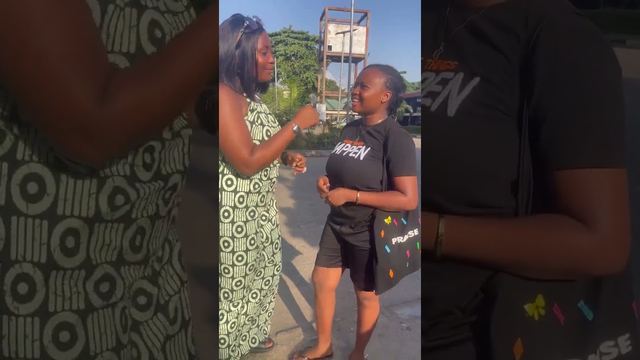
8:04Maybe, yes I think so I think a lot of people come here, especially people that speak Spanish only And I feel like for a long time they’ll be like, I don’t speak English And they’ll be like, you know They’ll be conversant, they just don’t speak out loud Yeah, I was a manager at the place and I had some Latinos voting on the mail. Yeah, I know that. And the difficulty with all the white guys. Absolutely. Let’s say we’re about to leave. They’re tired of me. That is downtown from here. Yeah, I have no idea where I am. But I really appreciate you letting me interview you. My platform is called We Them Media. I can show it to you. And this is for We Them Media and for Pixar It Didn’t Happen. With Pixar It Didn’t Happen, this guy Kenny, the founder of it, he’s been giving away $100 a week to people around the world who go out and ask these different questions I told you. Yeah. Do you have any question you’d want to ask people around the world? Around the world? Yeah, yeah. You know, it’s my world. Yeah, yeah.
9:19Yeah, but we have people submit from India, from Nigeria, Kenya, and Uganda so far. And so if you could get people in six countries to answer your question. Yes. One maybe interesting question would be what makes them happy in the place that they are actually living in? What makes them happy in the place they’re living at? Yes. And what makes them unhappy? Like how do they feel about the place that they live? Okay. Their grievances and their appreciations. Yes, you know, like here, especially, you wonder, what do people think, you know, how do they relate to themselves, to the world, to their family, to, you know.
10:01I have to go, see them, they’re waiting impatiently. But it’s very nice to meet you, sir. Yes. And I appreciate your time.