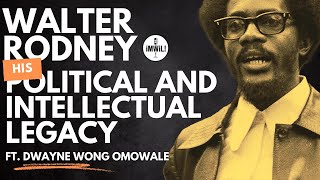
2:48AWe continue our monthly segment of Mind Your Business with Vice President of Aegis Capital Corp. Valance Williams and real estate agent Joe Thomas. During our second hour, we will welcome back to Caribbean Forum historian and author Eusi Kwayana, whose book Walter Rodney: His Last Days and Campaigns is one that should be a part of your library. Because of the death in the family of Felicia Passad, The CEO of Heartbeat Communications. Felicia will not be with us this morning to analyze the Caribbean news, and we extend our condolences to Felicia and her entire family. And I’d also like to convey my personal condolences to the family of my high school classmate Wilford Beckles, who we lost last month in Brooklyn.
3:46ASo tell someone the Caribbean Forum is on the air for the next 2 hours here on the Uhuru Radio Network, where you can log on 24 hours a day, 7 days a week for live and recorded programming. Thanks for your continued support. So at your leisure, you can make any donation that you deem affordable by logging on to uhurunews.com. Well, you should be on the website if you’re listening to us right now. And you can just click on the Donate button and make your contribution. No amount is too large or too small. If there’s someone you know who does not have access to a computer right now, you let them know that they can listen to us on their landline, their iPhone, or iPad by dialing [number removed].
4:36AThat’s [number removed]. Now here is Bob Marley in an exclusive interview with the late Gil Noble, host of Like It Is.
4:50DPleased to have you as a guest on Like It Is.
4:54BThank you.
4:55DHow did it all start? Had music always been a part of your life from when you were a little boy?
5:01BYeah, you know, growing up in a musical family. Grandfather, mother, uncle, sister, pickney.
5:08EEverything.
5:09DWhat part of Jamaica?
5:10BUm, St. Ann’s, you know. Yeah, it’s in the country.
5:14DWhat town?
5:15BUh, a town called Rodney. It’s not well known, you know. Yeah, a little place up in the hills, you know.
5:23CYeah.
5:25DUm, how big is your family?
5:28BWell, my family is really big family, you know. Malcolm, them My family name is Malcolm, is Plenty.
5:35DThat’s a good name.
5:37BYeah.
5:39DWhen did you begin to get involved in music, really?
5:42BAbout 19 -- 19 -- call about 1958.
5:48DDoing what?
5:49BWell, we’re always interested in music, but that time I was learning trade, you know, and meet up some guys who can sing. One named Desmond, they can Yeah, and so we started out from kind of rehearse together and thing, you know, and then one day he went away, do some recording, then I followed after.
6:10DYou weren’t doing the same kind of things then that you’re doing now. What kind of music was it in the beginning?
6:17BUh, that music was ska.
6:19DSka?
6:19BSka music, yeah.
6:21DHow does ska differ from From reggae?
6:25BSka is different, different in sound, different in style, different playing, you know. Ska is a more quicker music than reggae.
6:37DNo relation?
6:38BYeah, it’s almost the same music breakdown if you go much slower, you know.
6:43DSame root?
6:43BYeah, it’s almost the same music, ska, but honestly, no, if it was playing at, um, At 33, it’s like playing at 7.5, you know, a little more.
6:55DThat’s a good analogy. Uh, how, how does reggae and ska come out of calypso? Many people ask that.
7:07BYeah, because calypso was always there first, right, you know. And then, uh, when the musicians in Jamaica started to play -- I know them can play calypso too, kind of play a lot of calypso. But because, uh, the American influence music come past you down there, you know, them start to kind of get more to them time. You start Fats Domino.
7:32DYes.
7:32BAnd plenty of them type of people. So after a while now, the music start drift from the reggae to -- it used to be a music almost like a Like a half blues, and used to play before the ska start, you know. Even people like Joe Hicks, you know that music, used to play that plenty. So from there now it developed to people start ching ching ching ching ching for ska, you know. And then for rocksteady is like Jeng, jeng, jeng. For reggae, you know, it’s check, check, check, you know. So you have 3 different feels, but the 3 of them can put together again and make one thing still.
8:27DNow, calypso music, most of it dealt with family and folk stories and love and beautiful island in the sun, things like that. How did it move into what we’re getting in the music now where we have message?
8:46BBecause during that time of this, um, calypso and, um, thing, people never wasn’t so conscious about Africa and where them roots come from. Since reggae come now, people get -- I mean, not from a point of music, because music is always conscious. But since the reggae come now, the reggae start talk about Africa, blackness, you know, in a militant way. So that is how it kind of -- that is how the lyrics differ from the Oh Island in the Sun.
9:20DWell, who are some of your influences?
9:22BWell, I think my biggest influence is Marcus Garvey and Selassie. Yeah, sure.
9:31DFrom what you heard coming up as a boy about Garvey, or what you’ve learned now that you’re grown, or what?
9:39BWhat we hear, what we read, you know, and what we know now about him.
9:44DDid you learn much about Garvey in school?
9:46BNah, nah. Yes, them don’t teach. It’s the education that we don’t get in school, you know. We don’t get that type of education that When we grow up, we can know who we is. We get more education that we might know who Christopher Columbus is, or who Marco Polo is, you know, but we never really know who Marcus Garvey is, who Haile Selassie is, or who any black man is.
10:13DWere you born as a Rasta, or how did that evolve?
10:20BWell, I figure now I was born, you know, and then born and growing, there was a certain amount of consciousness in the I-self that, you know, it was always a lonely world not finding people who might think like me, you know.
10:40CYeah.
10:41BNot, not, not to say that I think so different, but because this consciousness about God and the people I come from is more Christian, you know. We always try to do like try stand up not right. But what we used to find out now that one church quarreling against the next church, and I figure I never want any of that, you know. I never want really enter anything where this one fight against that one, and everybody talking about God still. So after going on and going on and coming up, you know, the The thing that was there get more stronger. Come to Kingston, meet some more people. Them people is Rasta. You talk to them, find out it’s the same thing I have inside. It’s the same thing.
11:28DHow old were you when this started to happen?
11:31BThis is about 17, 18, you know. I find out that the same thing where I deal with is the same thing where the Rasta man talk about. That is how I could identify myself as a Rasta, by not changing, you know.
11:47DNow what happened when you went back home and told your family what you had found?
11:53BOh, I never have a home to go back to. No?
11:56DNo.
11:56BWhere we from, everybody gone, you know. Everybody gone. Everybody living in America, some living in Kingston, everybody gone, so Never really have a home like that much, although we used to have a home before grandfather died, you know. But after grandfather dead, everything get crashed.
12:16CSo, you know.
12:16DSo you came to Kingston and that’s where it began to happen?
12:19BYeah.
12:20DWhere did you live in Kingston? What part?
12:22BUm, east. I’ll call it East Kingston.
12:27CMm-hmm.
12:28BOut near the east. And then we go up Up a place named Oxford Street, you know, down to Spanish Town Road, down to -- then up to Trenchtown. Yes.
12:43DSo for a long time things were kind of lean.
12:45BWell, yes, thing was kind of lean. It leave to what is your expectation and you do, you know. To me it was, it was lean, but I could understand it. Because coming from the country where you learn to do things like, you don’t learn to depend on family and all of that, you know. You go out and you plant your own corn and you watch the corn grow. When corn grow, you pick your own corn, you know what I mean?
13:13DYes.
13:14BAll of them fruits upon them tree, you can get them, you know.
13:18CSo --
13:18DIt’s a little different though in town.
13:21BYeah.
13:21DYou know, you got to do different things to eat, eh?
13:28BWell, when you’re in the city, it’s a whole different ball game, you know.
13:32CRight.
13:32BPeople have to go to work, catch the bus. You know, the country, all of you, you go for the donkey and you ride a donkey to the farm and the cool, you know.
13:40DRight.
13:41BYou know, the city people also catch the bus, go to work, get off of work, come back home, you know. So it was a different thing up there.
13:49DI know a little bit about Jamaica, and I understand in Kingston And Trenchtown is a rough part of town. How did you survive?
13:56BWell, while living in Trenchtown, you know, um, as a young man, surviving was easy. The only thing you’d have to really look out for was the police, you know. God, the police could just get you, frame you, you go to prison, and because you come from Trenchtown, you know, Trenchtown’s that -- from them say, where you from? You say Trenchtown. You’re gone, you know what I mean? You get shipped out.
14:22DYou know, a lot of people are confused about what a Rasta really is and have a very negative image of the Rasta. Tell us what a Rasta is.
14:32BSee, Christ promised that he will return within 2,000 years, you know, and him say when him come, him will be the King of Kings, the Lord of Lords, the conqueror of the land of Judah. Through the lineage of King Solomon and King David. Now my life have great meaning to me, so I really search to find out if God is here. And I search, I look, I look in Ethiopia, I look all about, looking at Germany, you know, because men are prejudiced. We look for God, we’re looking at Ethiopia. I’m gonna see one man stand up with these names: Emperor Elias, last day, named King of Kings, Lord of Lords, conquering land of Judah through the lineage of King Solomon and King David, written in the Bible.
15:21BOne of my things is that, um, the Bible -- them say that King James edit the Bible. Now my understanding is that King James edit the Bible, I don’t think he will edit it for the benefit of black people. So when the revelation turn out that Haile Selassie is the King of Kings and the Lord of Lords, coming straight through the lineage of King Solomon and King David, then you know we really know that this is the Christ return. Because we know in this world, yeah, when the white man -- when white man edit it, he wouldn’t edit it in our behalf, you know. He going to edit it to make it look like England going to be the The big, big thing.
16:05BBut you know, the last years they’ll prove out that is Ethiopia, you know, and his last name is Rasta. So we are called Rastas, you know, called by his name. And then it’s a lot of things. We go as far as saying, him say, when I return and you call upon him -- now this is God -- him say, when I return and you call upon him, your mother and your father will forsake you. Now we know that if you call upon the Catholics, you -- them embrace you. You call upon the Church of God, them embrace you. Any religion you call upon, you might get embraced. The only religion them push you off from is, is Rasta.
16:45BBut that just make the truth more, more real, because them say when you call upon my name, your mother and your father will forsake you. And that is why today you hear Rasta Rastas get so much bad name. It’s not because Rastas do anything bad, but it’s because all the prophecy go with it. When you -- if your mother and your father go for sick, just imagine people who don’t even know you, you know what I mean?
17:07DWell, in most religions, uh, you go to church on Sunday and you may go to a Bible class once or twice during the week, and that’s it. Yeah. Is it pretty much basically the same? In Rasta, or is it more involved?
17:22BNo, we say no. We say that the man is the church. The Bible is there, but what we find out now is that a lot of people read the Bible, but they don’t understand the Bible because the approach to the Bible is wrong. I mean, there’s no way you can read a book, you just take up a book and just read it and figure you can find out what was happening from the beginning. The Bible is an old book with an old tradition in it, and from Genesis to Revelation, the whole truth of the whole straight road with the understanding is there, you know. So it’s not to say, well then, we just go, um, go church and do like the other Christian. We know that the man is a church, you know, because he just can’t overthrow the truth. You know, we, our people, have our roots. When we search for it, we find it in a Rasta because we don’t see -- there’s no other way. We don’t see no other way. It’s Rasta we find our roots in there, you know.
18:31DHow do you handle fame?
18:34BI handle fame by not being famous.
18:36DCome on, you know you’re a famous man.
18:39BNo, I mean, you know, not to me. No, no famous to me.
18:51DSome people get drunk off of fame.
18:52BI learned, I learned from, from he was coming in, from I just start the music, you know, the people want me, them show me say, hey, this game is a game where If you don’t mind sharp, you lose your consciousness. So the only way you can lose your consciousness is because if your figure say, yeah, you’re getting -- some people say, right, you might -- your head might get swell.
19:22DRight.
19:23BAnd if your head swell, that’s it. So, you know, we don’t keep my head in a bandage that it can’t swell.
19:36DHow do you handle the women? They come at you in droves.
19:39BI --
19:40Dpeople have visions of women beating down the door to get at Bob Marley and grabbing clothes. Is it like that?
19:47BNo, no, no. Money’s, you know --
19:56DIs it difficult though to keep your balance and not, you know, Do you ever get to feeling that you’re more important than you really are when so many people are after you all the time for different things?
20:06BNo, you see, I don’t think -- I, I never really check myself, you know. I really -- I know I am benefit to the people, you know. That’s the only consciousness I have of myself, that I can be beneficial to a people, you know. And when I really -- when I know anything Yes, I know that.
20:28DWhat do you think it is that has made Bob Marley such a big name?
20:33BI think, you know, maybe it’s just what Bob Marley stands for.
20:38DWhat is that?
20:39BThe truth and the determination to stay alive and survive, you know.
20:49DYou have a record out called Yeah, that was last year.
20:56CYeah.
20:58DWas anything -- did anything happen to you that caused you to write that?
21:02BWell, 1976, them shoot off at me, right?
21:05DYes.
21:06BAnd I figured that was survival, you know.
21:09EYeah.
21:10DWhat happened when you were shot? You were in your home?
21:13CYes.
21:14DWas it in the morning or at night or what happened?
21:16BWell, it was about, um, let’s say about 9 o’clock in the night. the night.
21:20DYeah.
21:20BWhat happened is that, um, the night before, about 3 nights before that, I, I was living at a place called Pulby, you know, and I went to about 3 o’clock in the morning and get, and get some sleep. And then I vision I was in a lot of gunshot, you know. That was, that was a dream. I was in a, a barrage of gunshot and But when when it’s all over, it’s like whenever you get a shot, but Mr. My mother gets shot. You know, the vision show my mother gets shot in her head. And what happened is that the vision said, “Don’t run.” You know, it’s like during all of this gunshot, it’s like something that the vision said, “Don’t run, stand up.” So when the gunshot start firing a whole road, the first thing come back to my mind was the vision. And all I could remember is that the vision said, don’t run. And so me have to stand up, you know. And, you know, them fire, fire until was tired of fire, and then -- is, is, is naturally a laughable gun battle. Man start to run and it ease up, you know.
22:33DWhere were you hit?
22:34GEh?
22:35DWhere were you hit?
22:40BMe? Yes, sir.
22:41DYeah, went right through or just --
22:45BNo, them said lodged inside there. Yeah?
22:48DYeah. You never saw the gunman?
22:52BUh, at that time, no.
22:56DBut you know who did it?
22:59BYeah, I know that.
22:59DWere they caught?
23:01BNo, but I know You have a record company now.
23:12DYeah.
23:13BWhy? Oh, you know, a long time we always have a record company. What we have now is a recording studio. When we go into the studio to work, it was a lot of hassle. I mean, we’re arrested, you know. Some people don’t want to rest in them studio. No, stop all of this. You have to make one because you know I mean a man might say, “No, you say I’ll slash your God.” Well, you know I mean, go and build your own studio. You know I mean? So all right, I’ll slash this God. I’m going to build a studio. You know? So you know I mean? I just said go. Just them thing come through sabotage and through.
23:55Fpressure.
23:55BIf everything was nice, maybe we wouldn’t have to be in the studio. But you know, it’s just a tricky place. It’s not everyone really have that humanitarian feeling. Some people just deal with them, they have no idea what they’re dealing with.
24:12DWhat’s ahead for Bob Marley, do you know? Do you have an agenda or a master plan?
24:19BWell, I feel ahead for me and I the unity of Africa. And then when the unity of Africa come, then people will really understand, say, you know, there was something in this thing, there is something in it.
24:35DDo you think of yourself more as an African than a Jamaican?
24:41BYeah, because one of the main things is that we are Rasta. From you accept Rasta, you become an Ethiopian, which is Africa. Next thing again, the history of Jamaica shows that the Arawak Indian was living there and it belonged to the Arawak Indian. Now our history show that through slave business, black people come out on the western thing, you know. So we still figure say Africa is You know, and this is where Russia turned to.
25:16DWhat do you see as most of Africa’s problems as far as uniting?
25:22FI mean --
25:22BI see Africa problem is that outside people keep on fatiguing the people, you know, and make them can’t really get them things together, you know. If it’s not this superpower, it’s that superpower. But Africa is the only place which part of music’s polite. You know, nobody know really. Africa, Africa so rich that it become a man just go in Africa steal, steal and carry back in a few country, and Africa still like, you know, Africa ready.
25:56DGarvey used to say Africa for the Africans. Is that how you feel?
25:59BYeah, Africa for Africans, a woman abroad, you know, sure.
26:06DWill your will your home base though always be Jamaica, or someday do you would you like to live in Africa?
26:12BNo, someday I’m going to be in Africa.
26:13CYeah.
26:14BMaybe we open a Jerusalem, you know what I mean? Then in Babylon.
26:21DAnd what do you think lies ahead for Jamaica?
26:25BI think what lies ahead for Jamaica is that Jamaica is a beautiful island. The best thing Jamaica could be. It’s just like how Jamaica, like how England own Jamaica. Jamaica must make some part of Africa own Jamaica, you know what I mean? And it work more nicer. I mean, you know, but if it’s going to be a thing which by how we always have a going to have a war because you know the solution is either them get themselves with Nigeria or with someone. You know what I mean? But make Jamaica become some African something to do with Africa. That’s Africa. Who in Jamaica, you know? But because of people and them, uh, ideology and philosophy, you know, some people want to be Marxist, some want to be this, some want to be that, and nobody would know. And plenty people don’t want to be with them. And what I mean is African, and Africa have its own culture, its own people, and you know, all it need is people who keep it down for either die out of the earth or something.
27:38DWhat is your, uh, feeling about the condition of black people here in the United States?
27:43BI feel like black people shall develop themselves, you know, nothing like, not Not to say that this development of yourself having a prejudice thing to it. It’s just that we are people with our own history and culture. We can educate ourselves. I mean, we are the first creators, so we have to really -- everything what you see on this earth, the black man make it. And I’m not saying that the white man don’t make some, but all wisdom come from the black man.
28:15DYou know, a lot of young viewers look up to you and are going to want to hang on every word and every syllable. Do you have a message for young people?
28:25BWell, you know, the whole thing again is to really check out the truth of Rasta and don’t make like fallacy. Don’t make it -- check it out and don’t get too busy that you can’t check out the truth. Because the truth is there, and Africa awaits its creators. And we know that the people in the West, head-wise, is them ready, you know. Them have to learn, come learn what them learn in the West. Them have to carry it home to them people, make it be a benefit to the people. Because I mean, how long must the black people suffer? And these are people You know, and then we have our own culture.
29:10BWe have everything. We don’t short anything. We have everything. Plus we have a land that no one is living there, and we must go home to it. And when you go home, you can build all of these big buildings if you want. I mean, if you miss a city, build a city, you know what I mean? If you want a car, you can get a car. I mean, I don’t see, I don’t see, I don’t see the big thing. One time America was, was, you know what I mean, maybe used to have lots of old, old, old, what I call it, all sort of thing I walk through.
29:46BAfrica is a peaceful place. They want to fool black people, boys, that jungle and blah blah boom boom.
29:52DWhere have you been in Africa besides Ethiopia?
29:55BZimbabwe.
29:57EOh yeah?
29:58DYeah.
30:00BGabon.
30:00DHow did Zimbabwe strike you?
30:02BWell, you know, Zimbabwe nice, man. Zimbabwe really nice. I mean, you know, it’s like a paradise, you know, in a, in a, in a, in a, in a place, you know, when you’re going and see beautiful.
30:17DHow did the people react to you?
30:19BPeople’s great. Yeah, people good, you know. Them place, when you go and see all the People and all the land set up. You see people living. You see a man having a nice piece. And then the one thing about it, the climate, you can go out all the while. You know, the climate nice outside. If you want to look upon a few lions and things, you can walk and go. And if you want to see some things that man never make, but it look like somebody make it, as Zimbabwe. ’Cause I go in a place and I see some stone farm where I know it’s not no man make it, but the wheat farm, you know, is higher than, higher than something.
31:03DIt’s really been a pleasant and informative experience talking to you, Brother Marley.
31:10BNice.
31:12DI thank you for your time.
31:13BI wish you well.
31:15AYes, that was an interview conducted, uh, in 1980 with Bob Marley and the late Gil Noble on the television broadcast Like It Is. Bob Marley would have been 68 years old on February 6th. He died May 11th, 1981. You’re listening to Caribbean Forum.
31:38GThis is Felicia Broussard. The Uhuri Radio Network has news and culture direct from Africa, the Caribbean, and wherever Africans are working, playing, and fighting to be free.
31:47FSupport Uhuru today.
31:49AAre you tired of too many reruns on Uhuru Radio? Want more live shows and fresh music? We do too, and we need your help. Uhuru Radio is upgrading to serve you better. We are getting new broadcast software and new equipment for new and better programming. We need to raise $1,000 this month. It takes just a few minutes to make that change. So go to the Uhuru Radio donate link now and contribute whatever you can. No donation is too large or too small. Uhuru Radio is your media. We need your support.
32:28CDonate today.
32:32AOn Sundays from 7 to 10 PM Eastern Standard Time, we’ll bring you Golden Sunday Sounds with me, Ron Bob Semple. A relaxing 3 hours of music from around the world. Music is the food of love, so tune in every Sunday evening from 7 to 10 PM Eastern Standard Time for Golden Sunday Sounds.
32:57EYou’re listening to Caribbean Forum with Ron Bob Semple, the voice of reason. You’re listening to Caribbean Forum with Ron Bob Semple.
33:41AThis is Caribbean Forum with Ron Bob Simple, the voice of reason.
33:51GAnd now here is Mind Your Business with Valance Williams and Joe Thomas.
36:01AWell, welcome back to Caribbean Forum. I’m Ron Bob Semple with you here on the Uhuru Radio Network every Saturday from 9 until 11 AM Eastern Standard Time. Well, here’s our installment of Mind Your Business, and, uh, joining us this morning, the Vice President Of Aegis Capital Corp., Valance Williams, and real estate agent Joe Thomas. Gentlemen, good morning and welcome.
36:26CGood morning, good morning, good morning.
36:29FVal here.
36:30AHow are you? Well, um, good morning to you, Val. I must say that you sound pretty bright in spite of that weather up in New York City.
36:38FYeah, don’t remind me, man.
36:42AI just came out of --
36:43FI stopped trying to shovel snow, man.
36:45GI see the young Be careful, man.
36:48AAs they say, you got to bend your knees, right?
36:50FYeah, yeah, yeah.
36:52AWell, gentlemen, yes, I have a spot in the sunshine down here for you.
36:59COh my God, some sunshine.
37:01AYeah, he is going to rub it in, isn’t he?
37:03FWell, you know, it is interesting that, um, I’m being attacked from left and right with this thing because one of the topics is climate change.
37:14GAbsolutely.
37:15FIt’s an absolutely huge No one is safe these days.
37:20GThat is very true.
37:22AWell, gentlemen, the last time we met on Mind Your Business, we were talking about foreign accounts, tax compliance, the problems in the Caribbean banks and the financial institutions, and also the massive rum subsidies to U.S. Caribbean territories. And this week, Valence, you opened the door. We’re going to talk about the economic effects of climate change in the Caribbean?
37:47FOh man, it’s interesting. You see the whole coincidence of this snow right now and you guys mentioning sunshine. But it’s quite interesting to see that in the Caribbean -- first, let’s make it a macro thing. There is global warming because when you guys moved to the to Florida, I know you must have heard from some of your friends, well, you’re going into the hurricane belt. And that was said by people that lived in New York. Then came Hurricane Sandy. And you know what the impact of Hurricane Sandy has done.
38:26AAbsolutely.
38:26FIt’s been $50 billion, right? Now let’s take the Caribbean. There are 2 things, 2 economic things that -- what we call tourism, which should be turned over. Work should be really entertainment so you could join gambling and a whole bunch of things because the climate change is starting to affect the tourist industry. You know, they’re not generating as much revenue. And then they, you know, within the last 10 years, ecotourism became very popular. So climate change and disrupting Disruption of the environment changes the whole ecotourism thing. So we’re in quite a bit of a quagmire. From the agricultural standpoint, most of the Caribbean countries are either exporting rice, sugar, you know, crops of that sort, bananas.
39:22FAnd the Europeans are already putting pressure on the pricing structure. So we indeed have an economic problem. global economic problem that is impacting on the Caribbean with climate change. So that is one of the ways I would start with that, because I am, in my research and speaking to my friends in the agricultural sector, they’re taking a bit of a beating right now, you know. Because as you would think, for instance, I was looking at Portia Simpson’s recent address to her people. And Jamaica is encountering probably one of the highest debt-ridden situations currently. They’re looking perhaps at a 1% growth. The -- and as we know, Jamaica is one of the more beautiful islands in the world.
40:20GThat’s right.
40:21FWhat is happening, the International Monetary Fund, of course, is trying to do some things, but Jamaica would have to do some more things on the fiscal side, you know.
40:33GAbsolutely.
40:35FYou also have now -- there’s a little bit of a better situation in Guyana than Trinidad and Belize because of the natural resources. Trinidad has the oil and natural gas. Guyana is doing pretty good.
40:50DYes.
40:51FAnd Suriname in the areas of gold, the mining and mineral sector, providing that the price of gold stays, you know, price of metals stay high, then they may be able to go through that. But I think that we have to do perhaps really long-term planning. when it comes to the economic impact of climate change. And you have to shift to -- I mean, it’s all adapting, you know. There has to be a paradigm shift in the way we deal with the fact that there is a reality of climate change and it’s affecting tourism and it’s affecting the agricultural sector.
41:41AAbsolutely. Well, Valence, it has been reported that Caribbean governments are sleepwalking on this climate change issue.
41:49FWell, I, you know, I mean, I understand that, but I’ve always taken the position that rather than -- the criticism is real, but rather than be critical, it’s how can we, you know, what can we do, what can we do, how can we make suggestions.
42:09ARight, absolutely.
42:10Fanyone gonna listen? You know, that, that kind of thing. You know, it’s the old Kennedy thing: ask not what your country could do for you, but what you can do for your country.
42:18AYou know, because a World Bank study has determined, uh, some time ago that 10 to 15 of the countries most vulnerable to climate conditions are in the Caribbean. A disaster that could have a major, uh, systemic impact in the Caribbean societies, which which has seen hurricanes and floods wipe out the equivalent of up to 80% of the gross domestic product.
42:43FYeah, and I mean, think about that. And we have a man in the -- in that understands the housing sector. When you get hit with a storm, in a hurricane, your buildings are gone. Look at what happened right up here in the Northeast, you know what I mean? That, um, That, and I guess you can add to that, what really happens to people in the real estate? You better diversify the income. You know, you gotta have real estate, I guess, all over the world.
43:16GAbsolutely. Yeah, I’m glad that you made that point, Alex, because what is happening in the Caribbean in some areas is that The prices of land and homes have gotten to a point where the locals can’t even buy some of the prime areas.
43:38FMan, you, you just, you, you just hit on a point that is amazing because I have a friend who’s putting my name on advertising for selling some land in Guyana, and he put a half an acre of land for $110,000. I was like, are you nuts? But people are buying. I could not believe the same thing was happening in Jamaica, in Trinidad, here.
44:04GAnd it’s all listed in US dollars.
44:07ARight, I was just about to say that, just to make it clear, Valence, that that $110,000 is not Guyana dollars.
44:14FNo, that’s US dollars, man. That’s US dollars. Everything in the Caribbean is listed in U.S. dollars because the attempt is really to sell to the diaspora and expatriates, you know what I mean? And that is creating price inflation. It’s amazing.
44:33CYeah.
44:35GTobago is a unique example because in Tobago, a lot of the families have refused to sell to anybody who is not a national of Trinidad and Tobago or somebody from the Caribbean. And that has caused some problems in people saying, well, you know, it’s discriminatory and all that sort of stuff.
44:56CWow.
44:57GBut I know from my own -- from my family in Tobago, I have an uncle there who told me straight up, he said, this land is for our family. If you guys want to come and buy, I’ll sell to you, you other than that, this is our home. We’re not selling it to anybody.
45:16FSpeaking of homes, I’m so happy to hear that because I have a very deep Tobago connection. Desmond Alfred and I met as freshmen at Howard University. He went and helped out the Guyana soccer team. He spent about 20-something years and he just went back to Tobago. He’s got a lot of land and he’s doing some building, and we discussed this just a couple of weeks ago. I, I should be heading to Tobago in a couple of months. The Germans were smart enough to recognize the quality of Tobago many, many moons ago, so they spread the word in Europe. And at some point you had to stop them, or the Germans were gonna own the whole Tobago. So I’m very happy to hear that, to be honest.
46:02GWell, the THA, the Tobago, the The Tobago government actually made that a law at one point, and it was very controversial, you know. But outside of the law, on a one-to-one basis, Tobagonians are not selling their land to people outside of the Caribbean. Yeah, and I, I had a --
46:23FI had a chat years ago with Arvin London, who is currently the Chief Secretary in the Yeah, Orville was right, you know. I mean, he -- that’s one of his ideas, man. Let’s hold this thing down because if you don’t watch it, your whole country belongs to somebody else. It’s happening.
46:42ANow, Joe, um, as a real estate agent, um, when a potential home buyer, be it a -- let’s say, for instance, a first -- a first-time homeowner, a potential homeowner, is there concern with the different weather patterns that are occurring throughout the world, and they’re concerned as to whether they should get, you know, flood insurance or hurricane insurance or anything of the sort?
47:06GWell, if you’re talking about Florida, those are givens. I mean, you know, if you’re in a flood zone, you should get flood insurance. There are some areas like, for instance, Tampa where we are Tampa has not had a major hurricane hit in about 25 years. That doesn’t say that this hurricane season coming up, we might not get hit. So you always have to look at making sure that you have the insurance. Another thing that people tend to shy away from is sinkholes. You know, every part of Florida could have a sinkhole problem. Every house in Florida could have a sinkhole problem. The good news is that the technology now is at a point where you can have that sinkhole problem fixed and your house would be better than several other homes that do not have a sinkhole problem. And you get -- some of these companies are giving you a lifetime guarantee after that. So these are some of the things that people does know and need to be educated about before they purchase a home.
48:19AYes, well, when we look at places like New York City, where not this past season but the previous winter season, there was a tornado that hit in Brooklyn. Hurricane Sandy, you mean, decimated parts of Far Rockaway in Long Island and parts of Brooklyn.
48:38GYeah, the Brooklyn area.
48:39ASo is there now added concern, a potential bias that they should consider even in these regions of having a similar sort of coverage as one would do, say, for the South?
48:54GWell, I don’t think the concern should be at the level that we have done here.
49:01ARight, understandably.
49:03GBut the concern should be there now, particularly as Lawrence has been pointing out we’re having this climate change, this global climate change thing happening, you know. So very soon you’re going to see insurance companies targeting these areas with their policies.
49:21AIf you’ve just joined us, you’re listening to Caribbean Forum with me, Ron Bob Semple, here on the Uhuru Radio Network. We’re chatting with Valence Williams. He’s the vice president of Aegis Capital Group out in New York City, and the real estate agent Joe Thomas, who is also a qualified massage therapist. If you’d like to join us in discourse, you can give us a call at [number removed]. That’s [number removed].
49:52FRon, I would just like to throw in a quick little segue. You will notice that the The Dow Jones has just gotten back to almost where -- beyond, slightly beyond where it was when the market crashed in 2008.
50:05GThat’s 4,000.
50:08FI would suggest to your -- to the listeners to pull out their 401 and IRAs from back then and take a serious look at it and see how much they have regained. And if they haven’t regained substantially, then you need to do some shifting around of things.
50:32AWhen you say shifting around, explain please.
50:35FWell, what you mean, you might be absolutely too conservative because if the stock market has doubled, then it means that if you were in mutual funds that were equity-oriented, then you have -- you should be back to where you were before this madness started. If you were in something, if you were in a money market which was paying less than anything because everybody got scared and you forgot to restructure your money or replace your money, uh, then you are in the same position as you were back then. So it’s, um, We’re looking at a global economy that is getting stronger. The U.S. economy is getting stronger. So perhaps it is time for you to take a look. Pull out your 401, your IRA, take a look.
51:28GPeople are living longer.
51:29FYou need more money and everything. So that would be my suggestion.
51:34AVery good advice. Joe, what else do you want to share with us with regard to real estate and concerns that one may have?
51:42GI really want to encourage a lot of first-time buyers, people who have never bought a house before, to really look into it. There are a lot of good programs, as I said last week. Whether you have bad credit and you don’t have enough money for a down payment, there are federal programs, there are local home buying programs. There are some areas right now that the government is trying to revitalize, so therefore they’re offering a whole lot of incentives for people to actually buy homes in those areas, particularly down here where we’ve had, you know, almost half of some communities with foreclosed homes. So again, it is something to look into. If people need more information, they can call me directly. Um, I can, you know, do some counseling with them. I can steer them in the right direction. Um, there’s no reason right now why anybody who wants to, uh, should not be able to buy a home. And this is not just in Florida. This is right through the, right through the, the country right now.
52:51FI guess I should add to that since I made the, um, for a 401, IRA suggestion, please do give me a call. I may have some ideas that you can strengthen your, your retirement portfolio. I mean, when I was, um, in my 30s and 40s, I never really thought this, this hard about what retirement means. But now that I’m a bigger boy -- I’ve always been numbers.
53:22AI realize the Thanks for the clarification.
53:25FPutting things away. So when we’re at the end of the show, I would definitely give you another call.
53:33AYes, we were chatting a couple of days ago, Valence, about a project that you -- I think we touched on it rather briefly last month.
53:43FRecognizing, and this is in keeping with the whole climate change that is affecting the economic situation. There are certain things that you do. You have to get foreign direct investment. So Leopard Capital is a private equity firm. What a private equity firm is, they get monies from private investors and put together a fund. In the case of Haiti and countries like in the Caribbean, once they’ve got money from private investors, the international agencies like the IMF and the World Bank and the International Fund for Finance would throw in some monies to match because they know that they’re coming in to create jobs and stabilize economies, right?
54:38CMm-hmm.
54:39FSo I -- it’s very possible that I could be taking this this company, Leopard Capital, to begin into Guyana first and then Trinidad next and then Suriname, then Jamaica. I -- we plan to do CARICOM. So we’re in the embryonic stages. They just contacted me about traveling next month, so we’re working out some details before that is done. So I will definitely be speaking on that further.
55:06AYou mentioned the IMF. You mentioned the IMF, the International Monetary Fund, a few moments ago. Has the IMF been a fair friend to the Caribbean?
55:14FNo, certainly not. This is why you need private equity, because private equity don’t go in -- they’re going in to invest in businesses for profit, to make profit. The IMF, under the guise of helping your economy grow, come in with a lot of rules and regulations that really stunt the -- not really stunt the growth, but the rules and regulations makes it difficult for the economic activity to spread out into the, you know, into the full country.
55:53GIf I could interject, my whole thing with the IMF is I think it keeps a certain level of dependency.
56:02AThat’s right.
56:02FYes, yeah, yeah, yeah, I totally agree with that. I totally, totally agree with that.
56:09AYes, well, gentlemen, um, as a wrap-up, um, starting with you, Joe, uh, just some parting words for our listeners, please.
56:16GUm, if you don’t own a home right now, please take a good look at homeownership. Um, It’s a great way to invest. Also, you can use some of that 401 and that other -- and all those other certificates that you have sitting in your drawer that you’re not sure about. As Alice just said, take it out, take a look at it, get proactive with your investments. Investigate, you know, call me, [number removed].
56:51CThank you.
56:53FRepeat it again.
56:54G[number removed].
56:59FAll right, uh, as a parting word, diversification is the way. Um, like you said, you may have a 401 locally. If you don’t have a home, buy a home. Um, along, along with, uh, outside of buying a home We have to understand what diversification is. Look at where the world is going. The technologies are taking over. God forbid you had owned Apple and Google when they first were in their embryonic stages. Google is $700,000 a share.
57:31GYeah.
57:32FAll of these things, Apple, I remember Apple at $15 when Steve Jobs came back. So you have to look at the trends, right? Diversify your portfolio. We are here to help you, right? My name is Val Williams. My number is [number removed]. [number removed]. From here on in, American economy is going to rise. The global economy is coming back. Europe, which was falling apart the other day, is So there might be a period of prosperity that we’re encountering. So be prepared, brighten yourself up.
58:16AGentlemen, thank you very much. Thank you very much. Mind Your Business with Val Williams and Joe Thomas. We’ll chat with historian and author Eusi Kwayana next.
58:29CYou’ve been listening to Mind Your Business on Caribbean Forum with Ron Bob Semple. You’re listening to whoradio.com, voice of the international African revolutionary movement.
59:05ETake you home to me daddy, me daddy now want you. Take you home to me sister, me sister now want you. Take you home to me brother, me brother now want you. What we go do now? Ah, we must go build house. What we go do now? Ah, we must go plant farm, then go make picnic and make a wee family. You take me home to your mama, your mama now want me. You take me home to your daddy, your daddy now want me. You take me home to your Didi, your Didi now want me. You take me home to your Bhaiya.
60:03AWell, welcome back to Caribbean Forum. I’m Ron Bob Semple with you. Well, he became one of Guyana’s most popular and controversial political activists, now making his entry into the field as a teenager at the village level. He was born in Lusignan. As an author, a few of his best-known works are Next Witness, Scars of Bondage, and Buxton in Print and Memory. This description befits none other than my special guest this morning, Brother Eusi Kwayana. Brother Eusi, good morning and welcome back to Caribbean Forum here on the Uhuru Radio Network.
60:46COh, thank you very much. Brother Mohan and listeners, much respect.
60:52ANow, first, much respect to you too, my brother. It’s always a pleasure. First of all, um, Brother Eusi, thank you for joining us this early in the morning as you now reside on the West Coast of the United States where it’s just 7 AM.
61:08CYeah, that’s right.
61:10AWell, uh, one of your recent books is Walter Rodney His Last Days and Campaigns. Please share with us, Brother Eusi, a couple of moments in the last days of this extraordinary brother who’s, um, that, that stands out in your mind, or that stood out in your mind.
61:28CThank you for this opportunity. It’s not a recent book really. It was recently published. It was a book written in Guyana in the ’80s, ’81 and ’84, and published internally, you know, without a publisher. And then I think it is 2 years ago that Robert Laoji, who once lived and worked in Guyana, he was a broadcaster and so on, ran into it had asked my permission to publish it, so he published it in Birmingham with a big launching in Birmingham, which is recorded on CDs. These CDs are on sale.
62:16AOkay.
62:16CThe new publication is very interesting because it has writings by people other than myself, and I welcome that. because it brings Walter Rodney to a wider audience, you know, and you get more people looking at his work. And that to me was very interesting. One of the -- the person who wrote the introduction was the Guyanese and Caribbean historian Dr. Clem Situran, and Robert Lighty himself, the publisher, his editorial of the book, and he chose the title and everything. It was Rodney’s Last Days and Campaigns. So it’s not a new book, but it’s newly published and it’s going well. We had a launching in Toronto on the 28th of November, I think it was, at a place called the different bookstores. And Toronto was very good. Guys from all over the place came and they were very anxious to get it.
63:34AI’m sorry, go ahead.
63:38CThey had me in Toronto for 10 days.
63:40ARight.
63:40CI had 3 appearances, all of them very, very well attended, and people were very kind.
63:52AAs I mentioned, if you can share with us, Brother Eusi, some of the last moments of Brother Walter Rodney’s life that really stood out in your mind, that really made an impact on you.
64:05CThe last moments were tragic moments. I was not really in his company. But the last days and years I can talk about.
64:19APlease do.
64:20CBecause the closest we got was when he came back from abroad, from Tanzania really, to live in Guyana, and that took place in 1974, soon after the Working People’s Alliance had been formed. His family came first, his wife Dr. Pat Rodney, and then he came. And by the end of ’74, he was already there. And before he came back, he was well acclaimed in the country. He was a hero before he came back because, as you know, he was barred from teaching at the University of Guyana. He had been appointed there, but at the appointment board. I don’t know how universities work. The appointment board, which is the academic body, I think, responsible for selecting people, appointed him to head the history department. And then the council, the university council, which always has a lot of political elements on it, with their own agendas, non-academic, they reversed the appointment and vetoed it, so to speak. So ASKRIA, which was very active at the time, took it up. We went to all the opposition parties and trade unions. I mean opposition parties and all the trade unions which were not necessarily opposition trade unions.
65:58DYes.
65:58CWe developed a broad attack on this refusal to have Walter Rodney teach at the University of Guyana. Now, those are his early days in returning. His last days were spent on the campaign for freedom in Guyana because there was none. You know, there was no freedom. Freedoms have been whittled away by this new paramountcy that had been announced in 1974 with the Declaration of Safaya. These are history things, historical things. I mention them with no venom or bitterness, but that is how the thing unfolded, and I’m trying to answer your question.
66:45GYes.
66:48CWalter Rodney began by giving some historical talks at the end of the parade ground. And the first talk he gave at the parade ground was very interesting because a number of -- a few hundred people were there. And he gave -- What was the topic? an anecdote which, um, which became part of Clem C. Turan’s essay in this book, Teaching Lions to Fight.
67:20BHmm.
67:22CBecause, um, Walter Rodney spoke of an exhibition somewhere on the continent of Africa attended by a lion. The lion looked around this exhibition gallery and there was a lot of hunting of lions, you know, in the exhibition, paintings of people who distinguished themselves by trapping and hunting lions. And the lion looked and shook his head and said, if only lions could paint.
67:54DHmm.
67:57AWow.
67:58CSo this is what sent the child for good.
68:06AIs there one particular characteristic, Brother Eusi, that you saw in Walter Rodney that made you say, as our senior hall used to say, hmm, this man is special?
68:21CYes, there are many, many, many such qualities. One, one of them is, you know, the way he dealt with people.
68:37GHmm.
68:40CHe came from a country, he came from a continent where one-party states were flourishing after independence. They thought that was the thing to unite these countries, you know, which had been divided and ruled for so many years by outside forces. These African leaders all said one-party states was the way to go because then they have everybody and they reduce competition to a minimum, and because that was the way to maintain sovereignty. He came from that kind of atmosphere and had an entirely different kind of attitude, although he worked in it and was a great supporter of the protests in Tanzania. But he, as I said before on your program, and I have to repeat myself, in the 1950s when we started this anti-colonial movement of modern times led by Che Guevara and later Bob Burnham and Lajwansingh and people of that We put ourselves forward as the people’s champions, you know.
69:52AHmm.
69:53CThis was the mentality we had at that time. We were going to set the country free, and I guess the people free, and so on. Then Walter Rodney came into the different kind of, um, For the first time, the focus was on empowerment of the people. Not the leaders freeing the people, but the people freeing themselves, which is the way people have become free throughout history.
70:28AThat’s correct.
70:28CNobody ever freed anybody.
70:30AYou’re so right.
70:32CYes, because what it all means is that we are going to need and put you anywhere they like. So nobody frees anybody. People free themselves or they are not free. And that is what he taught and implanted in the Guyanese psyche.
70:55BHmm.
70:57CEspecially during the time he was there and for about a decade after that. That focus was very, very, very prominent. Self-emancipation is the only true emancipation. And in councils, the main decisions were taken. Well, we have begun some of that in Afri and other organizations of that type, especially after we got in touch with CLR James and His book Facing Reality, which was written after the Soviet invasion of the Republic of Hungary. Many workers in Hungary had decided to put a stop to what was going on there and were reforming and building up committees and councils and so on to to make themselves the center of things rather than some government. And the Soviet troops crossed the borders and put an end to that movement. C.N.R. James and a few other people wrote a book called Facing Reality, which is very, um, popular in Ghana among us activists now.
72:15BYes.
72:17CSpeaking of this, Reminds me that yesterday in Guyana they launched a book of mine which was written in 1972. It is called The Bauxite Strike and the Old Politics. The Bauxite Strike and the Old Politics. This was the strike that took place at the time of nationalization when the government wanted to do something with the regular pension funds rather than what the workers wanted. And the workers rose up as one and opposed that thing. Today as well, I was in touch with them because also that’s the group at McKenzie fighting a lot of the, um, anti-popular things. For example, a Canadian, a of the company once went into the nurses’ hostel at night looking for prey, you know. And the management didn’t want to deal with this, and this aspirin compound, that aspirin, came out and made it an issue. And the workers were very, very, very self-reliant and they began to organize and represent themselves because the union had gone over to the side of the government.
73:41AIf you’ve just joined us, you’re listening to --
73:46CThis book is about those days.
73:48ANo, no, I was just about to say, um, if you just joined us, you’re listening to Caribbean Forum. I’m Ron Bob Semple with you here on the Uhuru Radio Network. My very special guest this morning is Brother Eusi Kwayana. author of several books, including Walter Rodney: His Last Days and Campaigns. Brother A.C. --
74:10CBrother Ron, tell your audience that your special guest is an old man of 87 years old already. And he already begins to talk of one thing. It’s not only yesterday. Other things come up and they are relevant. And because of the of memory that has taken place, you know, the non-education in the schools in this respect and in other respects as well. I try to insert them for a younger generation.
74:36AYes, my brother, and we are very, we are very much appreciative of that. Even at 87, in my estimation, and I’m sure in the estimation of many, many others, you’re still as sharp as a tack.
74:49CWell, I’m not 87. If I survive Another couple of months, it will be 88.
74:56AAbsolutely.
75:00CBrother, you see, Walter Rodney, I’m telling you, yes, you know, his great achievement. There’s a group of people trying to tell the world Walter Rodney has no legacy, left no legacy. I don’t know who these people are, but they, they are, they’ve now discovered this. You have That was the person who was in the forefront of the reorganization of political culture in Guyana, you know, and after the, the bloody ’60s when races were fighting one another. When I say races, I don’t mean 2 races because many people do not know that the United Force was also part of that.
75:44AThat’s right.
75:45CAnd had a very, very militant wing called DIVE. You know, they did everything that any other people did, but have somehow escaped the stamp of what the others had to bear. But, you know, he was a person who, at a public level -- a number of us have, you know, coming out, had been reorganizing before he returned, and when he came, he thought he would go to be working people’s lands.
76:17AYes.
76:17CBut it’s his presence, his freshness, his vision that inspired masses of people throughout Guyana of all races, and they came out to discussions, they came out to public meetings, they came out to rallies, they came out to march, and things began to change for the better. Well, I should say as we thought.
76:44ARight, absolutely.
76:46CBecause no, there’s nothing you can call better here. My wife jumped and she heard me say, I have never experienced such corruption in my entire life.
76:56AWow.
76:57CBecause within Guyana, when you’re fighting Corruption within the PNC government.
77:04AYes, yes.
77:05CRight. These people are out of hand. They they have a lot of more money to deal with, and they understand that they do.
77:15AA few moments ago. Yes.
77:17CI’m sorry. I’m interrupting you instead of you interrupting me.
77:20ANo, no, no, no. You’re about to expound. But what I was about to say a few moments ago, you mentioned self. emancipation, and your next book to be published is Post-Emancipation Village Movement on Guyana. Could you give us a sneak peek as to what to expect in this publication, Brother Eusi?
77:40CYes, well, thank you very much. In this publication, Post-Emancipation Villages of Guyana, it is -- the title involves how the Africans in Guyana after emancipation, the so-called emancipation, created history. And by history I mean world history, because they did something that we have not found repeated in the same way in any other place. They came out of centuries of enslavement and they colonial government was blocking your efforts to become self-sufficient. They did that, but not as totally as they wanted. But because of the crisis in the international sugar market caused by British legislation, we continued to buy sugar from -- that was grown by people who were inflamed and competed with the Caribbean sugar and so on. That story has been told over and over. Some plantations were going bankrupt. Some of them were also cotton plantations, and the US was, um, big in the cotton trade. So there were some plantations that were available for sale, and these Africans networked among themselves. and would collect people from about 4 plantations or so and go and buy out an old plantation. But what is remarkable, most remarkable about this, and what comes out when I give full exposure in the book, is the rules made for government by these new villagers who began with Victoria.
79:33BHmm.
79:35CNow, none of this is original research on my part. It is, I suppose, original thinking because this research has been done by Alan Young. There was first a foreigner, a man from the United Kingdom named Prupshan. I think he was from there, who wrote some sketches of village life, and there were other people who were writing their governor’s reports, writing pieces of it and sending to the home office. But Alan Young and Norman Cameron -- Norman Yusuf Cameron wrote Evolution of the Negro between 1927 and 1929 or something like that and had it published at the Daily Argosy in 2 volumes, and he has a lot of vivid stories in there.
80:25CBut you know, These things have never seen the light of day in the institutions of learning in Guyana. I don’t know why, but they have never been prescribed, these books. And Cameron is very readable. He goes all over the world, but he does deal a lot with Guyana. So Alan Young came and put this into a very formal treatise. called A British Local Self-Government in Guyana, published in 1958. And that book really awoke me to the self-emancipation that had gone on in Guyana. I didn’t call it that, but it was very clear to me that this is what was going on. I’m borrowing there a word that later on I learned from Walter Rodney, and he called it self-emancipation.
81:15CAnd And so this is what the book is about, and especially the way those people drafted rules to govern themselves. You know, we hear a lot in the so-called classical studies about the Greek city-states and all of that.
81:31ARight.
81:31CAnd I’m showing where these Victoria pioneers went beyond the Greek city-states in several respects. It’s a big claim, but it’s there.
81:43AAnd then just FYI, you know, The Village of Victoria was published by former slaves in British Guiana some 172 years ago.
81:53CYeah.
81:54AYeah. Let us -- yes, let us go back, Brother Eusi, to 1947. You became a member of a small group of politicians led by Dr. Cheddi Jagan who formed the People’s Progressive Party, which is currently in power in Guyana under the leadership of Donald Ramotar. In 1953, the PPP won a landslide victory in the country’s first elections. You, Brother Yayusi --
82:23CThe first election under adult suffrage.
82:26AThat’s correct.
82:27CAnd everybody could vote at the age of 21.
82:30AAbsolutely.
82:30CA lot had gone on before that. A lot had gone on before before that of great significance, which is all erased and brushed aside, you know.
82:38AYes, yes.
82:39C1953, of course, is the beginning of the modern political era, which I honor greatly.
82:45ERight.
82:47CBut, you know, when you study political history and see what people were up against and how they coped with it before that and just after the Zinnish movement, It’s a very rich story, but they’re not teaching it in the schools. I’m saying that over and over again.
83:05AAnd speaking of teaching in the schools, you at that time, Brother Eusi, left your job as a school teacher to assume the position of Minister of Communications and Works. Why did you feel that was necessary?
83:21COh, I felt it was necessary because -- it wasn’t necessary ready for me to become a minister. In fact, I didn’t even want to run for Parliament. My interest was in organizing and carrying out political education throughout the coast or in the interior, wherever you could get. My interest was -- so it’s a good question. I did do that, but that was not what I got into the movement for. I saw this Indian gentleman back from United States, where he was educated as a dentist and picked up some political resources. He came back with his wife and was very active. They were active with people in Georgetown.
84:08CAt the time, Mr. Burnham, I think, was a student in London. And I saw this man when, when once out of Georgetown he was alone with this new message of freedom and this message against the plantation, which was comprised in his book called -- his pamphlet called Bitter Sugar. And I said, no, it’s not fair for a man of, you know, just a man of one race to be fighting. And that is how I came out, and I joined The PAC, the Political Affairs Committee, sometime after it was founded -- it was founded in 1946. I was nowhere around. I didn’t even know about it. But when Jagan came in 1947 on the East Coast and began to campaign, I picked up his message and I said, no, I have to throw in my lot because I was very much in touch with people of my own age group and others along these schools, throughout these schools, young teachers, you know, pupil teachers at the time, young assistant teachers.
85:20CAnd I said, no, this is, this is, this is, um, imbalanced. I have to put myself into this. And I went in there for that purpose. In other words, I went in there so that Africans should be represented in this new wave of political ferment. You get it?
85:41AYes.
85:42CThat is why I went there. I was not thinking of being anything.
85:47AOkay.
85:48CAnd in fact, I may have told this story before. Dr. Jagannath and I were driving one day in his, um, his car. I think it was a Hillman Minx he used to drive. And he was talking something, and I said, you know, I’m not going into Parliament. And he said, what? And he said, if you are not going, I am not going.
86:11AWow.
86:13CHe was very disgusted with the way a lot of the elected representatives voted on issues. You follow?
86:20AYes.
86:21CPeople do not know the closeness with which we thought and worked along with people like Martin Carter, who was a public servant and couldn’t even think of standing on a public platform in those days. And there are many others -- Ivan Edwards, you know, uh, Mr. Burnham after he returned, China Rising, and people like that. But Rory Westphal, after he returned from England A lot of these people have been trained abroad, and then in the rural areas I can call so many names. Rampersad Stahl, Edmund Ford, who is still there, he’s a little older than I, um, Doodh Naatuwari, um, Rigby Dover, who’s in Toronto. I met him when I visited there, an old schoolmate of mine, one of my real friends, you know. You don’t think my friends are people whose names appear with me in the newspaper. They don’t know stories, you know. My real friends are a lot of my schoolmates. I mean, they are my friends too, but my students are among my best friends now.
87:32AAbsolutely. On that note, Brother Eusi, let’s take a short break so you can just get a breather. We are chatting with Brother Eusi Kwayana. author and an activist extraordinaire who is, um, always has a wealth of information whenever he graces Caribbean Forum with his presence or wherever one may see him. We’ll be right back with Brother Eusi Kwayana. Are you tired of too many reruns on your rural radio? Want more live shows and fresh music?
88:07EWe do too.
88:09AAnd we need your help. Uhuru Radio is upgrading to serve you better. We are getting new broadcast software and new equipment for new and better programming. We need to raise $1,000 this month to make that change. So go to the Uhuru Radio donate link now and contribute whatever you can. No donation is too large or too small. Uhuru Radio is your media. We need your support. This is Alan Bomar Jones. The Uhuru Radio Network gives a voice to the voiceless and stands for freedom for African people everywhere. Support it with your contribution today. On Sundays from 7 to 10 PM Eastern Standard Time, we’ll bring you Golden Sunday Sounds, With me, Ron Bob Semple. A relaxing 3 hours of music from around the world. Music is the food of love, so tune in every Sunday evening from 7 to 10 PM Eastern Standard Time for Golden Sunday Sounds.
89:18EYou’re listening to Caribbean Forum with Ron Bob Semple, the voice of reason. You’re listening to Caribbean Forum.
89:57AWith Ron Bob Semple, this is Caribbean Forum with Ron Bob Semple, the voice of reason. Welcome back to Caribbean Forum. I’m Ron Bob Semple with you until 11 AM. We’ve got another half an hour or so, and we’re chatting with Brother Eusi Kwayana, author, political activist, who is on the verge of celebrating his 88th birthday, and we are grateful that he can spend this, this time with us here on Caribbean Forum. Just before the break, Brother Youssef, we were talking about your having joined the government as a minister, the Minister of Communication and Works, and unfortunately back then the British government had suspended the Constitution and threw the PPP out of office after some 133 days. You were a political detainee. You, you held vigil outside the governor’s office. You held executive membership of both major political parties, the PPP and the People’s National Congress. You’re composer of the anthems of both parties. In spite of all that, Brother Eusi, how were you able to find time to provide lessons for hundreds of students, most of whom were indigent?
91:51COh, after the suspension of the Constitution, you know, people -- I had become a minister overnight, and I was determined not to go to the government to ask for work.
92:11EWhy not?
92:13CSo I first began to work as a carpenter in the village. I worked with Scotty Jarvis.
92:20AAnd that’s the village of Buxton?
92:21CVillage of Buxton, yes. Scotty Jarvis was a well-known contractor. They called him Makuram. I worked with him for about 2 years, along with, um, Cordy and Patrick Ruland and some other brothers. And then I decided to start a school, and I called that school Komte Jan School. It’s the only thing I started on my own. They always say I’m founder of this and founder of that. I’ve been a co-founder of things, but the only thing I founded on my own was that school, and that was in 1956.
93:04BWhat was the name of the school?
93:06CAnd it began with one student. It began with one single student above a stool in a place we called Ebony Club on -- along Boston Middle Walk.
93:18AWould you happen to remember the name of that student?
93:21FYes.
93:24AAnd his or her name is?
93:25COne second. Her name -- is, um, the only time I’m not remembering that name.
93:37AIt’s quite hard. I’m sure it’ll come back.
93:39CHer mother was a free woman. I’m seeing her now.
93:46AYes, I’m sure it’ll come back.
93:48CI always remember her name.
93:51AYes, you can continue, Brother Eusi.
93:55CYeah, um, It grew, you know, it grew just like that by word of mouth, so to speak. I put out a handbill and it grew and came to about something like 250 students eventually. And then there were lectures in the afternoon for people who were taking examinations, you know, adult classes as well. People paid fees, but it’s were very reasonable. And we had one principle that if -- well, I didn’t want to know who paid fees or who didn’t pay fees.
94:34AHmm.
94:34CI didn’t collect fees after the school group. The deputy principal collected the fees, and he never read out the names of people who did not pay fees and told them to go home and that kind of thing. thing, you know. And people are telling me that now, but I never knew or wanted to know because I am teaching, you see.
94:56AThat’s where your focus was.
94:58CYeah.
95:02AYou mentioned that that’s a school that you --
95:05CWe got a proposal. We had about 20 students, one student to every 20 students. He wanted you to have a student, to have returned a student eventually. And the deputy principal -- it came to a point where the deputy principal was a former student and had become a UG graduate. Today he’s a PhD. And my wife taught in that school too after we married, and so on. So we kept the A good staff, a very conscious staff, and we had a ratio of about 1 to 20 students.
95:46AWas it challenging for you?
95:51CIt was, you know, it looked challenging to other people. It looked challenging to other people. When you’re doing something you want to do, it’s not challenging.
96:04AI know what you mean.
96:05CI’m sure what you’re doing here is something I can’t do.
96:08ADon’t be so sure, my brother Eusi. You mentioned that that’s the only thing that you quote-unquote founded, and you co-founded a lot. And you co-founded the African Society for Racial Equality and later the African Society for for cultural relations with independent Africa. These groups became part of the Working People’s Alliance, the WPA, of which Walter Rodney was a member. How pivotal a role did you play in the struggle for democratic restoration in Guyana?
96:48CWell, I, I, um, that’s putting me on the spot. You want me to say I played a critical role in this struggle. I don’t do that. I never do that.
97:04BNo.
97:04CYou’re putting me on the spot there.
97:05ABut how --
97:07CI was active, you know, I did what I could do.
97:10ARight, right.
97:11CWhat was available to me, I tried to do. And right now I’m very concerned with the balance of political forces in Guyana. I think I mentioned to you, so I wanted to talk about that.
97:23AYes, and please, please, I’ve opened the door for you.
97:26CI did what I could. In fact, I joined the -- we went and saw Dr. Jabbar and he heard the 1973 elections. I stayed home and listened to that thing all day, and I was sure that it has been doctored, you know. And so a number of us started to -- we included them in this campaign, this Rodney campaign, employee Rodney campaign in 1974. I was the person who called the 1973 elections selections, you know.
98:08BMm-hmm.
98:09CThat didn’t come from the PPP. The press came to interview me about it. I said, well, you need a selection. And it stuck. Everybody picked it up. Now, I paid a lot of attention to constitutional movements and what was going right and what was going wrong, to corruption and that kind of thing. And we, as Austria in those days, you took action in the available channels. No, that is not me. That’s the body of persons all this time. But since November 2011, November 28th, 2011, things are very distorted in Guyana, you know. Things are very, very distorted. I don’t think there was any rigging of that election. I happened to be in Guyana early December, from about the 6th, because my brother passed away in Boston, and my wife and I and the son of ours, we got some people helped us with, um, frequent flyer miles and we went home to the funeral. And while there, I stayed in Boston all the time. Boston, which had been a hotspot, which I could not return to because of what was happening in 2002 with the arms and all that madness.
99:46AYes.
99:46CAnd the atmosphere there was very, very welcome. After the election, I was not there during the campaign. And as the results came out, you know, I chatted with a lot of young people in nightspots. I was going for a walk and they said, you must drop in. Of course, I arrived at the airport in a wheelchair and people probably thought, this chap can’t walk. But that’s how I travel these days.
100:15AOkay.
100:16CI do manage to, as possible to say, congratulate people.
100:21AYes, right, absolutely. That’s right, Prophet Wills outdebunked them too.
100:26CAnd Paul, I’m lucky to be able to walk daily and that kind of thing, and I met these young people and we talked for over an hour. I found no bitterness whatever, and to me that is an indication. So what happened on November 28th, 2011 is that These groups reorganized. They went in various groupings. WPA joined in a grouping with the PMC, which was something impossible. In 2006, when this idea came up and I was over here and they sent me an email asking what I thought to go to some meeting in New York, I didn’t even go because I asked them, what are you going to or the platform of the PNC. You follow?
101:16AYes.
101:17CThat was my attitude in 2006. I was not at all interested in what went on.
101:23AIt didn’t come off.
101:25CThey fought separately and were defeated separately. But this time when they said they were forming a campaign for national unity, I said, no, this is, this is a resumption of and all struggles. Because unless that country looks in that direction, it’s going to be fissured eternally. And you know what is going on there with women being raped and assaulted and disrespected, and children. And every blessed day there is somebody shot somewhere. You know, that country has never under any of the rulers clamp down on illegal arms. Guns in Guyana seem to be as popular as bread.
102:15AYes.
102:15CSo, you know, that kind of thing. And it did mean that this is the way to go. This country has to heal itself. Those tensions have to be exploded and resolved so that people can go about a normal life. And this question of victory and who is on top and these old-fashioned slogans and objectives are totally irrelevant. When you find yourself in a country that is multiethnic, unless you can make something of it, all the ethnics will suffer, all without exception. Some will suffer in one way, some will suffer in another way. And I don’t want to go into that, but this is, this is, this is the pattern universally.
103:06GYes.
103:09CSo I felt this is what happened in that election. The PPP’s candidate, Mr. Ramotar, won something like 48-point-something percent of the vote, and appointed constitution, he was entitled to be president.
103:23AYes.
103:24CI see they’re calling it 49-point-something now, but I don’t know the figures. Anyway, everybody accepts that he came first and he, under the Burnham Constitution, he became president. Mr. Blanchard was the presidential candidate for APNU. He did not win the presidency, but I think the party instead credited The AFC, the Association for Change, some, I think.
103:53AAlliance for Change.
103:54CThe Alliance for Change, they did very well. And so the scores were, Afnun 32, Alliance for Change 7, and the PPP 32. Afnun 26, the Alliance for Change 7, You’re referring to the seats? Yeah. I beg your pardon?
104:17AYou’re referring to the seats?
104:18CThe seats?
104:20AYes. In Parliament?
104:21GUh-huh.
104:21CNo, the concept -- the Universal Declaration of Human Rights says, the will of the people shall be the basis of the authority of government, Article 21. The will of the people shall be the basis of the authority of government, and it shall be expressed in periodic elections.
104:39FElections.
104:40CWhat’s the will of the people? It’s an election. The will of the people did not give the PPP a majority. The president has the right to appoint ministers and choose a cabinet. Under Article 103 of the Constitution, the president may appoint ministers from among people who are elected members of the National Assembly. The Constitution does not say he must appoint all of them from his party list. So I say it is an affront to democracy for a party to fail to win the majority and to grab all the cabinet posts. And that is what has happened there. And we are concerned about the feeling the fact that he had the option.
105:32CHe’s not compelled to, but I felt that if this gentleman was really interested in healing that country, all he had to do was to open negotiations with the opposition parties. And I can’t tell -- I, I will -- I won’t even suggest to them what they should do, but his duty as president and the one with the power to appoint The government, the government is really the cabinet. With the power in his hands under the constitution to appoint from among all the members of parliament, apart from the four technocrats who will come in from outside, there is no evidence that he opened any such negotiations to ask whether you all will consider a national.
106:20Cof your government, whether they want to call it unity or what, but I think the people were in a mood to unite. Now, breaking down racially, a number of Indian Guyanese supported the ANC and other people as well, but the bulk of support came from Indians.
106:42BIt is --
106:42Ceverybody is saying. And Because of Moses Nagamuthu and the same Mr. Kemmerich was the leader, and then there was Mr. Rutherford Trotman and Mr. Hughes on the other side. They attracted support. You can’t, you can’t be conking heads. This is a national consensus I’m talking about. The man named Dr. Ramcharan, Bertrand Ramcharan, I found when I went to Toronto. He came to a meeting I was at and gave me a book he had Britain talking about the national consensus, because people who understand the structure of the world are aware of this. You don’t go in a small country with many races and look for trouble, look for fissures and conflict, you know. You have as much consensus as possible because there are resources to be distributed, and that’s the bottom line. In all countries. Now, so, and then on the other hand, now, if I had not thought on this, has not defined the new political situation. I’m saying the new political situation in Guyana does not permit a one-party government by any stretch of the imagination. The Guyana Constitution says sovereignty belongs to the people.
108:07DYes.
108:07CAnd they express it through elections. The International Declaration of Human Rights laid that foundation after the Second World War. So where are we going? Where do you look for the authority of government? Where do you look for an expression of the will of the people if you are having elections? You see, even in Victoria they knew that. They had annual elections in Victoria, 1883, 1884.
108:36AWe just have about 8 or so minutes left, Brother Eusi. What is lacking? You know, just listening to you, what is lacking in Guyana that would create cohesion among its people?
108:51CWhat is lacking is a recognition that it’s country belongs to everybody, that it does not belong to some clique, you know. And this applies to the 2 major parties. Each of them wants to win and dominate, and that’s the only reason. Well, in this case, you know, I have fought with the PNC without limits, and a lot of PNC people will not like what I’m saying. I understand them. I was in the PNC at one stage.
109:19AThat’s Absolutely.
109:21CYou know, I wrote the song.
109:22BThat’s right.
109:24CAs you kindly reminded us. And I wrote the Working People’s Alliance song as well, and the PPP song as well.
109:30AYes, you did.
109:30CNow, I’m writing these songs because this is a movement I feel is a good movement, and it needs, you know, that kind of poetic encouragement and motivation. I’m not writing it to get a poster or anything. So there are these people now on both sides of the divide, the winner, the so-called president -- there are no winners and losers because the PPP won the presidency, the opposition won the parliament.
109:59BYes.
110:02CAnd the fault has to go to the executive’s failure to put out an initiative to gather the national forces. You’re talking a lot about the nation. What nation? You don’t have a nation if you can’t go to your fellow country people and say, will you consider a national government on the basis of the election which the opposition -- so-called opposition forces won? And I feel this is not being put to the international community. The PPP has altered its own message to the international community.
110:36BI think that’s a very important point.
110:37Csaying that the opposition is trying to make the country ungovernable. Now, they’re not going to tell me that. I was in town, I was there since 1947, and I will not allow Mr. Ramacharan and his friends to put that message out to the international community. Take Lyndon. My book shows that in 1970, the people of Visma and McKenzie, led by the workers, rose up against attempts of a government that they supported to interfere with their economic gains. I have not taken a position on the electricity charges. This time, because those people are excluded from the cabinet through their representatives, they are agitating economic grounds, and the government is saying that this is a racially motivated thing against an Indian government.
111:35CThat is nonsense. If it is so, then how is it that they conducted this agitation in the 1970s, which forced me to write this book, The Bauxite Strike and the Old Politics, in 1972? I’m not writing it now to make an excuse. I’m not asking you to excuse make an excuse. and to argue with Mr. Ramachandran. It was there, it is part of our history. Unfortunately, I wrote the experience down. So here were Africans fighting an African government. Here it happens to be an Indian government, but they are fighting a government which is Indian. It is not because it is Indian, and that’s the message he is trying to put out to save the Bank of of the political culture we are now.
112:26CThat is my beef. I don’t eat beef, but that is my beef.
112:30AJust this past week, Brother Eusi, the Speaker of the National Assembly, Raphael Trotman, to whom you alluded a few moments ago, he allowed Home Affairs Minister Clement Rohee to speak in the House after A motion was passed to the contrary. After the spate of violence in Linden and Agricola and other parts of the country, what is your reaction to the opposition walking out when Mr. Rohi took the podium?
112:57CPeople have a right to walk out if they want to walk out, if they don’t want to hear a speaker. I don’t want to get into that ruling and that conflict over the speaker and the because I am trying to work it out myself.
113:15AOkay.
113:16CThe Constitution, uh, I don’t -- I haven’t yet seen the form of the motion of no confidence, but I say this, that in any decent country with decent ministers, if that thing took place under a certain minister, a decent-minded democratic minister would resign. Immediately. That’s what happened in Guyana. Nobody would ask them to resign. So I am not getting into the arguments. That’s too far of me to get into such arguments, standing orders and all of that, you know.
113:51ARight, right.
113:52CBut I know that when a minister fails, that is a failure of management of the Ministry of Home Affairs. I have a lot to say which I can’t go on at this time of this interview.
114:08AOh well, we’ll have to continue that, I’m sure.
114:11CThat whole Lyndon thing, that whole Lyndon thing was totally uncalled for.
114:19AAbsolutely.
114:20CAs a high police officer said, the shooting was unnecessary. The Constitution guarantees Freedom of assembly.
114:29EYes.
114:31CAnd any modifications of that have to be in the Constitution.
114:36AWell, as usual, Brother Yusef, there is never enough time when you join me on my broadcast. We oftentimes do run out of time, but I certainly will have you back on the broadcast And just very quickly before I let you go, what’s next for One AU Sikhwayana?
114:58COh well, I am at a stage now when we are looking -- people of my age ought to be looking, you know, elsewhere. This is not the only world, as they say. By any computation, by any medical or mathematical or statistical analysis, you know.
115:23AWell, Brother Eusi, thank you very much for joining me once more here on Caribbean Forum. All the best to you and your endeavors.
115:32CA little --
115:33AYes.
115:33CI want to know where you are located.
115:35AI’m broadcasting out of Tampa, Florida.
115:38CTampa, Florida?
115:40AThat’s correct.
115:41CTampa, Florida.
115:42FThank you very much.
115:42CYes. We thought it was Florida. Okay then.
115:44AOkay, my brother.
115:45CCan you send us a link?
115:46AYes, absolutely. Okay, thank you.
115:50BOkay.
115:52AYes, brother, yes, it’s Brother Eusi Kwayana, the author and the political activist, joining us here on Caribbean Forum. Well, February is African History Month. And it’s being celebrated in, in Florida here, and I have the honor of presenting my one-man Looking Back, Moving Forward: The Spirit of Marcus Garvey. It will be on Tuesday and Wednesday, February 12th and 13th, at the Studio at 620. The Studio at 620 is located at 621st Avenue South in St. Petersburg, Florida. That’s February 12th and 13th at 7:30 PM, and for reservations one can call [number removed]. That’s [number removed]. Looking back, moving forward, the spirit of Marcus Garvey, my one-man cultural and educational presentation on the ideologies and philosophies of the father of Black nationalism.
117:05AAnd just before we go, on Sunday, well, tomorrow the 10th, the 20th year Grammy Award for reggae will be handed out to a lucky singer of this genre. This year’s nominees are Jimmy Cliff for Rebirth, the Original Wailers for Miracle, Sean Paul for Tomahawk, Technique, Sly and Robbie, and Jam Masters for New Legend Jamaica 50th Edition and 2 cinematics for Reggae Got Soul. And meanwhile, American Idol judge and Trinidadian rapper Nicki Minaj will be missing in action from the awards. She has not received a single nomination for this year’s Grammy, even though she had one of the 2012 biggest hits with her Red Wine. produced multi-platinum dance pop single.
117:58AWell, thank you for listening to us this morning. Watch your thoughts, they become words. Watch your words, they become actions. Watch your actions, they become habits. Watch your habits, they become character. Watch your character, for it becomes your destiny. If it is to be, it is up to me. Stay strong and be aware. I’m Rod Bob Sappel, and Have yourself an enjoyable weekend. Happy birthday to Robert Nesta Marley.