1:53AMany in the diaspora see the change in government as being positive and are extremely Excited. There was a huge rally held in Brooklyn last Saturday, last Sunday I should say, the 14th of June in Brooklyn on the streets of Church Avenue where it’s estimated between 10,000 and 12,000 Guyanese and supporters of Guyana and friends of Guyana showed their presence there at that that victory rally that was held in Brooklyn. Yes, well, many, as I mentioned, are motivated to get involved. However, is there a mechanism in place to make this effective? Well, joining me will be Wayne Ford, a Guyanese national who has been really on top of things, trying to keep Guyanese in the diaspora informed and also in Guyana, informed of what’s going on in Guyana politically.
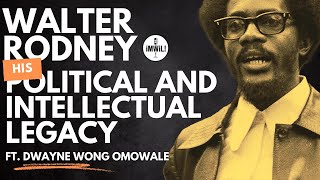
2:58AJoining Wayne will be Dr. Vibert Cambridge. He’s the current president of the Guyana Cultural Association out of New York, and attorney-in-law, at law, Colin Moore. They’ll be joining Wayne with their points of view as to how the involvement of the Guyanese in the diaspora could be made possible. Well, on June 13th, 1980, the world learned of the assassination of Dr. Walter Rodney on the streets of Georgetown, Guyana. June 13th, 2015 marked the 35th anniversary of the death of this prominent Guyanese historian, political activist, and preeminent scholar. Joining us on the forum will be author and historian Eusi Kwayana. who worked with Dr. Walter Rodney as a member of the Working People’s Alliance, the WPA, in Guyana.
3:52AAnd joining us also will be Professor of Africana Studies, Dr. David Hines. That during our second hour on Caribbean Forum. So tell someone that Caribbean Forum is on the air for the next 2 hours here on the Uhuru Radio Network, where you can log on 24 hours a day, 7 days a week for live and recorded programming. You’ll be enlightened by programs such as Africa Live, Diasporic Music, Reparations in Action Straight from the Streets, Revolutionary Health and Fitness, and Golden Sunday Sounds with yours truly on Sundays from 7 to 10 PM Eastern Time. Also, please feel free to log on to uhurunews.com or uhururadio.com and click on the donate button and make a meaningful monetary contribution.
4:41AUh, so that you can keep your radio station on the air. We invite all you listeners to support this radio station by becoming sustaining paying members, because as a paying member, you will receive unlimited download access to more than 150 speeches by Chairman Omali Yeshitela found in the archives section of uhururadio.com. Well, all other archives of programs heard on the station are freely available for download or to hear through your browser. For a minimum contribution of just $10 per month, you can become a sustaining member and gain access to these speeches spanning 4 decades of theoretical and practical leadership from the Chairman of the African People’s Socialist Party.
5:26ASo subscribe today and support the online voice of the international African revolution. We have acquired a license for our FM radio station in St. Petersburg, Florida, and so it is even more critical that you support this network financially. as we embark on building this new FM station, Black-owned. It’s your Black media. So make a meaningful monetary contribution and donation today by clicking on that donate button on uhururadio.com or uhurunews.com. If there’s someone you know who does not have access to a computer right now, let them know that they can listen to us on their landline, their iPhone, their iPad, or their Android by dialing [number removed].
6:15AThat’s [number removed] and follow the prompts. Well, thank you for tuning in to Caribbean Forum. Here is Corey Harris singing about Walter Rodney.
6:36BSay Father Walter.
6:43DWho remember Walter Rodney? Who remember him? Who remember Walter Rodney? Who remember him? Who remember Walter Rodney? Who remember him?
7:04BWho remember Walter Rodney?
7:07DWho remember See, Brother Walter, he just wanted to be free, chant about the history, chanting down slavery. He came to Africa today looking for that brand new day. Rock Nation with the roster, many minds he delivered, banned by the government. And everywhere he went, Rodney, a testament of fighting against the system. Who remember Walter Rodney? Who remember him? Who remember Walter Rodney? Who remember him? Who remember Walter Rodney? Who remember him? Who remember Dr. Rodney? Who remember him? Said soon the truth be told, how Babylon got her gold, and how the Pope in Rome, Rome paid for his golden throne. Times and days are dread, dread. Listen to what Rodney say. Some will heed the call. Some gonna stumble and fall. Well, make you never stumble. I said make you never fall. I said the conquering lion rules over all. Said make you never stumble. Well, make you never fall. Said King of Kings, the cause. Selassie rules over all. Oh yes!
9:22BWho’s over all?
9:25DHey, who remember Walter Rodney? Who remember him? Who remember Walter Rodney? Who remember him?
9:39BWho remember Walter Rodney?
9:43DWho remember him?
9:47BRemember, remember, remember.
9:50DRemember him.
9:55BBrother Walter. Brother Walter.
10:06EBrother Walter.
10:26AHere is Dr. Walter Rodney with a historical class analysis of Guyana.
10:32FWhen slavery ended in the Caribbean, as many people even casually familiar with the Caribbean would know, the population was at that time essentially African-based, the vast majority of the population, and it was subsequent to slavery that a large number of other ethnic groups were introduced to fulfill the function of labor in the society. Indian immigration was the largest single sector of immigration, but we also had immigrants from China, from the Madeira and the Azores Islands, from Europe itself to some extent, from the Caribbean islands and so on. But the Indian immigration was the largest and the most consistent source was the subcontinent of India. Consequently, at a certain point in the late 19th century in Guyana and indeed in Trinidad, the Indian population became first of all a substantial minority, and in the case of Guyana, in the present century they became the largest single ethnic group, and that is the basis of the so-called racial division in our society.
11:48FWhen African and Indian met in a Caribbean context, for all practical purposes, that was their first physical and/or social confrontation. It was not a continuation of relations which had independently been established between Africans and Indians, and therefore it meant that their appreciation and evaluation of each other had to develop in situ. Whatever relations exist between Africans and Indians in the Caribbean were developed right there in the Caribbean. They are not relations which represent a carryover from any other type of contact which Africans had with Indians. And yet at a very early stage of the relationship between Africans and Indians in Guyana, it was perceptible that both sides were hurling racial or racist barbs at each other.
12:49FNow where did these barbs originate? How did they develop in such a short time in the relations between Africans and Indians? In pursuing this question, it was interesting to identify the stereotypes which Africans and Indians utilized with respect to each other. The stereotype of the African was brought straight from slavery, the stereotype which in our society was known as Quashie. Quashie being a, a gross deformation of the Akan name Kwesi. Kwesi became Quashie in the, in the, uh, in the Creole rendition of the word. And this -- and, and the African slave was given a series of attributes which those who know the literature on racism, uh, would, would readily recognize.
13:43FThe attributes of being lazy, Of being stupid, of not -- at one point, although capable of carrying on the most backbreaking work, is still in a controversial fashion, in a contradictory fashion, regarded as lazy, regarded as given to music, given to idleness, and so on and so forth. The whole package that still in one way or another informed some of the racist literature and the racist stereotypes of the black man. Now that was Quashie, the African. The Indians inherited that assessment, that stereotype of Quashie. They had no notion of who Quashie was because they had not met Quashie. They had just arrived in the society, but they inherited lock, stock, and barrel that stereotype that had derived from the plantation society.
14:40FAt the same time, the modified plantation society of the post-slavery era quickly built up its own stereotype of the Indian. The Indian was called Sammy. That sounds rather Anglicized, but what it really referred to was the title Swarmy, uh, S-W-A-R-M-Y, which in effect, in, in the English version at any rate, Um, that would be the spelling, but it relates to an Indian of a certain, uh, a Hindu and a person who had a religious training and a religious, uh, inclination, a priest almost. Now the word was taken then out of the names of many Indians like Ram Sami or Vera Sami, and they simply said this is Sami.
15:28FNow Sammy was also reduced to a stereotype of a rather cunning, given to idleness also, but willing to work under certain conditions in order to advance his own aims, but not to be trusted, and so on and so forth. There is another stereotype that is built up of Sammy, and again, interestingly enough, the Africans soon acquired the stereotype of Sammy. So the plantation society was producing its stereotypes of these 2 racial groups, and because of its own economic as well as cultural dominance, the society imposed these stereotypes on both groups of working people, Africans and Indians. I won’t go into any further detail on that, but maybe there is a broader lesson to be drawn.
16:19FIn many of the studies on racism, there has arisen in the last several years a tendency to want to try and find the roots of racism in some very distant epoch, using sources like the Bible, using the very earliest contacts between Africans and Europeans. And it seems to me that one of the weaknesses of that scholarship and the methodology which it utilizes is that it takes issues such as acts of individual prejudice as between white and black, or the way that a particular black is treated in European society, but it does not follow through to see where that prejudice is transferred from being a mere individual prejudice to being part of an institutionalized relationship.
17:11FAnd it is only in the plantation society, only in the slave society of the New World, that the framework was established precisely for those institutional relations, so that the racism ceased to be merely a quirk, a personal aberration, and became instead a rationalization for a whole system of production. And this is why there’s a qualitative difference between racism as understood in the New World as it developed particularly in the 17th and 18th century and any other acts of individual prejudice which can historically be illustrated as having occurred prior to that date. In other words, it seems to me that even after one has illustrated that racism existed before capitalism, it still remains true that the capitalist system in a particular phase of its accumulation in which it required to subordinate non-white people in a particular way was responsible for both aspects of modern racism, namely the involvement of race as a category in determining how people had access to the means of production, the involvement of race in the actual production relations, and secondly, inevitably, the dissemination of racist ideas as a necessary part of the ideological superstructure to maintain that type of exploitation.
18:41FSo it is within the Caribbean, it seems to me, that one must go back, just as it is necessary, and many scholars are finding it necessary in recent times, to return to the 17th century, to return to that very decisive moment in the expansion of the European economy when it became an international economy to understand the genesis of capitalism on a world scale. In the same way, it seems to me that we have to look at the development of the sub-Caribbean society to understand the development of racism as it exists today. Now secondly, one of the interesting ways of seeing how that racism was very much rooted in the immediate and environment and must necessarily be a social phenomenon is merely to look at the way in which Guyanese delineate them, because the racial delineations are different from other -- from those which obtain in other parts of the world.
19:39FAll of the migrant peoples who came to Guyana were considered as a specific race. Therefore, when Portuguese came from the islands of Madeira and the Azores, the Portuguese up until today are regarded as a racial group in Guyana. That is a definition of race, enabled to the population to refer on race and to the Portuguese as another race, because their perception of race was inextricably bound up with their perception of how people made their living, how they had access to the means of production. And initially the Portuguese, like the Indians, like the Chinese, came into our society as, as bondsmen.
20:22GJoin us on the 2015 Marcus Garvey Legacy Cruise, a fun-filled African-centered cruise aboard the Carnival Splendor, leaving from the Port of Miami in Florida and stopping in Cozumel, Belize, Honduras and the Cayman Islands. Hear the unique perspective and insight of Omali Esitela, Chairman of the African Socialist International. We invite Africans everywhere and our friends and allies to share this unique experience of African culture, history, great food and friendship on a relaxing 8-day cruise from November 29th to December 6th, 2015. For more details and to place your booking for the 2015 Marcus Garvey Legacy Cruise, call our exclusive agency, Tanya’s Travel, at [number removed]. That’s [number removed]. You can also log on to yahoolulegacycruise.org for itinerary and pricing information. Call today because procrastination is the thief of time. 2015 Marcus Garvey Legacy Cruise, November 29th through December 6th. Call Tanya’s Travel at [number removed]. That’s [number removed], or log on to yuhurulegacycruise.org. See you on seas.
21:59CIt’s now time to order Omali Iyashitella’s new book, The Uneasy Equilibrium: The African Revolution Versus Parasitic Capitalism. Chairman Omali’s groundbreaking political analysis shows the way forward for people looking for answers during this period of crisis for imperialism. A crisis that offers great opportunity for colonized peoples everywhere. This latest book by the founder and leader of the African Socialist International and the Uhuru Movement costs $29.99. Order now at burningspearmarketplace.com or by calling [number removed]. Call [number removed] or visit burningspearmarketplace.com today. Uhuru means freedom.
22:57HInformation, ideas, reality. That’s what the Burning Spear newspaper offers you each month. Truth about government, society, entertainment, and the world around you. The Burning Spear is the oldest Black Power newspaper in existence, and your 1-year subscription is only $25. Get the insight and perspective that the mass media machine cannot and will not deliver. Read dynamic articles on the most pressing issues affecting the lives of African workers in the U.S., Africa, and around the world. Each month you’ll find real political analysis of the crisis of parasitic capitalism, insight into world and local events, and a focus on the realities and struggles in the heart of the hood, expressing a vision and voice of the African working class. Uncompromising truth, unwavering focus. The Burning Spear newspaper. This is Black power in the 21st century. Subscribe today and don’t get fooled again. Order your subscription now. Go to burningspearmarketplace.com and click on Spear. That’s burningspearmarketplace.com and click on Uhuru.
24:03JThe importance of black media is that it is important to educate our people globally, not just us Caribbean. Global education about monetary money matters is very extremely important because the whole game comes down to money at the end of the day. So Uhuru Radio is playing a very important global part of assisting people in understanding that which is the basis of living.
24:29AOn Sundays from 7 to 10 PM Eastern Standard Time, we’ll bring you Golden Sunday Sounds with me, Ron Bob Semple. A relaxing 3 hours of music from around the world. Music is the food of love. So tune in every Sunday evening from 7 to 10 PM Eastern Standard Time for Golden Sunday Sounds.
24:52JThis is Felicia Persaud.
25:01EThe Uhuru Radio Network has news and culture direct from Africa, the Caribbean, and wherever Africans are working, playing, and fighting to be free. Support Uhuru today.
25:11FGet your news, views, and interviews which affect Caribbean and Caribbean-American nationals by tuning into the Caribbean Forum with Ron Bob Semple here on the Uhuru Radio Network.
25:22CTune in to Caribbean Forum Saturday mornings, 9 to 11 AM Eastern Time, with Ron Bob Semple on the Uhuru Radio Network.
25:31LLadies and gentlemen, this is the Mighty Sparrow, the Supreme Calypso King of the World, and you are tuned in to the Caribbean Forum with Ron Bob Semple.
25:54DYou’re listening to Caribbean Forum with Ron Bob Semple, the voice of reason. You’re listening to Caribbean Forum with Ron Bob Semple.
26:18AThis is Caribbean Forum with Ron Bob Simple, the voice of reason.
26:49BIt’s a brand new day, so let’s celebrate. It’s time to celebrate. It’s time to cooperate. It’s time to live in love and unity. It’s time we live as one family. One people, one nation with one destiny. Working together to bring us prosperity. One love to the American. One love the African American. One love to the Caucasian. One love the Portuguese and Chinese. One love Halloween and Guyanese. One love, no matter where you go. One love, I hear your man and go. One love, it’s something you got to know. Blow, man, blow! Hey, hey, hey! Yes, push it! Come on, everybody, put some love in the air! No, man, no!
28:26EHey!
28:27MHey!
28:28BYes! Push it! It’s time to restore our dignity. It’s time we practice equality. It’s time to bring back democracy. It’s time for inclusivity. Let’s give God our praises, great things he has done. The victory is ours.
29:17AAnd folks, I’m with you. We were here Saturday mornings. 9 until 11 AM Eastern time, rebroadcast during the week. Joining me at this time are 3 gentlemen who have, who have played significant strokes in this match of the Popeye Fields of Endeavor. We face the Wayne Hall For those of you who are very much involved in the social media, do on occasion listen to Mr. Wayne Ford as he shares with us his videos of his perspective of what’s happening in Guyana and what could happen in Guyana. As most of you are probably doing all that, uh, Guyana has just concluded its elections on May 11th and a new administration is now leading Guyana. Also joining us is Dr. Vibert Cambridge. He’s the current president of the Guyana Cultural Association based in New York City and also in New York City specifically Brooklyn, Attorney Colin Moore. My brothers, good morning and welcome to Caribbean Forum and the Uhuru Radio Network.
30:47LThank you, thank you, Ronald. Thank you.
30:51EGood morning, Ronald.
30:52LThank you.
30:53AAbsolutely. Dr. Vibert Cambridge, as I just mentioned, Guyana has concluded its elections on May 11th and there’s a new government, their coalition, their Partnership for National Unity and the Alliance for Change coalition. What is your take on this new administration and what do you feel it can and/or will do to and for Guyana?
31:25LWell, for me, the first consideration is that we may be at the end, or the beginning of the end, of ethnopolitics in Guyana. That is, by that I mean administrations whose support base are of primarily one ethnic community. I believe that we may have come to the end of that. And this is us taking the long view, looking across the 20th century from that, you know, from the colonial period of governance until 1953 and the preparation for independence, ’53 to ’56, and the post-independence era. We have been dominated by what scholars like David Hines and so refer to as ethno-politics. I think that this has come to an end, or at least we are at the beginning of the end of that, and we are now in a position to look at some of the persistent challenges that have faced the governance of Guyana over the past, you know, 100-plus years.
32:48Lthe issues of drainage, the issues of access to health, access to better education. That’s what I believe, that we’re at a new moment. I think this new administration will have a challenge of human resources, a challenge of organization, but as I suspect that topic of this conversation is about the potential role the diaspora could play in this, in this situation. So that’s my immediate take on that, Ronald.
33:25AAttorney Colin Moore, I’d like to pose the same question to you.
33:29II wish I could be as optimistic as Dr. Vibert and hail the end of ethno-politics, but I tend to be a little more pragmatic I think that ethno-politics or plural racial pluralism has been a part of our social structure for over 100 years.
33:49JOh, sure it is.
33:51IYes, and as a matter of fact --
33:53AExcuse me, gentlemen, if you can just speak up a little for me, please. Your signal is just a tad low.
33:57IYes, I said I wish --
34:00AI appreciate that. Thank you very much, Colin.
34:02IYeah, I wish I could be as optimistic as Dr. Cambridge. To herald the end of ethno-politics. But I think that racial pluralism has been a part of our social structure for a very long time. It was encouraged by the colonial power, the British, as they brought in, for example, at the end of slavery, as they brought in indentured servants from India to take over the sugar estates, because blacks at that time You know, there are 2 schools of thought. Blacks were willing to work and remain at the sugar estates. However, the colonial bosses, the sugar barons, decided to push the blacks out when they were demanding higher wages and better working conditions.
34:50IAnd instead, they decided to employ Indians to take the place of blacks. And what they did is they set one group against the other. They kept telling Indians that blacks were lazy, that blacks were no good, that blacks were this and that, and so forth. And they intentionally inculcated ethnic conflict. I grew up in Port Morant, for example, and I could never forget as a young kid, they would have these designations on the estates. They would call one section the nigger yard and the other one they’d call it the coolie bong yard. And the Europeans, they would refer by other euphemisms. For example, there was the Portuguese quarter and the Chinese quarter.
35:41INotice the euphemism quarters. But when it came to blacks, they would call it the nigger yard and the coolie bong yard, and they would set one group up against to compete with the other in wages and working conditions. So there has been this legacy of racial division in Guyana. And when in 1953 we had the elections, as you recall, this ethnic conflict was so embedded that there was a partial coalition between Mr. Burnham and Dr. Jagan, which did not last. For a long time. And the reason why it did not last is because we had a long legacy of racial division which could not withstand even the fervent attempts by nationalist leaders like Jagan and Burnham to bring together the groups.
36:36IHowever, what I see around, Bob, is that there is hope, however. I mean, all is not lost. There is a -- we have got to recognize there’s a long tradition of competition between the 2 groups. And what Mr. Granger and others have done is put forth a new theory of one Guyana. The difference between this problem, this situation today, and the situation 23 years ago when the PPP took power was that the PPP intentionally exploited the racial divisions in 1993 to polarize the racial groups. And what this new APNU Coalition has done is to recognize pragmatically that there are divisions, and they are making -- they’re taking affirmative steps to bring the groups together by forming coalitions and forming common agendas and common programs for the restoration of some degree of racial cooperation between the groups.
37:41LWhat challenges do you see? I remain essentially optimistic that this is the beginning of the end of that. I have faith in youth. I have faith in cultural practices that are indicating the possibility of this future. So I’m not saying that we’ve come to the end of it. I’m saying that this may be the beginning of the end of that ethno-politics. I remain optimistic.
38:09AWhat challenges do you foresee the coalition facing as they try to, you know, turn around what has been going on in Guyana for the last 23 years?
38:21II’m sorry, Dr. Jim.
38:24EYeah, okay.
38:25IThere are significant challenges. One of them, first of all, is a political challenge. The fact is that the coalition has a majority of one vote. So if somebody is sick, for example, and unable to attend a session, then that could be the end of the government. You know, in other words, there’s a very, very narrow plurality, and we have got to recognize that. And then you have an opposition that says it may not even attend Parliament, it may not go into Parliament. So the PPP is acting like a spoiled child. In other words, having lost the game, it wants to take home its marbles, and it may not want to cooperate.
39:06ISo I foresee we may have another 4 years of extreme racial tension and non-cooperation. So that’s a challenge. There’s a political challenge. There’s an economic challenge. The economic challenge is that Yes. They have, they have taken virtually all the resources out of the treasury, and the new government now starts with perhaps a bare cupboard that is almost empty. And while they have put forward an interesting program about improving the salaries of civil servants and so forth, my question is, where is the money going to come from, the money to do all these ambitious programs? Like increasing the salaries of civil servants, increasing the salaries of the police, of the GDF, and of the public sector, which are very good ambitions.
40:00IBut the reality is that there has been 20-something years of reckless spending of the country’s resources. And our main export industries, for example, sugar and rice, are run by a Are on the point of collapse. A lot of people might not know this. I happen to come from the rural areas, so I know this, that there has been almost a criminal expenditure of resources. And now we have lost -- the price of sugar has gone down. We have lost rice markets in the Caribbean. We have lost the Cuban rice market. We have lost the rice market in Jamaica and also in Trinidad. And so we are losing in terms of our markets abroad.
40:52IAnd the sugar industry, the cost of production of Guyana sugar is now one of the highest in the world. As a matter of fact, for every ton of sugar that we produce, we are losing money. And the PPP has staffed has employed, has put its own individuals in charge of GuySuCo, and there has been 33 years of maladministration. For example, the largest sugar estate in Guyana, at Skeldon, is almost on the point of collapse. They purchased a very expensive sugar factory there which is not working to capacity. So we feel very serious economic problems from the fact that our 2 major exports, sugar and rice, are on the point of collapse.
41:40IAnd then our, our bauxite industry is also in trouble because of bad administration by the Chinese and by the Russians and so forth.
41:49AWell, Colin, you ask where will that money come from. Maybe you can start with what has been reported, that there have been 10 billion Guyana dollars that had been sitting in a dormant account.
42:02LDormant --
42:04Inot only dormant account. For example, the rice farmers owe almost $13 billion in deficits to the commercial banks, and that’s because they have borrowed money and they have not had profitable markets for their products.
42:23ESo this --
42:24Ithe government will have to find a means to pay off those banks before we even start the next crop.
42:31AIf you’ve just joined us, you tuned into Caribbean Forum with me, Ron Bob Semple, here on the Uhuru Radio Network. We’re here Saturday mornings, 9 until 11 AM Eastern Time, and then rebroadcast during the week. We continue our discussion in the aftermath of the elections in Guyana, which are held on May 11th. A new administration is now in place. The Partnership for Unity and the Alliance for Change Coalition is now leading the country. And my guests in this segment are Dr. Vibert Cambridge, Tony Colin-Moore, and Mr. Wayne Ford. Wayne, you have been one who has been really on top of the Constitution in Guyana. And I think it was Vibert that just alluded to -- no, it might have been Colin -- alluded to the fact that the PPP still has not put their butts in those seats in the Parliament. Is it true that the Constitution states that a Deputy Speaker of the Parliament could only be elected based on votes from the opposition?
43:47JWell, Ron, I’ve read that. I haven’t verified that information, so it would be remiss of me to offer an opinion in that regard. Okay. Maybe Colin might be more familiar with that. Well, let me just add something here in terms of the conversation on the ethnic -- the racial division in Guyana. Of course, we all know that it started a long time ago, and Walter Rodney has outlined the racial barbs and the the first time that the Indians and Africans met in the Caribbean context, and why it possibly started there. But beyond that, if we get into the more contemporary area in the ’50s, as Carla has referred to, from there on until possibly now, politicians have promoted and perpetuated what I call ethnocentric politics.
44:37JAnd that’s politics of division by race. And it’s only recently with the APNU that we have seen a thrust and a change of the political landscape in terms of trying to bring parties together of different ethnicities and calling it a partnership of national unity and running on a platform of national unity. The interesting and ironic thing here is that we seem to be more polarized at this point than before. For instance, looking at the parade in Brooklyn, New York, 2 weeks ago, it was predominantly Afro-Guyanese and it was called a victory parade.
45:13LBut wait, but wait, why is that surprising? You know, Brooklyn or the Guyanese diaspora in New York reflects Guyana’s residential polarization. And so why is it surprising that you had a predominantly of Afro-Guyanese in Brooklyn. That’s where a majority of Guyanese of African ancestry lived, you know. I don’t see that it was mighty strange. I don’t think it is an indication of anything beyond this reality. The effort at bridging Brooklyn and Queens, that’s an ongoing struggle, and it is in that struggle that I see the optimism. Unfortunately, I am not a pessimist, right? And to say that you got all these problems and just pile them up, it implies that we don’t have the capacity as a people to do something about it. And I believe we do have the capacity to find something.
46:16IBut Vibert, let me ask you this. Why is it that Central Brooklyn is almost 95% Afro-Guyanese?
46:24LBecause of immigration from Central Harlem. Hold on a minute.
46:28Iand Richmond Hill is almost 95%.
46:31LBecause of immigration patterns, Colin. Go back to the ’60s, go back to the, go back to the turn of the 20th century when Guyanese started to migrate like the other West Indians to the United States. I think we take too much short views about Guyana and its relationship with the United States.
46:50IBut ask yourself the question, why is it that Indo-Guyanese decide not to immigrate to, let’s say, Central Brooklyn, where the earlier patterns of migration were? Let me finish.
47:06LLet me finish.
47:07IAnd why is it that they have decided to set up a separate enclave in Queens? Ask yourself that question.
47:15LI think any effort at us attempting to answer this now is going to be driven by knee-jerk reaction and fail to recognize some of the things that attract immigrant groups. Why are Guyanese in Schenectady? Why are Guyanese, you know, where -- why are Guyanese in Minnesota? I think we need a deeper understanding of immigration, and I think we should consult the works of people like Aubrey Bonnett, Laird Matthews, Desmond Roberts, who have studied this thing systematically for us to get answers. I think what we are doing here, it’s just riding on, you know, the obvious. You know, the 2 communities migrated at different times into different environmental opportunities.
47:58INo, but that’s precisely the question -- not precisely the question I’m asking. No, we understand that different people migrate at different times. Puerto Ricans, Dominicans, and so forth, all groups do that. But why is it one ethnic group decides to migrate and live in a particular location and another group decides not to live in that location?
48:23LI’m seriously recommending Desmond Roberts’ essay in Laird Matthews’ recent book on English-speaking Caribbean immigrants to New York.
48:34IYeah, but the point is you look at different patterns of migration with Haitians or Dominicans or Puerto Ricans, and you don’t see that ethnic --
48:44LAnd follow -- no, follow the Jews, follow the Russian immigrants in New York, you know, look at those things.
48:55ILook at the poor ones, at the carnals of them. Yeah, but they do not have separate patterns of residency. For example, that Jews from certain parts of Europe do not necessarily locate in specific enclaves.
49:16LWhat does that say, Colin?
49:18IPardon me, what does that say?
49:19LWhat does that say?
49:20IWhat it says is that --
49:21LIt says that something initiates some chain-link sensing, some enclave, some community, some network is there that receives and provides soccer and support and guidance and links and all those kinds of things. And that, you know, the Guyanese residential patterns in New York is representative of our history and culture. And it is, you know, so what we saw under the independence, you know, the victory march is emblematic of our reality.
49:53EAnd what is that reality?
49:58IAll you’re saying is that we have a racially polarized reality and it replicates itself in migration patterns.
50:06LNo, about Guyana. It never gets to places like Australia where, you know, where we’ve got a small population, you know, more geographically dispersed. I’m saying that the reality on the ground in New York is part of the work Indeed, indeed.
50:32JAnd if I may add just quickly, the migration of different ethnic groups. For instance, we’ve got Chinatown right there next to Little Italy, and then we’ve got the Koreans in Queens. So, but they do not divide themselves into North Korea and South Korea. They’re there. The Chinese do not divide themselves in Chinatown. They’re there. And Little Italy and the whole combination, the Russian group out in Or is it Bay Ridge?
50:54EBut the thing we --
50:55Jthe point we’re trying to look at here, and Bible, you’re right, it reflects the reality. And that’s what I was going to -- the point I was going to make, that that parade reflects the reality in Guyana and reality in the diaspora. And one of the interesting things you guys can comment on this, Mr. Harmon, during his presentation speech at that parade, asked for a rally to be held in Queens. Of course, we know that what he meant by that, he recognized that there was no participation from the ethnic community in Queens, although they’ve got a 30-minute commute. People came from as far as Florida, myself included, and Washington and Georgia for this. However, folks in Queens, 30 minutes away, did not attend. Many of them did not.
51:39MThat’s right.
51:40JAnd Mr. Harbonne asked to have a rally in Queens.
51:43AWell, the question is, why do we want to have 2 rallies, one in 2 different ethnic Yeah, but do you know if the organizers extended an official invitation to have them represented in Brooklyn?
51:54JYes, they did.
51:56IAs a matter of fact, I was part of the group, Ron Bob, that has been conducting outreach to Queens. So there were specific invitations given and affirmative attempts made to bringing the Indo-Guyanese population from Queens. So let’s you know, let’s be honest about the situation. It’s good to have nice rosy glasses about racial cooperation, but the fact of the matter is that we live in a society which is not, which is not integrated. People must have individual opinions.
52:37LPeople must be motivated by their own rosy glasses. One of the problems in Guyana is top-down think, and one of the challenges that this new administration will see is the perpetuation of top-down think.
52:53AOkay, boy, very interesting. Now we’re talking about Guyanese in the diaspora, between 10,000 and 12,000, that has been estimated attended attended that victory rally in Brooklyn. Wayne, President David Granger, during his address to the first sitting of the 11th Parliament, where the PPP Civic was not represented, the President said, quote, we shall propose policies that provide opportunities for local entrepreneurs and investors and our huge diaspora to develop our abundant natural resources. What should this approach be?
53:47JWell, the interesting thing is that -- and it’s a good point there because President Granger has outlined and articulated clearly in his trips to the US and even in Canada the need and his intent to form a diaspora department. As a matter of fact, the Manifesto 2015 and Foundation 9 clearly outlines the diaspora integration process, or foundation for that, as a part of an integral part of development in Guyana. His speech to the Parliament clearly was a reflection of the manifesto and his intention to make things happen. Recently, Mr. Greenwich in Jamaica indicated that there will be a diaspora department somewhere along the line. The interesting part of that is that it was in Jamaica Observer and not in the Kite Shore News or Chronicle or anything coming out of Guyana.
54:42JSo that’s where we heard that something is going to occur in that regard. But we know that, and for those who know, it is a process. The diaspora integration or engagement is a process. It’s a lengthy process. It’s a discipline in itself. It’s almost an industry. Or sector. Some folks have the view that it is a one-dimensional affair of getting Guyanese to come back home or getting your immigrants to return home and set up shop and invest. And that’s just one tiny facet of the engagement process of the diaspora, which has so many resources in terms of qualifications, skills, experience, exposure, and expertise. So the knowledge transfer is a major part.
55:22JIt’s called social social remittances, where those in the diaspora have specific norms and beliefs and values which can be transferred because of their involvement in a developed country or developed countries. And so this sort of social transmission or remittances is an important part also. And there’s many programs that can go along with that to help the diaspora. So what President Granger did there was eventually to lay the ground once more for the diaspora engagement. What is interesting is that there are over 56 countries with ministries dedicated specifically to diaspora. India has it. Haiti has it. Many other countries have diaspora ministries. Many other countries have sub-ministry levels.
56:10JGhana has 26 ministries formed recently. And so we look at that and we ask ourselves, well, Why not? Why didn’t we have a ministry dedicated to diaspora affairs, knowing that Guyanese send home over $400 million in remittances, which amount to -- I was reading recently -- amount to about 17% of GDP for Guyana? India doesn’t have that amount of GDP being sent back, remittances sent back that affects GDP, neither does Brazil, Germany, and many other countries. that have diaspora ministries. In addition to that, these countries do not have 95% of their emigrant stock outside the country, and that’s the ratio of the number of people living outside the country to those living within the country.
56:54JGuyana is somewhere 95%, 100%, some say more, more Guyanese out of Guyana than in Guyana. So when you look at these 2 factors, that you’ve got tremendous amounts of remittances and you’ve got a large number of the Guyanese population living outside Guyana, you ask yourself, about, well, how important are we or is the diaspora to the whole context of national development in Guyana?
57:16AVibert, I’d like your take on this, please.
57:18ESay again?
57:19AYeah, we just have a few minutes. Vibert, I’d like your take on that statement.
57:23LI think Wayne must be congratulated for the systematic and thorough work that he is doing in terms of mobilizing data. I had the good fortune -- my students a couple of weeks ago the good fortune of having Mr. Wayne Ford, who in the literature would be defined as a first mover, to speak about the challenges and opportunities that are involved in mobilizing Guyana’s diaspora. A couple of points that I would like to make. A, we should not only be looking for high flyers in the diaspora, we must also be looking for people with medium-level skills. So diaspora engagement has got to be an inclusive approach, not only about the high flyers intellectually, but about the citizens with middle-level skills. It is an organizational approach. As Wayne says, it takes a long time. It’s got to be systematic, and it is not only about remittances. There are strengths and there are weaknesses. It calls for solid thought and thinking And I again must commend Wayne Jones and people like Desmond Roberts and Lair Matthews and Aubrey Bonnett and Colin Moore, who’ve been thinking this issue through.
58:41AColin, I’d like to give you the last word before we wrap up, please.
58:44LRight, so I think we’re at the beginning of a conversation, as we’re like at the beginning of the end of ethno-racism.
58:50IYes, I agree with with Vibert and also with Wayne about the importance of the diaspora. But what I am a little tired though of, these politicians throwing around rhetoric like about the engagement of the diaspora. They speak constantly about it, but when you look at their actual policies, there has been very, very few attempts to actually engage the diaspora. I want more than rhetoric. I want to see policy. For example, I was a bit disappointed at the last visit of the individuals from Guyana, you know, the ministers who came down and so forth, you know, including the president. The point is that there are a lot of people in the diaspora who did not get an opportunity to meet with them and to interact with them. Now, they ought to take a page out of the book of the Israelis, for example. Ms. Golda Meir, whenever she came to New York, the first persons whose hands she shook, she went into Crown Heights and she shook the hands of the Grand Rebbe of the Hasidic Jews.
59:58AWell, gentlemen, unfortunately we’ve got to wrap up. Our segment is over. I’d like to thank Wayne Ford, Dr. Vibert Cambridge, and Tony Colin-Moore for joining me here on Caribbean Forum. Stay tuned for historian and author A.U. Sekouyam and a professor of Africana Studies, David Hines. Thank you, gentlemen.
60:17JThank you, Ron. Appreciate it. Thank you, gentlemen.
60:20EThank you.
60:20AYou’re listening to Whooradio.com, voice of the international African revolution.
61:01NDo you know of El Dorado? The ancient story told. About that fabled city whose streets were lined with gold. The news was heard by Raleigh, and a search was soon begun among the green hills.
61:34DNot trees.
61:37NToward the setting sun. They traveled up the rivers. Searched mountains great and tall. And found that priceless treasure. The mighty Kaieteur Falls. Do you know of El Dorado? The ancient story told about that fabled city whose streets were lined with gold. They asked me, Amerindians, about this golden city, but all they had were diamonds and a land of endless beauty. Guyana, so green and great. Caressed by the ocean breeze. A people so proud and peaceful. And a land of mystery. Do you know of El Dorado? The ancient story tells of a land of mystery. told about that fabled city whose streets were lined with gold. Do you know of El Dorado? The ancient story told.
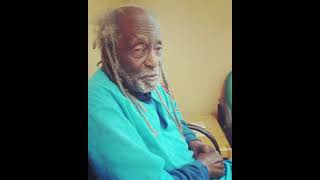
63:38AYes, do you know of El Dorado? The ancient That is Bill McCrooney Newman out of Toronto, Canada, bringing us back here on Caribbean Forum with Eldorado. Yes, so welcome back to Caribbean Forum on the Uhuru Radio Network, where we examine issues that affect Caribbean nationals both at home and across the diaspora. Well, my next guest is no stranger to these airwaves. He is a Guyanese politician, author, a historian, born in the village of Luzignan and moved to Buxton at the early age of 7. He was once a Minister of Communication and Works and co-founded the African Society for Racial Equality and later the African Society for Cultural Relations with Independent Africa, ASCRIA. In addition to all that and more, My guest recently celebrated his 90th birthday. Please welcome Brother Eusi Kwayana. Brother Eusi, good morning.
64:49EGood morning, Brother Ron.
64:52AHow are you, my brother? First of all, first of all, thank you. Thank you for rising so early to join us here on Caribbean Forum. As you are on the West Coast, which is just 3 hours behind Eastern Time.
65:07EThat’s easy for old people.
65:09ADid I make a mistake by calling that number, Brother Eusi?
65:15EOh no, not at all. I’m confirming it.
65:19ABrother Eusi, I’d like to take you back to the late 1940s and early 1950s. the period of your first foray into politics. What motivated you to get involved in the national political arena?
65:38EIn one word, you know, there was a whole, a whole sense of injustices, you know, and it was a time when the old guard in the old Legislative Council could not cope with this, these injustices as they came down, because I suppose they had been attuned to them. And it was when I heard Cheddi Jagan running for the 1947 elections in Central Demerara that I decided that politics And I’ve not been a politician ever since, but I have been in politics, which I saw as a creative activity and still do. But, um, yeah, that is when I came in. Of course, I was active with Martin Stevenson and others in the local situation at first, cleaning up the local administration and attempting to I used to work along with farmers and other interested people, housewives and so on, in the domestic scene. So it’s quite natural, you know, you look around you and you see that the house needs sweeping and you take up a broom.
67:05AHad you not gotten yourself involved in politics, What would you have been focusing in on as a quote-unquote career?
67:21EOh well, I did -- I never focused on politics as a career. Okay, if you will pardon me. Otherwise, um, I would have been elsewhere. Um, it was never a career for me, and that’s why I ran into so much trouble. I was teaching and I still, um, I’m still a teacher. I’m still happy teaching when possible. I have also been engaged in drama. That was a first love of mine, and I’ve been active there. You know what, you mentioned that I was a co-founder of the African Society for Interracial Equality and Values.
68:07MYes.
68:09EI was also co-founder of the very mighty PPP. Don’t forget that.
68:14IAbsolutely.
68:18EAnd, um, I don’t know, you know, my first interest as a thinking person was in science. This will amaze a lot of people. I was in the church, of course, the Anglican Church, and I was very interested in drama and science. In drama, we were introduced to high drama by Reverend D.W.H. Pollard from Denhamstel, who was a pastor in the village there. And we had a lot of musical traditions in the Anglican Church, Ken Burgon, of whom Mr. Budhu Singh has written. But I was interested in physics.
69:01AOkay, okay.
69:02EI was interested in physics, and then I found I couldn’t study physics because my salary as a pupil teacher, $24 a month, was what the science teacher needed to teach me. So I switched. I switched to economics, which didn’t need a lab. So anyway, those were the things that dabbled in.
69:32AApart from the salary --
69:35EI am more interested in teaching than anything else. That’s where my energy is.
69:41AApart from the salary that was being offered to you when you got yourself involved in physics, is there something else that I don’t understand your question. Okay, you mentioned --
70:00EI said I was interested in physics.
70:01AYeah, right, right.
70:02LNot civics.
70:03AYeah, right, right, physics.
70:04EI wanted to study physical science.
70:06ARight.
70:07EBut I couldn’t afford the labs.
70:09ARight, okay, so that was the primary reason that you did that?
70:14EThat was my only reason.
70:16AOkay, okay, okay, okay.
70:17EThat’s the only reason. I couldn’t do it. My father was long dead. And my mother was slaving to bring us up, you know. I didn’t go to high school for that reason. I refused. I said, no, I can’t. My elder brother is in high school and my younger brother should be there. I will go through the primary education route. So that was the kind of consideration.
70:40ATell us about the formation of the Buxton Ratepayers Association.
70:48EThat came up essentially at a time when Booker’s Estates Limited and the sugar producers behind them, supported by the government of the day, wanted to drive a canal, or really to have the rights to use a canal passing through Boxton Friendship, to transport canes from, I think it was Plantation Oval, onto Anmore. It was a time when there were changes taking place in sugar, close to the end of the Second World War. We had a program of centralizing factories, you know, getting one sugar factory to do the work of of 3 or 4. And so there was a lot of domestic resistance to that because it meant loss of jobs.
71:47EAlthough for the industry it was a step forward, it was technologically more sensible. But these things always have what they call, you know, they have friction, kind of economic friction. causes loss of jobs and changes of locations and so on. So it was at that time, and along with that, the Sugar Producers Association wanted this canal, which we call the right-of-way canal, to be granted. They want the rights. The canal was already there and they were paying a toll to pass their boats, but they wanted a lease lease for 99 years. And you know, you’re talking to villagers and you tell them 99-year lease and they know what that means.
72:41ESo we were up in arms against it, and a letter came to the, um, village council. It was a very crowded meeting, and Teacher George Young was the one who tipped us off about it because he knew our energy and so on. And he He was there like a lone wolf fighting the pro-sugar council as much as he could. So he got word to us and we filmed it all. It was a very, very, very vigorous exchange at the meeting. But that is where it leaked out. And then we took it to the streets. And that is what they did not want. It became a public issue, not only there, but we got in touch with the people acting in Plaisance and began to exchange speakers and visits.
73:40EAnd so there was a whole mood of resistance on the east coast of Demerara.
73:45AWhat passes through your mind when you hear or read about what’s happening with the sugar industry today in Guyana?
73:54EWell, I think the, the last administration has succeeded in doing what the colonial owners could not do. They have jeopardized that industry in a remarkable way. I cannot remember a time when sugar was such a hazard to Guyana. It has always been, you know, sugar or bauxite, and one of them would be the main earner of foreign exchange. And perhaps it still brings in foreign exchange, but with this, um, project, this Sheldon flagship project, and if that is a flagship You can just imagine the state of the other ships.
74:46LMm-hmm.
74:48EBecause all the, all the resources went into that, and I see that there’s going to be an investigation into it. But the previous administration has not yet said anything sensible about sugar since they squandered that money on Skeldon. But the moment I saw it, because, you know, I worked among cane farmers as a village councillor chairman. We had to do with representation of cane farmers to the authorities and everything, all these schools, the Marara Central Committee. And there too, we -- I was not a cane farmer, of course. I was a teacher in the people’s school, the white plant school, but got mixed up in all of these things. I wasn’t planting cane, I wasn’t mining sugar or anything like that, but we had this network going and Soon as I heard the capacity of Skeldon factory, the first question I asked myself is, where is the cane going to come from?
75:45BRight.
75:47EBecause when you have these high-powered mills, and this is what the so-called politicians don’t seem to understand, I hope that changes, you have to feed them. If you get a high-powered mill, you have to feed it, otherwise it will not work. everything will crash. And there was no plan for an expansion of cane sugar growing. So that -- I silently noted that. I wasn’t at the time engaged in sugar economics. Clive Thomas was doing a lot of that. And I just looked on and made a comment here and there. But I’m hearing the same issue now being played out. And that thing was such a hazard that I hear the lifter wasn’t working. Well, those of us born in estates and having to do with cane farming know that the lifter is what takes the cane out of the punt.
76:50ARight.
76:50EGet it into the mill. And when that is not working well, that is a very initial break down. That is really serious. I don’t know what kind of engineers, what kind of technical support the government had at the time, but, you know, it’s -- I mean, it is so well known now.
77:12AI think it was just a critical part of Guyana’s economy.
77:24BYes.
77:24ASo was the bauxite.
77:25EYes.
77:26AOn June 13th, Brother EUC, 1980, 35 years ago and a week, Dr. Walter Rodney was assassinated in Georgetown, Guyana. In 1974, you became part of the Working People’s Alliance, WPA, working as a member of the the party’s collective leadership and worked closely with Dr. Walter Rodney. What was that experience like?
77:58EIt was a very good experience. It was, it was the 3rd political party I would be in and the one in which I have had the longest stay. Because of a new kind of ethic, you know. It didn’t have a boss man. It didn’t have a maximum leader. It did not make deals and neglect the issues that brought us together, you know. And collective leadership was something I had been fighting for ever since the de-Stalinization in Europe, then it was exposed by Khrushchev at one of the congresses that, um, they had been going through a one-man dictatorship. It could hardly be a one-man dictatorship because they must have, uh, close assistants and loyalists who support them in their crimes.
79:04EBut that is when I began to think of the this kind of, um, new possibility for, for human advance. And right now I’m working on a book about the Guyana villages. It doesn’t engage any new research as such. I use the research of Norman Cameron, of Cook Young, of, um, Alan Young and other writers, and of a new writer named Simmons from University of Guyana, who is now abroad, I think, and gives the whole thing a new interpretation. And it has convinced me that ordinary people who may not have money, a lot of money, yet have a good instinct of governance. I wanted to to be like.
80:01ESo that is coming up very soon, I hope. It was interrupted by some personal accidents, but I think they’re hoping to launch it in August or September.
80:13AWell, of course, please let us know when that happens, Brother Eusi. Of course, I would love to get the opportunity of actually reading it and having you on the air once again to talk about that.
80:27EYeah, so the Working People’s Alliance I found to be very, very, you know, not a perfect organization by any means. Oh my goodness, we had so many faults, like every other human organization. Some people pretend that their organizations are faultless, but, um, you see, the idea of criticizing yourself It’s very important because when you do that --
80:54AYes, self-criticism.
80:56EYes, when you do that, you sort of blow away any illusions of infallibility. We have a lot of popes around who cannot make mistakes. Even when they are pointed out, they are described as something other than mistakes. You know, and they call on other people to apologize, but they themselves hardly know the concept. So this is what we struggled with in the Working People’s Alliance. We struggled with it and were largely successful. And the race thing -- we faced the race thing, the racial element of Guyanese politics, frontally. It had begun before the Working People’s Alliance started. It had begun with ASKRIA and IPRA. Here was an African organization and an Indian organization established for the purpose of Africans and Indians coming together to do what?
81:59ETo look after the hopes in which both of them lived. Now, isn’t this basic common sense? How can you How can one of those 2 elements -- and there are others as well, but these are the 2 that had the clout at the time -- how can people, 6 races in one house, each of them looking after its own corner of the house or its own room in the house, when the house itself is under fire? And you don’t spend time to put that fire out so that everybody can look after what they are immediately concerned with and make better conditions for everybody. That is basic, you know.
82:53EAnd I got that image of a burning house from a very unexpected quarter. I was campaigning for the PNC in the late 1950s. I was expelled in ’61 for racism, as they called it. And I was going house to house in my cooney. I used to take a team out and we would spend 2 weeks in an area and visit house to house. And I’m talking to an old woman of Indian descent. Sitting at her door mouth, and I’m talking to her about PNC. And she looks at me and says, I mean, one of the greatest political lessons I have ever had. She looks at me and says, “Beta, me house a bone.
83:48EMe neighbor house a bone. Neither less, me fire.“ fire.
83:55IYou follow?
83:56EWow. Straight from the heart and straight from reality, and I felt I could not ignore it. It was not in a book, but it was coming from the source from which wisdom comes, that is, from people’s activity and thoughts, you know.
84:13AWhere would you say the strength Do you think you know where the strength of the WPA came from, Brother Yayusi?
84:20EIn what sense?
84:24AThe strength of the WPA. Is it primarily the leadership?
84:31ENo, I would not say primarily the leadership.
84:37AOkay, where, where do you think it came from?
84:40EMaybe from what the leadership attempted to do. We attempted to be very frank with people and discuss things as they were, and that was accelerated when Walter Rodney came back and looked around and decided he would throw in his lot with us. But we, we were going around in small groups to villages and estates and talking to small groups and asking people, what do you think about this? this thing that we have bothering this country. And all around we found that people were very interested in it and wished it would go away, but they didn’t know how.
85:22DHmm.
85:23EBecause they were mostly all attached to one of these 2 big parties, and we didn’t talk to such people. So I don’t know, we began to put out Day Clean and to be very candid open up things that were being hidden. And I believe people became convinced that this was a serious attempt to find a better way. I can’t say more than that. We had a lot of wonderful people working in that team who were primarily not tied to the idea of office, of winning and ruling and anything like that. I tell you, the hardest thing in the Nobel period was to find people wanting to be part of it.
86:11AWhy do you think that was?
86:13EWell, it is just because of the kind of formations they come from. They didn’t come from a hostile formation. They came from a formation that wanted to work with people and overcome social obstacles, you see. And so because I had been there in the 1950s, I, I became the ready person to be selected to send to Parliament. It was not anything I asked for, but I was the only one with direct parliamentary experience and interest in things like reading the Official Gazette and all of that, you know, and monitoring the day-to-day actions of the rulers.
86:59AIf you’ve just joined us, you’re listening to Caribbean Forum with me, Ron Bob Semple, here on the Uhuru Radio Network. Caribbean Forum is heard Saturday mornings, 9 until 11 AM Eastern Time, and then rebroadcast during the week. You can always check our schedule at uhururadio.com. My very, very special guest Yes. In this segment is Brother Eusi Kwayana, author, historian, dramatist, lyricist, and I probably can go on, but I certainly won’t. We’re going to take a short break, give Brother Eusi a chance to catch his breath, maybe have a glass of H2O, and we’ll be right back with you. We’ll open the phone lines and we’ll also make another attempt to get Brother David Hinds, who is still in Guyana. I’m Ron Bob Semple. We’ll be back right after these very, very, very important words. On Sundays from 7 to 10 PM Eastern Standard Time, we’ll bring you Golden Sunday Sounds with me, Ron Bob Semple. A relaxing 3 hours of music from around the world. Music is The food of love. So tune in every Sunday evening from 7 to 10 PM Eastern Standard Time for Golden Sunday Sounds.
88:21OCome join us on the 2015 Marcus Garvey Legacy Cruise, a fun-filled African-centered cruise aboard the Carnival Splendor. Departing from the Port of Miami, Florida, making stops in Cozumel, Belize, Honduras, and the Cayman Islands, with the unique perspective and insight of Omali Yakshetela, Chairman of the African Socialist International. We invite Africans everywhere, as well as friends and allies, to share in this amazing experience of African culture, history, great food, and friendship, all on a relaxing We’re hosting cruises for 8 days from November 29th to December 6th, 2015. For more details and reservations for the 2015 Marcus Garvey Legacy Cruise, call our exclusive agency, Tanya’s Travel, at [number removed]. You may also log on to yahoollegacycruise.org to view the itinerary and pricing information. Call today because procrastination is the thief of time. The 2015 Marcus Garvey Legacy Cruise setting sail November 29th through December 6th. Call Timeless Travel at [number removed]. That’s [number removed]. Or log on to Yahoo Legacy Cruise. And we’ll see you on the open field.
89:59KWhat is going on?
90:05EI think, uh --
90:06GThis is ridiculous.
90:06DHey man, what’s wrong with you?
90:08IThe objective is revolution.
90:09PRevolution.
90:10BRevolution.
90:10PWe have no illusions.
90:11EWe have no illusions.
90:12Kapsp.uhururadio.com.
90:15PUhuru Radio was envisioned as a means by which our community, our people, our party, our revolutionary aspirations could contend with the ruling class in this war of ideas that contributes to maintaining the oppression of African people. Part of what African internationalism, Garveyism in the 21st century, is about is ending that isolation, is bringing African people together in common struggle. And Uhuru Radio, it allows Africans in any place in the world to have access to other Africans so that reinforcements are always on the way No matter where it is that we’re struggling and no matter what may be the temporary setbacks.
90:50KOn behalf of the African People’s Socialist Party, we would like to thank you for your continued support of Uhuru Radio.
90:57QUhuru, I am the Real Sun, and I’m here to stand in solidarity and support Burning Spear Media. Burning Spear Media keeps alive African culture from North America, the Caribbean, Africa, and the world. We have not forgotten about the Bandung Conference of 1955 where leaders of African and Asian nations came together to stand in solidarity against colonial oppression. Burning Spear Media makes it possible to keep memories like these alive by honoring history and remembering legacy. It is owned and controlled by the Black working class, and it is one of the oldest newspapers to be in continuous publications since the civil rights movements of the 1960s. Leaders and organizations all over the world have been crushed for standing up for the voice power, and rights of Black people all over the world. And yet, Burning Spear Media lives on. I support Burning Spear Media and Uhudu News and Radio, which connects African people all over the world.
91:59LWill you?
92:00EHey, Aisha, hold on. I’ll walk with you.
92:05KYou know, this was gonna be a great class.
92:07EI know, yet I’m still trying to figure out how I can exactly The Uhuru Movement?
92:14KYes, the Uhuru Movement. They offer great opportunities to utilize these type of skills in the most meaningful ways. I mean, writers, photography, graphic design, journalism, videography, video editing, even radio broadcasting.
92:28EWow, sounds great. I’m assuming you have to be pretty advanced.
92:33KNot at all. I mean, although experience is welcome, it’s not necessary. Mandatory. You know, the Uhuru Movement, they will train you. Log on and sign up today at uhurunews.com, where your skills are wanted and needed. Whether reporting on local news, writing for an international newspaper, or hosting your own radio show, the Uhuru Movement is the place for you. Do you have a desire to work in sales, marketing, or administration? Do you have the talent for audio engineering? Log on and sign up today. Uhuru News Not just explaining the world, but changing the world.
93:06EThank you, brother. I will definitely follow up today.
93:08KAnd hopefully you’ll become a member like I am.
93:33DNation, now where your nation?
93:35FNation, now where them there?
93:38DNation, me a calla we nation.
93:40ENation, now where them there?
93:43DNation, come tell me your nation.
93:45ENation, now where them there?
93:49DNation, now where your nation?
93:51ENation, now where them there?
93:54AWelcome back to Caribbean Forum Nation Nation. Lukisa Okera here on the Uhuru Radio Network. I’m Ron Bob Semple with you. My special guest is Brother Eusi Kwayana, historian, author. It’s always a pleasure to have Brother Eusi join us here on these airwaves. Brother Eusi, as we are well aware that Guyana now has a new administration, the Partnership for National Unity coalesced with the AFC, the Alliance for Change, and many Guyanese in the diaspora are pretty much excited about this change. As you had mentioned earlier, that you were a member of the Working People’s Alliance, the WPA, with Dr. Walter Rodney, who we are remembering on this, the 35th anniversary of his death on June 13th, 1980. The WPA was part of the coalition, the 6-party coalition that that removed, if I can use that word, the PPP Civic Administration. I don’t know how much involvement you currently have with the WPA, but you did mention earlier, Brother Eusi, that you were one of the founders of the PPP. How does it feel right now knowing that there has been this coalition that you and others foresaw back in the ’50s and the ’60s.
95:43LIt feels good.
95:47EI must say that the final aspect of the coalition, the coming together of APNO and AFC, and I say this very frankly and want it to be known, because they were negotiating and it seemed to be very hard to bring about a union, and then suddenly it happened. And we were having discussions with a few people, and, um, there were some people, particularly Moses Bagwan, who made a comment on email. Saying that this coalition ought to, you know, be able to provide the necessary, um, the necessary, um, resources, human resources, to win. I hadn’t seen it like that. I was hoping for the best because, you know, the PPP has made itself objectionable to to man and God, if I may put it that way. The arrogance that I’m seeing, that I was seeing displayed in that regime, is something I’d never experienced before coming from a government in Guyana. I mean, it was, it was -- and the kind of, kind of things that they did was very, were very low-life You know, and blatant. And today’s people, Starbrooke News. And the most offensive thing was the lowlife way of operating. You’re put in charge of something and it is for the people, and some of it is going into private pockets.
97:37ASome of it.
97:39EThat is the lowest possible form of political existence, you know, and racketeering and all of that. And every now and then have to be caught red-handed and making excuses. I had been watching it since November 2011 when I went to Guyana for my -- because of my brother’s passing. And it was a few days after the 2011 elections. And so there I was, face to face with the results, and I saw the responses of people. And I’m talking about Buxton because I stayed there and went nowhere else. And people cornered me off. They were so happy. They didn’t win. APU had not won.
98:30ARight.
98:31EBut the young people and the few older people that I saw were so happy with what they had done, the fact that they had voted and come out with a respectable result. So what I’m trying to say is that I don’t think Guyanese at the level of the population are power-hungry or want to dominate people except when they’re invited to do so by their leaders. And I felt that another thing would be -- I felt something would be worked out. It was obvious that the president had won his seat through a mutiny and that the opposition had won the majority in the parliament. So the establishment asked me for an interview and I said, well, you know, we have been talking about this for half a century and the people have done it. The people did it because they voted in their self-interest.
99:29ARight.
99:30EThe PPP people felt they needed the PPP to defend them. The Afrikaner people felt they needed the Afrikaner people, and WPA was part of that, to defend them. And it came out in favor of the nation. That was my simple deduction, but no, few other people saw it like that. And, and I, you know, I am, I’m just one person, so I have to -- I agree with you. Give way to what the majority and those who are actually active in the thing seem to feel. So I was talking of a government of national unity based on those election results, but the presidential party did not see it that way. As Ralph Franklin put it in a One of his writings, the PPP did not go that road, did not take that road or that route. And to me, the opposition, you know, I am, I’ve been engaged for decades and decades in trying to expose the reality of politics in Guyana, beyond Guyana, outside of Guyana.
100:52DHmm.
100:52EAnd, um, I felt the people had done more effectively than any -- anybody could, any writer or anybody could do this time. And it was just there for the taking. But that is -- that is past now. And the -- by a series of maneuvers and accidents, it has come to the point that the opposition party is united and won the edge.
101:18AOver the PPP, but it is a pretty slim edge.
101:22EBrother, you see, PPP is beaten in an election. You know, Moses Bhagwan has always warned them about the reliance on the number of Indian voters and all of that. He used to call it the counting of heads. He said he didn’t know why they were so focused on the counting of heads because I suppose he had um. Experience of a number of heads changing for one reason or another. But anyway, that has happened and I welcome it. We like to pay tribute to those who were so far-seeing, right? And I’ve written somewhere that I was not one of them as to see that this uniting before the elections of the 2 opposition parties could clinch what I suppose they would like to call victory. I don’t like that word, you know, domestic politics, it’s all -- it has certain repercussions, you know.
102:19AWe’d like to give you an opportunity to engage in discourse with Brother Eusi. You can give us a call, area code [number removed]. That’s [number removed]. Or you can Skype us. Our Skype ID is Uhuru Radio, U-H-U-R-U Radio. Brother Ussie, Wordsworth McAndrew has received the Golden Arrow of Achievement Award posthumously. Many of us feel that, that it is long overdue. You have been quoted as saying Mac was one of the Guyanese who helped to give Guyanese Creole respectability on the air. Your reflections on Wordsworth, McAndrew?
103:14EYeah, I think his work was very important, and people are finding that out more and more, that we have these disciplines like, um, health sociology in its multiple forms, and language and Linguistics and all of that. My wife is always engaged in linguistics. But he is very -- my sense about it and my interest in it is that this is the language that our dispossessed foreparents employed in their onward march. And this goes for all Guyanese, you know. We came there and were either entirely dispossessed of language or partly dispossessed of it because there was the overlord’s language that had to be official and had to be whipped into everyone’s body and mind and consciousness, you know, distorting all that was there in terms of linguistics and emotions and all of that.
104:20EAnd we had to step in line and It is very important that people have been working at this level to recapture that language which was part of the mode of our survival from the time of enslavement, indenture, and other forms of bondage into modern times with its own forms of bondage, of course. So that is how I would like to describe his significance. But when you come to detail, I can hardly get into that in this short program because his achievements are multiple.
105:01AAbsolutely.
105:02EYou know what I think amazes young people? I don’t know if they know this because I don’t know whether his works are being perpetuated in the schools or brought up by the Ministry of I do not think so either, but, uh, but, uh, we’ll find that out. What, what, what amused me more than anything from the words of Machandran, you know, when this sort of love relationships take place among young people or any, any people at any age, we had a phrase in Guyana called typee.
105:34LYep.
105:35ERemember that?
105:36AOh yes, I do.
105:37ETypee meaning, um, strong attachment and all of that. What’s that? MacAndrew defined about it.
105:47AYes, he should. Yeah, Totiloti pull.
105:51EI was able to define which was the strongest.
105:55AYou know, he was absolutely amazing, man. Absolutely amazing.
105:59EWorked very hard on that and was gifted in it.
106:03AYes, he certainly was. You know, I’ve had several conversations with him. And I was just imploring him, I said, Mack, we’ve got to sit down, we’ve got to sit down and, and have this tape recorder running. You know, you’ve got a wealth of information to share with us. You know, most of your listeners know that Mack traveled the width and the length and the breadth of Guyana, lived with the Polk Knockers and lived with the indigenous people in in all parts of Guyana, and he’s an excellent broadcaster. Yeah, I mean, I had the opportunity to share, you know, some of the broadcasting skills with him when I lived in New York, and it’s, it’s really good to know that, that he’s now been recognized, you know. I mean, it’s very, really long overdue.
106:54EI used to come to Bokston, and I used to visit him. I used to visit him in New Jersey when he took ill.
106:59AOkay, right, right. That’s where he lived last.
107:02EYes, yes, recall, you should take me to him. Recall, he’s now still there and active, right? Journalist in Guyana. Yes, absolutely.
107:19ABrother Eusi, um, in 2014, uh, you testified at the Walter Rodney, uh, the commission inquiry there in Georgetown. It is -- it has not been conclusive. With the new David Granger administration leading Guyana, do you want to see the new administration focus in on this inquiry?
107:50EWell, it’s a human rights issue.
107:54AOkay.
107:55EThe new administration will have to decide where it stands on the question of human rights.
108:00AOkay.
108:01EI have a letter about -- in today’s Stabroek News, which they were kind enough to publish. I sent it also to Kycho News. It must have been too late for them.
108:10AOkay.
108:10EI sent it also to Guyanese Online, so they’re present. But I’m concerned with the way the commission is being approved. By people in power, because it is sending a message that there is overexpenditure. And this overexpenditure, alleged overexpenditure, is being coupled in the mind of the public to the various rackets that they have been so wonderfully discovering all over the administration, of people deploying finance, deploying balances, and all the rest of it. And what we knew before and what is now being -- coming to light, it is all of a package. I also referred to the fact that the present Attorney General, the learned and honorable Mr. Williams, took a full part in the proceedings of this inquiry, and it will be a little odd if at this point he, who had several days under cross-examination and must have the best of intentions to bring out the truth -- I found all the lawyers in that inquiry very Okay, right. Very fair. I, I have no authority to pass judgment on the commission. We have to wait for that.
109:48ARight, absolutely.
109:49EBut the whole atmosphere, put side by side with the records that are being discussed, is very, very, very unfair. There is no report that the commission has been asked anything. to explain anything. And when the Honourable Attorney General talks of one last sitting, what does he really mean? Lawyers are going to go there and in one day, in a few hours, make their submissions? I don’t know. That, that --
110:28BWow.
110:29EThat doesn’t seem possible. So I don’t know if he means one last session. No, the president has the power to fix dates of termination, when they should end, and when the report should be delivered.
110:43AWell, we’ll certainly see what happens.
110:47EAdding of those actions with all of these insinuations, you know.
110:51AYeah, absolutely.
110:51EOne thing that they have said that is a clear racket is that man who was hired to write a book and to make propaganda out of the testimony. Some of us have been complaining of this during the sitting of the Commission. They would pick out spicy things against the PNC, of course, and the PNC was the government at the time and has to answer. But they would pick out spicy things against the PNC for their political purposes and repeat them over and over and over again. And this inquiry has been streaming live, so the world knows absolutely what the testimony was, so to speak.
111:33AAnd, uh, well, Brother Eusi, uh, we do have a caller on the line. Caller, good morning, uh, welcome to Caribbean Forum. Could you give us your first name and where you’re calling from, please?
111:43MYes, thank you. My first name is David, and I’m calling from Chicago, Illinois.
111:49AGood morning, David. David.
111:50MThank you. Good morning, Elder Eusi. It’s really a great honor to hear your voice today and to actually have a chance to ask you some questions.
111:59EIt’s a pleasure to visit.
112:01MYes. You know, there’s so many things that you have been involved with, and I’m struggling to figure out one, but there are 2 things that maybe come to mind. One is, now that there’s this change in the administration, in Guyana and it’s a coalition, there’s still the sort of nagging worry that these guys still have to first of all maintain the coalition whilst trying to accomplish all the tasks that they have. And with your vast experience not only in Guyana but seeing some, you know, governments in countries that are developing like this try to move forward, what tidbits of advice or what things should we look for to see that this government is actually moving forward in a positive way? And then the second part, the second question, totally unrelated --
112:57EYour last words are fading, please.
112:59MI didn’t hear you.
113:00EYour last words didn’t come through.
113:03MOh, I was just saying, what tidbits of advice do you have for for us to look to, you know, the onlookers to say, how do we assess how this coalition and government is moving forward? What things should we look for in their performance and in their activities to see how well they’re doing going forward? And then the next one is, just recently it’s been talked about that there’s been some discovery of oil off the coast of Guyana. And just give us your thoughts on this whole situation. And, and, you know, there’s definitely two sides to it. It can be a blessing and also a curse.
113:43AThank you, David. If you can hang up and listen to Brother Eusi’s response, we’ll be appreciative of that.
113:49MThank you.
113:50AThank you.
113:50EWell, thank you for thinking that I could answer that question. The people who are outside of Guyana have to -- I believe, I believe it is only fair to give the new administration a chance. Every new government has what they call a honeymoon period in which they are not under attack except for immediate reasons, and I think they have started off very well in unearthing and making known irregularities that we have run into. First of all, you are quite correct in saying, and perceptive in saying, that we have to struggle to keep the coalition strong and intact. If that coalition falls apart, the government falls apart.
114:48ESo the members in the diaspora where we are, should have to try to contribute to that and avoid making hasty judgments at the very beginning. Then they have the rest of the work to do. I am not there and I don’t really stay at a distance and pronounce on things. I feel There is a lot of goodwill. There is a determination to do better, and that is what Guyanese want. And people outside of Guyana who have skills and can make them available in various ways, they have to tell us. They have to tell their citizens abroad what is needed. And there are a lot of people at home too who have not had a chance to take part in the reconstruction of things.
115:49ESo this is, this is a very, very dicey question. We have to wait and see where they are going. They have some bills coming up this week, some long-sought, like the anti-money laundering bill, which is crucial because all the experts are saying that country is largely run on laundered money. And it has run them into difficulties with other countries. I see that Norway is going to stop its contributions to the forest sector, and we just have to be told what all of this means. I don’t know. The question of oil is another thing. This is a great problem with developing countries. We’ve been hearing of oil for some time.
116:39ESome of it went to court. I think Guyana was victorious against Suriname. It seems now that the recovery of oil is on the agenda, and this is always a challenge for a country, for the country in which it is taking place, whether it’s in in Africa, in Europe, in the United States of America, you know. This is big finance and big political clout, and we just have to be good Guyanese and patriots. And what we can do, what people outside of government can do, is to keep the government on its toes.
117:32AAbsolutely. Hold their feet to the fire.
117:34EThings like integrity, things like accountability.
117:39AAbsolutely.
117:40EAnd they’ve already committed themselves to that, but we have to help them.
117:43HYes.
117:44EBecause when people get into office, they get overwhelmed, you know. And we, we have to do both. We have to encourage them and also be vigilant. And I’m sure that there’s -- I’m glad that there are some people left out of the administration, not in the government, not in the cabinet, who have a critical approach to these things. And I hope the government will not get crusty when they are criticized or questioned. And that is all we can say at this stage. Reason that I can state. There may be some person who can say more, but I refrain.
118:27AWell, Brother Youssef, as usual, thank you very much for joining me here on Caribbean Forum. Always a wealth of information. As David mentioned, that it was such an honor and a pleasure, you know, to have you on our airwaves and listen to you and be able to chat with you again. And thank you, my brother. And when the Guyana Villages book comes out, please let us know. Of course, we’ll have you on the airwaves to talk about it. And with this new administration, we hope that those Guyanese in Guyana and outside Guyana would wake up to this new reality that there is change on the horizon. And so we’re going to ask our good friend Slingshot, John Drepaux, to take us home with Wake Up My Guyana. Brother Eusi, greetings. Thank you.
119:22EThank you very much.
119:23AAbsolutely.
119:42FWake up, my Guyana! It’s the dawn of a brand new day.
119:46BWake up, everybody get up, my Guyanese people.
119:56FGood day, may blessings come your way every day.