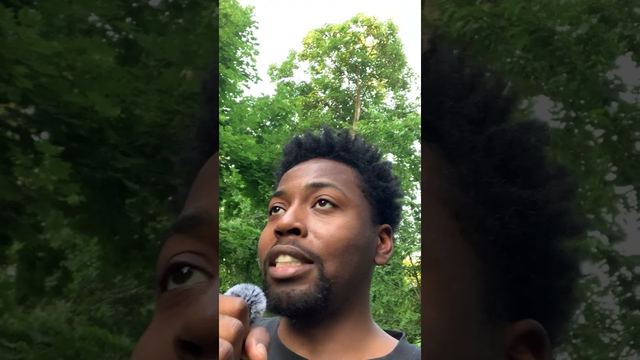
0:14B: Pizza Day here is the best. It’s the best community in the scene, and it’s connected to the NFT Philly scene. Very well. Yeah.
0:23Maceo: And how’s the party been?
0:25B: Epic. It’s always the best. It’s a new venue here, so it’s nice to see that they’re trying new things. things also because the other venue wasn’t available, but yeah, and there’s no band this year, but we did have plenty of music.
0:36Maceo: Yeah, yeah, and the vibes were cool, and I’ve seen, I think this is the third venue I’ve seen over the last four years, and it’s super dope to see new people here, old people here, I think it’s always for me having an annual time to see the crypto community in the city.
0:48B: The best part.
0:49Maceo: I brought my 83-year-old great-great aunt last year, she was really tired, and I said, I’ve been here for way too long, you know, but she wasn’t saying that.
0:55B: And she’ll be back here next year.
0:56Maceo: We’ll see, she’s not talking to me right now. We’ll see, but you know, that’s just famous stuff. So you’re the person who created the ERC721 token standard?
1:10B: Lead author.
1:11Maceo: Lead author. Okay.
1:12B: There’s four authors,
1:13Maceo: yeah. Okay. Who are your co-authors?
1:15B: So Dieter Shirley is the creator. Okay. He is the second author. And we have two others in the community too.
1:20Maceo: Okay. Are they like not doxed?
1:22B: I think their names are out there, but.
1:25Maceo: It’s okay. Yeah, yeah. I’m just offering the opportunity to recognize them. There’s no pressure.
1:29B: Yeah, we got four authors and they’re all contributors and it’s, you know, it’s a great flashback.
1:34Maceo: Okay, okay. And for people who don’t, like, I see Bitcoin as the fight against fiat. Yeah. How do you see Ethereum?
1:42B: Ethereum is, I just see it as Vitalik’s creation and I’d like to see him let it go. But I think the community around Ethereum is larger than that. And I feel like we are the people that are struggling to connect the real world to the future world. it’s a very community effort and that’s where it is right now
2:01Maceo: and what do you think about like that journey right like the real world and that’s kind of why I asked you that question right in those terms I was hoping you kind of give some analogy right
2:08B: yeah so I’ll give you the NFT so if Bitcoin is the challenge to fiat money then Ethereum would be the challenge to centralized control value and you know programs programs relating to value and securities but NFT is really the connection to specific individual The applications that I’ve worked on have been related to very commercial things just outside of the cryptosphere. Agriculture, royalty payments of things unrelated to crypto. And now we’re starting to see stocks come in here. So I think that is the most important thing is, you know, the world’s very big. Crypto is a small part. And so if we can continue to do that, we can continue to do that.
3:00Maceo: I like that. I like that. Why should my grandma care?
3:04B: She doesn’t need to care. If your grandma was in Argentina, she would know about Bitcoin already because everybody knows over there. When we have a stable currency, it doesn’t matter. But when you are in an economy that has a currency that, you know, when you’re trying to buy foreign currencies just to keep your retirement money safe, that’s when you really know about crypto. When
3:23Maceo: you’re even just thinking about inflation or
3:27B: inflation. The funny thing, so I was in Argentina, and I was talking to people, they were saying how they put their retirement funds into Bitcoin, and I said, oh my god, that’s so volatile. Bitcoin goes up, Bitcoin goes down, they’re like, yeah, but the Argentine peso just goes down and down and down. At least Bitcoin goes up sometimes.
3:44Maceo: I like that one.
3:44B: So no offense to the peso, and it has changed a lot since that statement, which was a couple of years ago. But, you know, you’ve got to think in other people’s perspective and from the US dollar, that might not be the global perspective. So comparing Bitcoin versus one specific currency might not represent what a lot of people are thinking.
4:01Maceo: I appreciate that. And I guess, do you feel like Ethereum is fulfilling on its mission right now in a podcast called Let’s Talk About Ethereum around the world, and you know, we’re talking to builders in different countries around the world while I’ve met going to conferences, like essentially the circuit, right? Yeah. And thinking about, right, what people are building and ideally trying to draw parallels between people working in like non-profit industries, you know, thinking about public goods and people in crypto thinking about public goods. I think they kind of exist in silos. Yeah. But I think if we can draw those parallels to people who have, you know, legacy knowledge.
4:30B: What is public goods?
4:31Maceo: You’re asking me?
4:32B: Yeah, you got to. Yeah.
4:34Maceo: Yeah. I mean, I would say a public good is like anything that if it exists, it can serve everybody. It’s like people think about the free rider problem, but I think in the capitalist society we apply the free rider problem to too many things. I think it’s okay to be a free rider on health care, on education. I’d rather you eat my educated neighbor than my ignorant neighbor. Are ignorant neighbors working out for us?
4:52B: I mean, so does public goods, does that include DeFi? Does that include DeFi? If there’s tokens, if there’s holders of tokens, does that include L2s?
5:00Maceo: I think they could be public goods. I think it’s about the infrastructure. Are they extractive in nature or are they regenerative in nature? Those would be the questions I would ask most immediately. You’re bringing some personality. I appreciate the levity. It’s a serious conversation. I would say, is my bank funding my education or my health care or anything worthwhile or is it just making people rich?
5:25B: Circular economy, ownership, equity. These are concepts that are Perhaps DeFi can help us better understand and apply. I think you would get more mileage out of that understanding by reading Graeber and, you know, some of the anarchist books or whatever, and work with the direct action in the real world rather than crypto. So the real world is always going to be better than, you know, the financial world. And if we just relegate crypto to finance and, you know, a few specific applications, then that would be the tail wagging the dog. So if that’s if that’s what you’re taking away here, I think we can take that mindset away.
5:25B: I have a specific name for this. I call this moon dust. So like Bitcoin, Ethereum, this is on the moon, right? We’re saying go to the moon, go to the moon. Well, why don’t we just take some of that dust and bring it back to the earth? You know, some of the things that we’ve learned about stakeholder engagement, you know, ownership, allowing your customers to own your product, involving them in the decision making at the deepest levels of ownership of your company. Like these are things you can do in the real world. So I don’t think that needs to be exclusive to crypto But because of the people that are physically there now We’re getting a population bias of the type of people that are building in a sandbox So it’s fun, but these are ideas that are bigger than us, bigger than crypto And bigger than, frankly, all the people that are near this stuff So I love what you’re thinking with this And I don’t want to keep that in crypto I don’t want to say that’s a crypto thing I want to say that’s an us thing
6:49Maceo: Which thing, Phil? When you’re pointing to this moon dust, what’s the us thing?
6:52B: The Us would be your concept of, you had a name for it, it was, you know, stakeholders, not stakeholders, you said, you know, public goods
7:01Maceo: And the free rider problem
7:02B: Yeah, but we can implement that concept here You know, you can just buy a pizza shop and you can publish your finances and vote for your staff and vote for the amount of money that your staff makes using a DAO But you don’t have to use a DAO, you can just use the receipts and you can have QR codes on the receipts that you sell
7:18Maceo: Yeah, you can say the whole organization structure is not at all profit-centric, but it’s self-sustaining and still creates value for the community. You
7:23B: said it doesn’t have to be profit-centric.
7:24Maceo: I’m just saying it can be. It’s an option.
7:26B: But you can have multiple layers. B-corporations don’t have to be anti-profit. It
7:31Maceo: could be a spectrum. We’re unlocking a spectrum.
7:34B: Right. So these are the concepts that we’ve tried. And so we can point to these test cases and we can bring them back. Switch topic. In the beginning of crypto, we were all thinking about self-custody and hardware wallets. and people are thinking, oh, my God, how am I going to get my family member who’s older into this ecosystem if they have to write these 12 words down? They say, well, that’s not how it’s going to work. They’re going to use a custodial wallet. Somebody’s going to hold their money for them. Oh, my God, that’s anti-crypto. No. What’s going on is the first people that came to crypto were hardcore.
7:40B: And so that’s a bias. You know, not everybody’s going to be like that. So when we bring the rest of the world in, of course, they’re going to do the same type of banking with crypto that they do banking with money, right? So as the thing expands, you’re going to meet them where they are, right? So let’s take that with public goods That’s an amazing thing, but the fact that we are using public goods in crypto right now is only specific because the people that are there now The first people that are crypto obviously are you know self-sustaining and they don’t need jobs, right? So they can think of these other stakeholders, but the people that have jobs, you know We have to convince them that there are other stakeholders in life.
7:40B: We have to convince them of how they can you know structure themselves and so that is the dust so we’ve been to the moon we’re coming back and we’re bringing the dust and we’re sprinkling it around yeah value systems just values we’re bringing the values back
9:00Maceo: well making them more explicit and then like
9:05B: it’s the flag so we’re bringing the We’re rallying around this new flag that we saw work under, let’s say, if you believe that DeFi is a public good. Could be, might be, might not be.
9:14Maceo: I would say so. I would say so. When I think of Aave, I don’t know, is Aave owned by somebody?
9:19B: So, pin it down. Why is it a public good?
9:21Maceo: I mean, the reason that I would say that is the premise is that it’s decentralized finance, right? As opposed to it being a bank that’s making money off of me. Like, I can go and buy ownership in their token, right, which gives me exposure to the upside of the organization.
9:32B: buy shares in Capital One and you could bank in Capital One. How’s that different?
9:38Maceo: I think that’s a good question. I think that it’s on the blockchain and there’s like explicit rules for governance which are allowing people who can, anybody anywhere in the world can buy access to it. That’s not true with Capital One.
9:48B: Capital One also has explicit rules for governments and they have the Board of Governors.
9:51Maceo: This is a trick question. Is it borderless? Is it like borderless still like Capital One?
9:55B: The rules are enforced. The rules cannot be rug pulled. So that’s the thing that’s missing here is that the...
10:01Maceo: I was hoping it was that it’s in America
10:03B: so I mean it is it you know it’s global nothing is American companies are not American you know because the shareholders could be anywhere
10:10Maceo: so I feel like but some like I went to the Caribbean for the Oasis on chain and they were talking about people there can’t get access to buying what certain stocks and things like that because they’re like blacklisted from the US like stock exchange and so there are markets right which aren’t able to
10:23B: I mean I can buy Chinese shares through ADRs
10:25Maceo: there’s always a way to do it
10:28B: which then what’s then under a previous president they had The Fire Sell Them. So I’m cutting my legs out of that argument. But you can travel to buy your shares where you want. But I think the offer that crypto has is that it’s a rules-based system. You know, America was founded as a rule-based system. It has values, you know, we the people. That was the value statement. But then the enforcement is a rules-based order. And so the international order we say now is a rules-based order. It’s not actually that. So if the rules are what makes the things valuable, then having the rules be the fundamental part of your system, aka smart contracts, then that is a more perfect implementation of what you’re trying to do as a public good.
11:06B: So I want to test your thesis because we do have stakeholders, we do have bylaws in the U.S. in corporate finance, and so we have to see what is the missing nugget, and it is the actual enforceability.
11:31Maceo: Would you agree that Ethereum is the only DAO today?
11:34B: DAO? No? Alright. To be continued. A lot of DAOs are like this. Uh, this is my. It really probably is the only DAO. It’s the only DAO. Name a DAO. Name a DAO. We Them Media, Maceo, Will, and Maceo