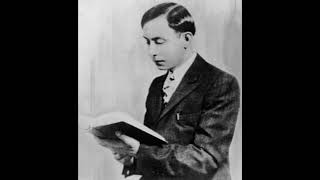
0:19BYeah, so, uh, the reason why I decided to pick Walter Rodney as the topic is because yesterday was his birthday actually, and they had a symposium commemorating his life. And yeah, he’s the author of that book right there, How Your Underdeveloped African -- He wrote a book about Walter Rodney. The significance of Walter Rodney -- there’s 2 aspects about his life that I want to speak about. The first was Walter Rodney as an educator. He was a professor of African history. But the significant thing about Walter Rodney, he wasn’t just a professor in university. He was known for what they call Jamaican roundings, which means he’d go out amongst the people, do sit down and have discussions on African history, politics, whatever topics among the masses.
0:58BSo it’s a very grassroots approach of educating people. That’s, um, that’s a tradition I try to do myself, which is why we have these discussions here. Wherever else I see African people gathering to have these discussions, I’ll participate and contribute the information I have. And the reason why Walter Rodney did this -- his approach was what he called putting African history in the service of Black liberation. Which meant that himself as a historian, he was putting himself in the service of the Black masses, putting himself in the service of the struggle, because he didn’t believe that a Black academic should just be a person sitting up in a classroom, you know, researching, writing books, lecturing, doing that kind of stuff, disconnected from the struggle of the masses.
1:37BHe thought, you know, that academics, people that have the background and understanding of history and politics, needed to be directly there with the masses working. Towards their liberation. So that’s one of the significant aspects of who he was. He wasn’t just this academic writing books, he gave lectures, he was there struggling with the masses. And that became a problem when he was in Jamaica. He taught in Jamaica. The government of Jamaica actually banned him from the island because they were, they were very, very afraid of, you know, this brother that’s going down there among the masses, not only teaching African history but also telling them, you know, this government in Jamaica, even though it’s a black government, it’s not serving, you know, Black interests.
2:15CBecause they’re being funded by Europeans giving money to take over the island.
2:19BYeah, that, that. But, you know, and obviously they didn’t want a professor going on there and exposing that to the masses, so they ended up banning him from Jamaica. He’s from, uh, Guyana. Same thing when he went back to Guyana, he couldn’t get a job teaching at the university in Guyana. So what Walter wanted to explore, then, like, Guyana, the same thing, this is a Black government. So what you start finding is, you know, these Caribbean countries that were formerly colonies that have now become independent, they were very uncomfortable with, you know, this Black man actually teaching people real, you know, real history, African history, but also educating people on the political circumstances.
2:50BBecause he let people know that, yeah, you might have a Black government in charge, but you’re still not independent. It’s still a piece of -- It’s still dominated by foreign forces, and yet it’s not serving the people. So that’s one aspect of who Walter Rodney was. Now, the other aspect I want to talk about, which is also significant to the work I’m doing, he was on A Pan-Africanist. I’m sure you’re all familiar with Pan-Africanists. But again, his approach was a very mass-based approach. So when he was a professor in Tanzania, because Walter Rodney is a professor, talks around the world, now he’s in Tanzania. And when you read his writings from that period, he’s very critical of the governments across Africa because again, it’s a strange situation where we have independence, we’re no longer colonies, and these are countries controlled by African people, but we’re still not independent.
3:33BWe’re still dominated by these foreign forces. These governments are still oppressing. the masses. And I find that especially significant today because a lot of Africanists, in trying to reconnect to Africa, we don’t identify with those issues. So we have a lot of people, for example, I know in the Caribbean, organizations that have established contacts with the African Union and with certain African governments, but they’re not really speaking to the conditions of the masses or speaking to the corruption that you find within certain African --
3:58CThat’s right. At least from what I’ve researched, what I’ve seen, it’s mostly because you have countries like States or France, UK, because they want the minerals.
4:11BThat’s a --
4:11Cyes, Africa is full of natural resources.
4:14BThe thing with colonialism, colonialism was Europeans going there to take control of resources. And when independence came, what the Europeans realized is, well, we can give them local independence, meaning we don’t necessarily have to have local control, still control resources. So they put, you know, certain puppet governments in place. Yeah, warlords. Because what happens is that -- that’s why I’ve been so involved in the Togo situation. The president of Togo decided we want to break away from, you know, the French currency and establish our currency. Well, suddenly he’s assassinated and they put this dictator in power. Now, this dictator, Eyadéma, he was a former soldier in the French colonial army. So these are people that served colonialism that they were putting in power positions of influence. So these are European puppets that are put in power. This is the 1960s.
4:56CFollow the money. So it’s follow that money. And you see who’s in charge and see which way they sway the vote.
5:04BSo what I was saying about Walter Rodney, that’s why he’s significant, because he was one of the Pan-Africanists that I’ve been pointing out. And I’ve noticed a lot of Pan-Africanists don’t want to make that connection. So they think Pan-Africanism is just, you know, go back to Africa or establish contacts with Africa. And Walter Rodney talks about, well, no, you actually have to establish contacts with the masses and, you know, help them in their struggle, which is one of the things I’ve been doing in Togo. But yet people have this approach of Pan-Africanism just kind of a feel-good, like we’ll just go to Africa.
5:28AYeah, like sing Kumbaya and eat African food.
5:33BAnd Trinidad, I was speaking about this recently, Trinidad’s got what they call Emancipation Day in honor of when slavery was abolished. So they’ve had situations where they’ll invite African dictators to come down to Trinidad to have the celebration with these African dictators. And no one will say anything but the fact that this man’s a dictator oppressing his own people in Africa. So I think those aspects of Walter Rodney are very significant. Some issues we have today because yeah, a lot of our intellectuals aren’t connected with the masses in that sense. Like I said, these are intellectuals who sit up in sit up in these universities and you know make a good living off of their positions.
6:05CAnd just like you just said, they make a good living off these positions. They get a lot of money for this, but I don’t know if we can trust them.
6:14BYeah, yeah. I mean, it happened to Walter.
6:17CYou talk here, you talk that, you talk out of racism. Liberation comes in all the money. So you’re talking about liberating some money, that’s what you try to build buildings out of. Like they just killed all the people in -- I forgot her name -- in Brazil. Oh yeah, yeah, yeah, yeah, yeah, yeah, yeah, yeah, yeah.
6:33BI mean, Brazil is horrible. And that’s the whole thing too, the Pan-African thing, because, you know, a lot of us, we don’t really understand what’s going on in Brazil. We think about police brutality here in Brazil, it’s horrible.
6:44AThere it’s horrible.
6:46CIt’s horrible.
6:47AYeah, I know.
6:48BWe’re not even talking police, this is military police now. You know, people with military equipment that will just go into these communities and shoot people. Because the thing that she was exposing before she got killed was they went into the slums recently, killed a couple people, and just dumped the bodies in a ditch somewhere. So that’s what’s going on in Brazil. And I guess like one of the -- we have a lot of Pan-Africanists, you know, running around preaching Pan-Africanism, but who’s really pointing out those things and trying to connect with what’s going on in Trouble, yes. Trouble, and even, um --
7:14AYeah, I think, I think, like you said, I think the, the, the issue is, is that there’s a point where as a Pan-Africanist you say to yourself, well, I know what’s going on and I’m ready to pass. I’m living in the present and I want to see a new future. But at the same time, deep down inside, you’re like, well, if I say something and if I go against this Momentum that’s already been in place, that’s it for me. I’m pretty much riding my death warrant, you know, because -- and I think a lot of people are afraid of that, and then that’s why they don’t talk out as much or is as visible as much, you know what I mean? And then, but if you get enough people together, in my opinion, you can’t get rid of everyone.
8:02BWell, I mean, you have --
8:03AYou know what I’m saying? But you have to get enough people quick, and that’s the grassroots.