1:10BOkay, so give us a start, like I said.
1:13CI appreciate you, uh, giving me the opportunity. My name is, um, Dwayne Wong, and I also gave myself the African name Omowale because I feel like as African people we should have African names.
1:25BYes. Man, I gave my new name.
1:29CWhat’s that?
1:30BIt’s Shadi L. And mine is Halini City, which means street of the queen.
1:37COkay, so everyone here has got an African name. Iran, Egon, that’s interesting. It’s my first time actually speaking Speaking for an audience where everyone --
1:46Byeah, I have that.
1:47AWake consciousness.
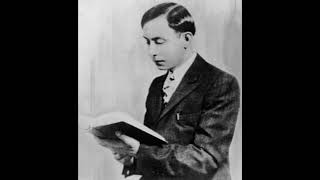
1:48CYeah, waking up, right? I mean, that’s one of the things I’m going to speak about tonight too. I see a lot of consciousness and awakening among African people around the world, and that’s why, uh, well, I think, you know, the perfect book to get started on having these discussions is the one I wrote about Marcus Garvey here, The Life Goals and Achievements of Marcus Garvey, because he saw our struggle, the struggle of African people was a global struggle. And that’s the reason why I came here tonight wearing this Togo Debout t-shirt, because right now the people in Togo, they’ve been under the rule of a dictatorship for the last 50 years, and the people there are finally uprising against this dictatorship and rebelling, trying to overthrow the dictatorship.
2:29CI’ve been in contact with a couple of the activists there trying to help them raise awareness to their struggle. And, um, in doing so, I believe that’s a continuation of the legacy that Marcus Garvey left us, this legacy of a global African struggle and recognizing that we’re all brothers and sisters regardless of the Atlantic Ocean that separates us. Another thing too with Togo, there’s not a lot of media coverage at all of Togo, and it crossed my mind that, um, whenever there are terrorist attacks in France, in England, Germany, Belgium, you know, those European countries. It’s all over the news. You see people on social media posting prayers for those countries, changing their profile pictures to the flags, but you don’t see anything about Togo.
3:14CAnd the reason for this is because we live in a very Eurocentric world that only cares about the interests of European people, not African people. And many of us here living in America, living in that worldview, we tend not to care about our own issues. Like I said, the people of Togo have been oppressed for the last 50 years, and they’re fighting for their liberation, and we don’t really hear anything about it in the media. You really don’t see many people trying to reach out and communicate with the people of Togo. So one of the things I want to do to continue the legacy that Marcus Garvey left us is to reach out to some of the activists in Togo.
3:47CI’m also in contact with African -- other Africans on the continent, and try to rebuild the Pan-African movement that Marcus Garvey left us. Thank you. One of the things I point out in this book that I believe is a very remarkable achievement of Marcus Garvey is that in an age before social media, he was able to build a global Pan-African movement. He had branches in over 40 different countries around the world. His organization, the Universal Negro Improvement Association, was first founded in Jamaica. And it spread throughout the Caribbean. He came here in America, established headquarters here in the United States, and eventually spread to a global movement.
4:27CHe had branches all across the United States, all throughout the islands, throughout South America, throughout Africa, and there was even a branch of his organization in Australia. So like I said, in reaching out to other African people around the world and trying to continue that legacy of us working together globally to advance our interests as a people, people and to work towards our liberation. The other element of Marcus Garvey’s ideology I think is very important that I’ve -- well, I’m working to continue as well is economics. Garvey was a strong believer in self-sufficiency for African people, the ideology of do-for-self, not to be reliant or dependent upon other people or to necessarily have to beg other people for things that we could build for ourselves.
5:12CI point out in my book that Garvey’s organization was able to establish various different businesses. He owned restaurants, banks, a security force, the organization had a security force, and ships. He bought ships and was able to establish commerce between African Americans and those in the Caribbean islands. So that’s another important legacy of Marcus Garvey that I think we’ve kind of lost this ideology of not depending on other people and of doing it for ourselves. Because we’re very accustomed to thinking of African people as impoverished and poor people, but we’re really not poor people. The problem is that we’re very poorly organized. When you look at just African Americans alone, the amount of spending power and wealth that we have collectively, if we could organize that and start investing that in building institutions, we could solve many of the issues that we have right now in our communities.
6:06BSo you’re saying we’re not organized? Is that your perception?
6:09CYes, we’re not organized. We’re not poor. We have --
6:11Bthe wealth is there.
6:12CWe just need to organize that properly, you know. And then looking at that from a global perspective, you look at the African continent, which is the richest continent on the planet. There’s no reason why Africa should have the amount of poverty and issues that they have. But again, it’s an issue of a lack of organization. When you look at Africa right now, um, Basic things that could be produced on African continent are things that have to be imported in terms of food aid. Africa, with all the resources Africa has, there’s no reason why Africa -- Africans should be starving and need to import food. I saw recently, you know, in Ivory Coast, the Chinese were in there building a dam, and the thought crossed my mind that, um, you don’t see Iverians or other people from West Africa going to China and building the infrastructure in China, so why are the Chinese in Africa building infrastructure?
6:58CSo what we see globally is that, like I said, we’re not a poor people. We’re just very poorly organized. We’re not as self-sufficient and self-reliant as we need to be. So very often we allow people to come in and take control of the communities through things like going in there building infrastructure. Because if you don’t build infrastructure in your community, and if you don’t maintain the infrastructure in your community, then you just live there. But it’s not really your community in the sense of ownership. So one of the messages that Marcus Garvey came with was this message of building our own communities, building our own countries, and establishing ownership and control of it.
7:35CHe had his favorite famous slogan, Africa for the Africans, and that’s what he meant by that. He meant by an African continent which is controlled by African people as opposed to the colonial forces which controlled Africa at that time. Another important thing to keep in mind Marcus Garvey, and the reason why he wanted to build his movement into a global movement is because he was born in Jamaica, which at the time was a British colony, and most of the Caribbean at the time was under British rule. Now, if you look at the United States and what was happening here in terms of, you know, Jim Crow, lynchings, that kind of oppression we were living under here in the United States, and then Garvey looked at the African continent and he realized the entire continent, with the exception of Liberia and Ethiopia, were under European colonial control.
8:24CSo Garvey looked at the global situation and he realized everywhere he looks he sees African people oppressed under alien domination, and he believed that the solution to this is to recognize that as African people we have a common problem, and for that reason we should unite towards a common objective. So as I said, these to me are 2 of the critical elements of Marcus Garvey’s ideology that in my own way I’m working to implement. So that’s my brief presentation on Marcus Garvey. Now I’d like to open it up and get into some discussions and questions about my book or some of the efforts that I’ve been engaged in.
9:04BWell, first of all, thank you for coming again. And I wanted to let you know I’m doing a lot of studying on Togo myself personally. And all of our soap and shea butter comes from Togo. Oh, okay. So we’re actually sending, um, our rep goes back in 2 weeks and his family makes all of our black soap and shea butter in Togo. And what I -- yes, it’s right by Ghana. But what I was asking is, you better see it on this map. Yes, but that’s only Ghana. Okay, yes, right over this. But, um, What I was asking them is that when we are exporting or when we are importing soaps and shea butters from Togo, what can we do to make money? In other words, one hand wash the other. What can we take from U.S. that you could sell that we could do an even trade?
10:01AYeah.
10:01BBecause what I’m noticing as a black business owner, as a As a strong advocate for our culture to be seen and being aware here, I’m doing all the buying, but what can they buy from us? So it’d be an even exchange. You know, every country that we do business with in China, in Japan, in Pakistan, and all those things, we’re not getting an even trade. So we’ll oversaturate our things here, but how can I? How can I sell? Now what they told me is that what they in in Dianita is children’s clothes. They want to wear little jeans and little shirts and things like that, so children’s clothes. So they’re asking me to get a container. You know how big a container is, a tractor-trailer.
10:44AI was shipping.
10:44BFull of -- that would be worth it.
10:46AI mean, I was in shipping.
10:47CYeah.
10:48ALongshoremen, that’s what we did.
10:50BYeah. So that’s what I’m looking at. How can it be -- if I’m spending $30,000, $40,000, $50,000 in product, How can I make $100,000, you know, with you taking -- in other words, don’t take the container back empty. If the container comes over here, it goes all over the US, who all the buyers are, we get all our goods and services from them, then what can we send back? So it won’t be that we are just milking our culture. We want to build our infrastructure here as well as they’re building their infrastructure there. And that’s just not Togo, that’s any place.
11:23CYeah.
11:24BBut I found, I’m still very curious. I’ve been studying a lot about Marcus Garvey, and he was a very complex man.
11:32CComplex.
11:32BBut he was, what I liked the most about Marcus Garvey is that when they were putting him back and forth in jail, and they said, well, what happens when you die? What happens? And he said, I’mma always be alive. I’ll be alive in every person that believes in my philosophy. So I say I am Marcus Garvey because I feel that it is important to, to know where you come from. And I’m to the point that I went, like I told you, I went to his gravesite. I went all the way over and visited his gravesite and his wife’s gravesite and also in a house that he had. There’s so much we don’t know about him, but there’s a lot of stuff And that’s what I would love to help you get to, that -- to his -- his -- they have a house that is full of his letters and books that is bigger than this. It’s bigger than this gallery. Wow.
12:29AHe did a lot of writing.
12:30BHe did a lot of writing.
12:31AHe did a lot of publishing.
12:33BAnd then they have pieces where they won’t even let you touch the pages because they’re so old they will -- they will fall apart. So when you go into his house, you know, it’s like an old house, this cookie-cutter kind of house, and you go and you see all this work. So what we are reading about him is just a very small fraction of what he actually did and all the literature that he left. That is just amazing that it’s just that much on him and we just get snippets of it. Because he was 100% Want us to know about Africa and go back and trade. Now, what I want to ask you: when he he lost his ships because of not having the support, correct?
13:21CI mean, he had my understanding was that go ahead.
13:25AWell, our account of my understanding was that the people he hired to help him manage that and the engineers and Mechanics sabotage. Yeah, see, but then again, all our, all our organizations is infiltrated with the FBI. All of them. Okay, every one of them. That’s the first thing you got to get clear. If you don’t have that clear, you got the wrong concept.
13:52BNow hold that thought. I’m gonna go around the corner, I’m gonna come back. I had Cubans in here last night. And Cuban will not let -- they will not let America bring back Tupac Shakur’s godmother.
14:08AUh-huh.
14:09BIs in Cuba, right? Yeah. And they -- but I’m saying, they --
14:13Abut that Cuban is so bonded, they should probably afraid they’re gonna kill her if she --
14:17Bbut they’re not gonna -- they’re not gonna let anybody get near to her.
14:20AWe got plenty exiles in Cuba, not just her, right?
14:23BWhat I’m saying is Like you said, now you got our own people sabotaging Marcus Garvey freight lines, right? And then you got a little place like Cuba that can hide a woman and not let U.S. snipers and the FBI go and get her. It’s just a matter of how we protect ourselves, I feel.
14:42CYes, a matter of protection. And I mean, Cuba went through that revolution. A part of the process with the revolution was also education, educating the Cuban people to recognize that this is a revolution that we’re waging and we have to defend that revolution. And, um, the issue that African people run into very often is we really don’t recognize the issue that we’re dealing with because we don’t engage in the necessary community education that we need. And, um, that was one of the issues that Marcus Garvey ran into during his days, is that he had a lot of grassroots support, but in terms of the people that he was surrounded but there were a lot of people that didn’t necessarily have those interests or that community orientation to recognize the importance of the idea.
15:25BWhat were you going to say? You were going to ask a question?
15:30AA lot of people doing Marcus Lawless’ thing. He had Drew Ali, who’s -- you know Drew Ali, right?
15:39CWhat’s that?
15:40ADrew Ali. You find over in Moore’s Saxton.
15:44COh, yeah, yeah, yes, yes.
15:47AYes, a lot of those people came out there. Yeah, well, those people started these organizations that we see now. Yeah, but Drew Ali had something that they didn’t have -- nationalized the people. Every African nation, if they naturalize, that’s what Adolf Hitler did, you know. He got rid of them when he nationalized the country. If you wasn’t German and you didn’t get out, you were in trouble. Our problem ain’t money, none of that. We not naturalized. As a nation, that’s our problem. We think we Negroes, Blacks, and coloreds when you’re not that. Till we get those -- it’s conception, not concept, it’s conception. We got to change our mindset and thinking. Until we do that, you can’t go nowhere because you can’t travel the world as a national. That’s the first thing. If we don’t do anything else, if we gonna have this meeting, we have to nationalize. You have to be one people.
17:12BSo what do you think that, what do you think that we could do to help? I understand the nationalization, but we have to --
17:20AWell, that gotta start first.
17:21BRight, you gotta start first.
17:22AWe can’t nationalize --
17:23BRight, we have to first know that we gotta nationalize.
17:26ABut, but the movement been out there ever since Marcus Garvey and Drew Ali was doing this. It’s being suppressed by our FBI.
17:34BThat’s the point. It’s being suppressed. But what I’m saying is that it’s like you got to be working on --
17:41Ayou got to do that first. If we don’t nationalize, won’t nobody know which way to go and who everybody is. Okay, if we don’t know who you are and you don’t know who he is, How we gonna get together? That’s why they started the Moorish Science Temple, nationalized. He was killed too in 1929, you know that, right? Because that’s a powerful tool, everybody walking around with nationality cards, right, with the same names on them, the names that they took from you in the beginning.
18:13BThe names they took from you.
18:15AYeah. So, but now one other thing though, My mother told us we was not from Africa. They had 500 acres of land up there in Georgia. My grandmama’s -- my daddy’s mama was born in 1987. They came into this already with property, land.
18:39BWell, everybody that came in America, first of all, wasn’t all from Africa. African, everybody that came wasn’t all slaves. I do, I do, I definitely have read and understood that. But what I, what I want to know is from, from his writings and what you have, what do you see that we, meaning me or the energy or people that’s going to be coming to the group, because, well, as our group go, we’ll be going back around the circle. What do you think that we could do that would make Marcus Garvey proud.
19:15CWhen you talked about the movement being suppressed, one of the things I was thinking about is, on one level, that is what’s going on, it’s being suppressed. But on another level, it’s simply a matter of, um, there aren’t enough people in the community really getting out there and doing those things. Because when I made the effort to reach out to the people in Togo, I was actually surprised by how receptive and welcome I was. That’s good. So, I mean, The perception a lot of Africans here have is, well, don’t deal with those people on the continent. They’re not us. They don’t like us. They don’t want us there. They don’t want us back. And I’m interacting with people in Togo, and I feel like almost like I’m a Togolese myself. So I think in terms of continuing Marcus Garvey’s legacy and doing things to make him proud, just initiating that contact, reaching out to African people from other parts of the world and engaging with them, I think would be the first step. And we’d be surprised to find out that we’re Really not as different or not as much traditions as we have.
20:05BBecause they told me when I reached out, they want me to get WhatsApp. They want you to see what they’re doing on their daily lives. They wanted you to get with the women when they’re making the soaps. And like, I was watching one guy, he was so excited because he had on a European suit and hard shoes, and they were all out there on dirt. So they definitely want to communicate. What I learned a lot from the Africans and by going to Africa is they really want you to go and see what it really is like. That’s why I put the skyrises and the ships and the docks, and I put the big map of Africa, because everybody feels that it’s all dirt and it’s all disease and it’s all infested. Yes, they do have that, but so do we, you know what I mean?
20:45AThat’s right.
20:46BSo my whole goal is, is to -- my -- I feel my purpose is to enlighten you that it -- that, that you should go. Just like you plan a trip to come to the mall, you can plan a trip to go to Africa.
20:56ARight.
20:57BAnd you can be in good health. But they want you, they want your resources, they want your money, they want you to support. And they’re not -- we have so much crime here that I don’t see any place that we -- that’s African descent that we shouldn’t be trying to go to. So yeah, that’s a powerful man. And he did a lot of things to make them not -- How did you feel about him being put in jail?
21:21CI feel like we’re putting our weight in.
21:23BJust like he was, like Tane was putting him in jail, they were trying to discourage him. Oh yeah. They were trying to tell him that, you know, you know, you’re gonna die and what are you gonna do? And you know, they came with these charges and so forth.
21:35AWhat was the charge?
21:36BI don’t remember what the charge was.
21:38CHe trumped up, I think, mail fraud.
21:41BIt was something that they couldn’t prove. That’s why he got out.
21:43CI’m interested in in the book too, was that it was completely trumped up because when they got to the trial, they had absolutely no evidence, no real concrete evidence against him. But what you were talking about in terms of, you know, them jailing him and trying to discourage him, to me, that’s one area where Marcus Garvey as a leader shines the brightest, is that moment. Because they were going to imprison him, and I put the quote in this book here, I don’t remember it exactly, but Marcus Garvey’s thinking was, the only people that fear being imprisoned are guilty men. But for Marcus Garvey to be imprisoned for the cause of justice, he had no problem with that.
22:17BAnd that was the order from the President of the United States. So it wasn’t, it wasn’t like he just --
22:22AWell, I know you’re being suppressed.
22:24BYou know what I mean?
22:24AYou ain’t got to tell me.
22:26BSo it’s like that was, that was done. And when you read that, it’s like, wow, you know, they’ve been from Martin Luther King to everybody else that looked like they were trying to bring us together. And I’m gonna be honest with you, When I opened this store here, I had a little bit of art in the back, and when I found out that this property was stolen from African Americans, this right land that we own, I had to pull that gallery out of that back and bring it here. And I hated when the store left because this was a nice sneaker store. I hated when they left, but I didn’t know that they had to get out for me to get in.
22:57AWow.
22:58BYou know, but, and the history that you got to have, I feel like this is a sacred gallery. I feel like we’re in the belly of Africa in here. I feel like we’re in the tomb. And we got to create this study group. And we got to reach back. We got to start where we are. And we got to move forward. Because so many people, when it gets too technical, they are afraid of our culture. And the goal is not to make them afraid of the culture, but to engage them.