We Them Media logo We Them Media Back the work

Saving is burning money: Daniel on stablecoins and inflation.

In this video? Ask for a change or have it taken down.

Keep up with new releases. Get the newsletter, once a week

To quote this piece: Daniel, “Saving is burning money: Daniel on stablecoins and inflation,” We Them Media, https://wethem.xyz/watch/saving-is-burning-money-daniel-on-stablecoins-and-inflation-nigeria. Each transcript line links to its second.

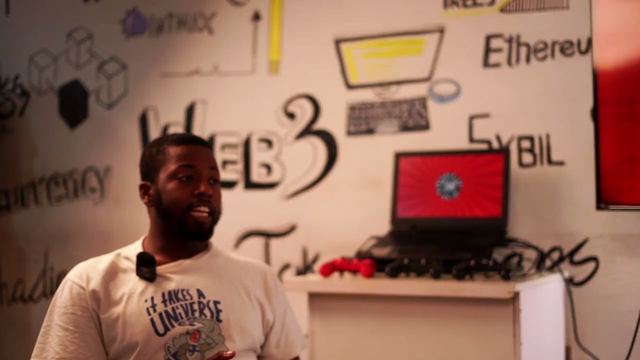
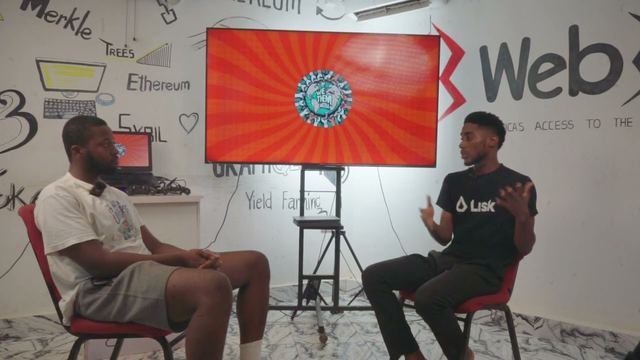
What inflation does to a saver, from someone living it. Daniel, in Nigeria, does the arithmetic out loud: “I will have $200,000 in cash, but this purchasing power will be less because of inflation. It’s as good as I have $160,000 or $170,000.” The interviewer names it and he agrees. “You’re burning money. Yeah, I’m burning money. By saving.”

Then the part that makes it an argument rather than a complaint. “I don’t get bailouts.” Big companies do. So if the individual is not protected by policy, “I shouldn’t be affected by their lack of intelligent policies,” and “I should be able to use blockchain, crypto, like stable coins to hedge against that.” His plan is to spread that: “I want to encourage more people to save in stable tokens and maybe stake them.” Beyond savings he wants blockchain for “holding leaders accountable,” and to “encourage youth and teenagers to learn blockchain technology as a means of getting out of poverty.”

The last minute is the church community he already supports, with small prizes, “$10 for the first prize, $7 for the second, and then $5 for the third prize,” and a hope to fund scholarships for kids from low-income and single-parent homes. Compare the American version of the same argument in ’Bitcoin hedges debasement, not inflation’. Executive producer: C.Y. Lee. Supported by Donna Dalton and Aja Davis. The transcript below is from the original audio.

8 supporters at $178 a month pay for this work, on the way to $1,000 a month. Become a supporter →
Transcript

Skip the transcript ↓

Spotted a wrong word? Tap its timestamp, then tell us.

Transcribed from the original audio and corrected for names. Speaker letters mark turns, not names. Search every transcript

These are the speaker’s own words. We have not checked their claims.

0:00A: I will have $200,000 in cash, but this purchasing power will be less because of inflation. It’s as good as I have $160,000 or $170,000. So it’s crazy. You’re burning money. Yeah, I’m burning money. By saving. By saving. So that defeats the purpose. Because I don’t get bailouts. People that get bailouts are big companies, big brands. To start companies or to build houses or whatever. So it’s big brands that get these bailouts or get these loans from the government. Yeah, so if me as an individual cannot get the government, I shouldn’t be affected by their lack of intelligent policies that they’ve refused to propose that would actually help economic growth.

0:00A: Yeah, I shouldn’t be affected by that. I should be able to use blockchain, crypto, like stable coins to hedge against that. So we’re discussing that. So I want to encourage more people to save in stable tokens and maybe stake them, stake them to little. A little, yeah, interest at the end of the year. So I want to learn more into that. I also want to see how I can also use blockchain activism, holding leaders accountable to using for voting. I want to also see how I can also encourage youth and teenagers to learn blockchain technology as a means of getting out of poverty. Do what I want to do going forward.

0:00A: And hopefully in the long run, get funding for some social projects like the, like the, um, Public Defication, I told you about. Yeah, this is something I think I should do going forward. Even things like at your church, which you mentioned to me as well. You said? Or even things like in your church community, like you mentioned to me as well. Yeah. Trying to contribute to people regardless of cost. $10 for the first prize, $7 for the second, and then $5 for the third prize. Then going forward and see for offer scholarships. Some of them come from very low-income homes, single-parent homes, and then some of them take it too far.

0:00A: They should be really accommodating to everyone. But some family, my father would say, If you go to church, if you become religious, I don’t pay your fees anymore. So we want to see how we can support them and get them through schools.

That was the whole tape.

The We Them Weekly, once a week by email What went up, and what we are asking next.

More from Nigeria.

The whole project