The One Question bounty closes Thursday 10 December.

Join in
We Them Media logo We Them Media Support us

Reading The Birth of Power: history and Philadelphia.

In this video? Ask for a change or have it taken down.

Keep up with new releases. Get the newsletter, once a week

To quote this piece: “Reading The Birth of Power: history and Philadelphia,” We Them Media, https://wethem.xyz/watch/reading-the-birth-of-power-history-and-philadelphia. Each transcript line links to its second.

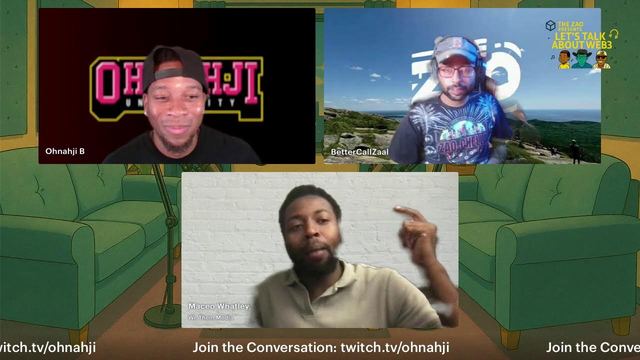
Maceo reads the section of The Birth of Power by Dennis M. Walker that sets out the book’s journey in three parts, starting with reclaiming the historical record from before enslavement and moving to the systems that extracted African American labor and wealth. He ends with a short reflection on Philadelphia. From the reading: “A people who do not know what they once built may struggle to imagine what they’re capable of building.” “This history is not presented solely to document suffering.” Dennis M. Walker talked with Maceo about the book at the Black Blockchain Summit at Howard University on Saturday 26 September 2026; that conversation, The dollar is not your friend, is on its own page, and the book has its own page at thebirthofpower.com. Recorded by Maceo of We Them Media. The book belongs to Dennis M. Walker.

Mentioned in this video: The Birth of Power, the book's page.
Become a supporter

What is in it?

Jump straight to a moment.

Transcript

Skip the transcript ↓

Spotted a wrong word? Tap its timestamp, then tell us.

Where YouTube masked a word it shows as [bleeped]. Search every transcript

These are the speaker’s own words. We have not checked their claims.

0:00A: The journey ahead. This book is organized into 3 sections that together trace a journey from identity through history to diagnosis and action. Part 1, Who We Are and Where We Come From. This first section reclaims the historical record. It challenges the falsehood that Africa had no meaningful history before European intervention and rejects the notion that African American identity began with enslavement. Long before Carter G. Woodson established Negro History Week in 1926 to dispel those myths, African peoples built civilizations, developed systems of governance, cultivated trade networks, advanced knowledge in mathematics, medicine, astronomy, and philosophy, and created enduring cultural traditions. We begin before enslavement with the civilizations of pre-colonial Africa, including Kemet, Nubia, Mali, and Aksum. Reclaiming that history is not an exercise in nostalgia. A people who do not know what they once built may struggle to imagine What they’re capable of building. Part 2, what we have gone through. The second section examines the systems that transformed African people and their descendants into sources of extractable labor, trade commodities, wealth, and political advantage. It traces the transatlantic slave trade, colonial extraction, racial enslavement, the betrayal of Reconstruction, Jim Crow, the Great Migration, the civil rights movement, and the postcolonial The post-civil rights backlash, documenting the many forms of resistance through which African Americans fought to secure freedom, citizenship, dignity, and economic independence, and the recurring pattern in which each advance was met with a systemic counterattack. This history is not presented solely to document suffering. It is necessary because the present cannot be understood apart from the systems that produced it. I saw an Instagram post the other day that said Philadelphia is the biggest city in the country with the highest poverty rate. I just think that’s crazy. You know, we’re playing, we play a part in this big thing in this America, huh? We’re all part of this country.

That was the whole tape.

The We Them Weekly, once a week by email What went up, and what we are asking next.

More single dispatches.

The whole project

Same place: Everything recorded online; Same hub: The Birth of Power by Dennis M. Walker.